

Edge of Breakup
Video Categories
Boss Katana Artist 100-Watt Guitar Amp Head & 2x12" Cab
The Boss Katana Artist MkII Head debut on the channel — and an immediate answer to a question I've had for a long time about how well this amp takes boutique pedals. Welcome back to Edge of Breakup.
In this episode the Boss Katana Artist 100W MkII Head and 2x12" cabinet take center stage — featuring the Black Bobbin JM by Iconic Guitars with exclusive Lollar Black Bobbin Jazzmaster pickups, alongside a pedalboard covering the Meris LVX (in the Katana's effects loop), Browne Amplification Carbon, KingTone Vibe 1968, and Dominion Electric Fuzz.
The Katana Artist MkII Head is Boss's flagship modeled amp head built on their Tube Logic design approach — five amp characters (Clean, Crunch, Lead, Brown, Acoustic) each with a Variation switch for a total of ten core tones. 100 watts of Class-AB analog power, scalable to 50W or 0.5W via Power Control. Three-band global EQ, three-way Contour switch, five simultaneous onboard effects with over 60 Boss effects accessible via Tone Studio, and eight storable Tone Setting memories. The series/parallel effects loop is what this demo specifically tests — how boutique, finicky vintage fuzz, modulation, and delay behave through a platform outside the Boss ecosystem. The answer: extremely well.
The Black Bobbin JM is the work of Shelby Pollard (Black Bobbin) and Iconic Guitars — a vintage-spec Jazzmaster build with Mastery M1 hardware, quarter-sawn maple neck, rosewood fretboard at 7.25" radius, 1 11/16" nut width, bone nut, Jescar medium frets, 280K vintage-inspired pots, and an NOS K40Y-9 PIO capacitor. The exclusive Black Bobbin Lollar pickups are the result of Shelby asking Lollar one specific question: what would your Jazzmaster pickups sound like after 50 years of aging? The answer was Alnico 2 magnets instead of Alnico 5 — lower output, natural degaussing character — combined with staggered pole pieces and traditional Jazzmaster string spacing. The Jazzmaster rhythm circuit is also explored in this demo.
🔊 Boss Katana Artist MkII Head: https://www.boss.info/global/products/katana-artist_mkii_head/
🎸 Black Bobbin: https://blackbobbin.com
🎸 Lollar Black Bobbin Pickups: https://www.lollarguitars.com/lollar-pickups
Subscribe for more boutique tone explorations.
🎸 Black Bobbin JM (Iconic Guitars) | Lollar Black Bobbin Pickups | Mastery M1 | 280K Pots | NOS PIO Cap
🎛️ Dominion Electric Fuzz | KingTone Vibe 1968 | Browne Carbon | Meris LVX (effects loop)
🔊 Boss Katana Artist MkII Head | 100W | Tube Logic | 5 Amp Characters | Series/Parallel FX Loop | 2x12" Cab
Recording: Universal Audio Apollo x4 | Lauten Audio LS-208 | Royer R10 & R121 | Sennheiser E906
Lollar Pickups Mini Humbuckers
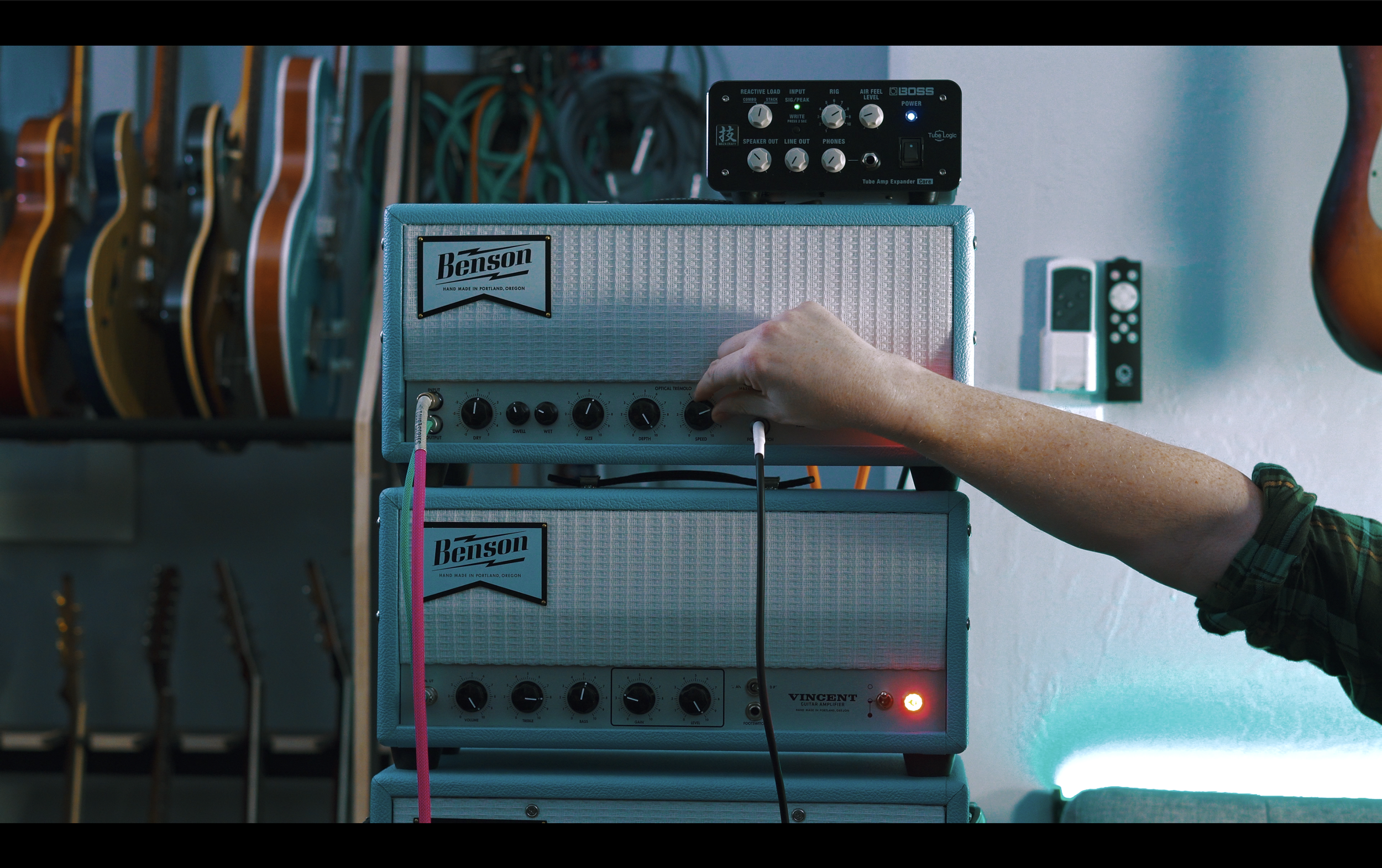
The P90 rout is more versatile than most people realize — and this demo proves it. The Lollar Mini Humbuckers in the Frank Brothers Arcade Goldtop, through the Benson Monarch cranked with the R2R Electric Rangemaster. Welcome back to Edge of Breakup.
In this episode the Lollar Mini Humbucker Pickups take center stage — installed in the Frank Brothers Arcade Goldtop via P90 soapbar conversion rings, into the Benson Amps Monarch and Benson 2x12" cabinet via the Boss Waza Tube Amp Expander with the Benson Tall Bird for reverb, and the R2R Electric Rangemaster treble booster in the second half.
The P90 hunt on this guitar has covered the Fralin Stock P90, Fralin Hum-Cancelling P90, Righteous Sound Monte P90, Lollar '50s Wind, Standard Wind, and High Wind P90s. This episode takes a deliberate detour into a different pickup format entirely. Lollar's own soapbar conversion rings allow their Mini-Humbucker, La Prima, Firebird, and MiniBroiler pickups to drop directly into any standard P90 soapbar rout — no routing required. The P90 rout turns out to be one of the most versatile formats available, and the Mini Humbucker is one of its best applications.
The Lollar Mini Humbucker's internal architecture is what makes it distinctive. Steel cores rather than alnico rod magnets — this gives the pickup higher inductance, more bass, more output, and a smoother attack than an alnico-core mini humbucker. When you push the amp, the steel core produces more of a grind and sustain character than alnico. The result sits tonally between a full-size humbucker and a P90 — tighter, brighter, and more defined than a full humbucker, with more warmth and sustain than a true single coil. Hum-cancelling by design.
DC resistance: Neck 6.6K / Middle 6.7K / Bridge 7.2K. Recommended pots: 500K. The middle position on this guitar — Mini Humbucker neck and bridge blended in parallel — is a genuinely new sound for the Arcade Goldtop, not available with any P90 configuration.
The R2R Electric Rangemaster enters at 17:03 — pushing the Mini Humbuckers' already tight transient attack into the Monarch's preamp for the treble-boosted British lead tone these pickups are extremely well-suited for.
Coming up on the channel: Lollar La Prima Mini Humbuckers, Lollar Gold Foil Soapbars, and Lollar Firebird.
🎸 Lollar Mini Humbucker: https://www.lollarguitars.com/lollar-pickups
🎸 Frank Brothers Guitar Company: https://www.frankbrothersguitars.com
🔊 Benson Amps: https://www.bensonamps.com/guitar-amplifiers
Subscribe for more boutique tone explorations.
🎸 Frank Brothers Arcade Goldtop | Lollar Mini Humbuckers (P90 Conversion Rings) | B5 Bigsby
🎛️ R2R Electric Rangemaster (second half)
🔊 Benson Amps Monarch | Benson Tall Bird | Boss Waza TAE | Benson 2x12"
Recording: Universal Audio Apollo x4 | Lauten Audio LS-208 | Royer R10 & R121 | Sennheiser E906
Benson Earhart Reverb Combo
The debut of my new Benson Amps Earhart Reverb Combo — cranked, top boost on, tone maxed, absolutely crushing. Welcome back to Edge of Breakup.
In this episode the Benson Amps Earhart Reverb Combo takes center stage for its channel debut — featuring the Frank Brothers Arcade Thinline with Righteous Sound RAF A4 & A2 Humbuckers, alongside a compact pedalboard covering the Dominion Electric Fuzz, KingTone Vibe 1968, Browne Amplification Carbon, and Meris LVX.
The Earhart is Benson's interpretation of the top boost style of amplifier — not a clone, but a deeply considered evolution. Chris Benson took the tone stack from the original 1960s top boost design, modified it, and integrated it into the Monarch platform, carrying over the Monarch's touch sensitivity and harmonic characteristics into an EL84 Class A circuit. The result is a Benson amp that chimes in a way the Monarch doesn't — the top boost switch adds shimmer and three-dimensional clarity above the midrange, while Normal mode makes the Earhart behave like a well-balanced Monarch. The midrange is very slightly scooped but not as heavily scooped as the original top boost amps — a sweetness that lives in between. The Reverb Combo adds Tall Bird-style tube-driven spring reverb in a completely transparent fashion.
15 watts. 2 x JJ EL84 power tubes. 2 x JJ 12AX7 preamp tubes. 1 x JJ 12DW7 reverb driver. 5AR4 rectifier (default). Mercury Magnetics transformers. Jupiter capacitors. Carbon comp resistors. Point-to-point construction on terminal strips — no PCB, eyelet, or turret board. DC filaments for low noise. 13–18 watts depending on rectifier. This combo is 39 lbs of pure Class A.
Controls are beautifully minimal: Volume, Tone (tilt between bass and treble), and the Normal/Top Boost switch. Volume and Tone in combination control the frequency tilt of the entire amp — many sounds from two knobs.
The Righteous Sound RAF (Righteousness Applied For) Humbuckers — Alnico 4 neck, Alnico 2 bridge — are the vintage-accurate PAF replica set built for this guitar. Period-correct 42AWG plain enamel wire, USA-made butyrate bobbins and pole screws, custom nickel PAF-clone covers.
🔊 Benson Amps Earhart Reverb Combo: https://www.bensonamps.com/guitar-amplifiers
🎸 Frank Brothers Guitar Company: https://www.frankbrothersguitars.com
🎸 Righteous Sound Pickups: https://www.righteoussoundpickups.com
Subscribe for more boutique tone explorations.
🎸 Frank Brothers Arcade Thinline | Righteous Sound RAF Humbuckers (A4 Neck / A2 Bridge)
🎛️ Dominion Electric Fuzz | KingTone Vibe 1968 | Browne Amplification Carbon | Meris LVX
🔊 Benson Amps Earhart Reverb Combo 1x12 | 15W | Class A | EL84 | Top Boost | Tube Reverb
Recording: Universal Audio Apollo x4 | Lauten Audio LS-208 | Royer R10 & R121 | Sennheiser E906
Walrus Audio Fundamental Series — Fuzz & Delay
Walrus Audio has no business making pedals this good for under $100. The Fundamental Series Fuzz and Delay debut on the channel today — and they're remarkable. Welcome back to Edge of Breakup.
In this episode the Walrus Audio Fundamental Series Fuzz and Fundamental Series Delay take center stage together — featuring the Frank Brothers Arcade Thinline with Righteous Sound RAF Humbuckers (A4 neck / A2 bridge), into the Benson Amps Monarch, Benson Tall Bird, and Benson 2x12" cabinet via the Boss Waza Tube Amp Expander.
The Fundamental Series is Walrus Audio's challenge to themselves: design eight pedals with professional-grade tonal integrity using the simplest possible control set. Three sliders and a three-way toggle per pedal. Everything essential, nothing superfluous. Designed and assembled in Oklahoma City.
The Fundamental Fuzz is a three-mode aggressive fuzz. Gain, Tone, and Volume sliders — Tone cuts highs when dialed left, cuts lows when dialed right. The three-way toggle covers the character range: Classic is screaming fuzz with an iconic mid scoop, compressed and crunchy — the vintage silicon fuzz character. Mid+ flattens the tone stage with a mid boost, giving a compressed, full, punchy snarl — more PAF-voiced guitar-like. Gate lowers the bias voltage to create gated, spitty, starved fuzz — the dying-battery chaos Jack White built a career on. All three explored in this demo, stacked with the delay and individually.
The Fundamental Delay is three algorithms via slide switch. Digital: clean, transparent repeats with rhythmic definition. Analog: filtered and slightly distorted repeats designed to replicate bucket brigade delay character — warm, slightly wobbly, tape-adjacent. Reverse: reversed trails for building melody or pushing feedback into overload. Tap tempo by holding the bypass switch until the LED flashes. Buffered bypass with trails mode on by default.
The Righteous Sound RAF (Righteousness Applied For) Humbuckers are vintage-accurate PAF replicas — 49.2mm PAF-spec butyrate bobbins, USA-made pole screws and slugs, period-correct 42AWG plain enamel wire, vintage single braid wiring, custom fabricated nickel PAF-clone covers with no copper undercoat. This specific set: Alnico 4 in the neck, Alnico 2 in the bridge — the Derek Trucks-inspired configuration. Neck DC 7.2–7.5K / Bridge DC 7.6–7.8K. The A4 neck brings clarity and articulation; the A2 bridge brings warmth, bloom, and open harmonic complexity.
🎛️ Walrus Audio Fundamental Fuzz: https://www.walrusaudio.com/products/fundamental-series-fuzz
🎛️ Walrus Audio Fundamental Delay: https://www.walrusaudio.com/products/fundamental-series-delay
🎸 Righteous Sound Pickups: https://www.righteoussoundpickups.com
🎸 Frank Brothers Guitar Company: https://www.frankbrothersguitars.com
🔊 Benson Amps: https://www.bensonamps.com/guitar-amplifiers
Subscribe for more boutique tone explorations.
🎸 Frank Brothers Arcade Thinline | Righteous Sound RAF Humbuckers (A4 Neck / A2 Bridge)
🎛️ Walrus Audio Fundamental Fuzz (Classic / Mid+ / Gate) + Fundamental Delay (Digital / Analog / Reverse)
🔊 Benson Amps Monarch | Benson Tall Bird | Boss Waza TAE | Benson 2x12"
Recording: Universal Audio Apollo x4 | Lauten Audio LS-208 | Royer R10 & R121 | Sennheiser E906 | Ableton Live
Fralin Hum-Canceling P90 Pickups
All the P90 tone. None of the hum. The Fralin Hum-Cancelling P90 is the solution that actually works. Welcome back to Edge of Breakup.
In this episode the Lindy Fralin Hum-Cancelling P90 Soapbar Pickups take center stage in the Frank Brothers Arcade Goldtop, into the Benson Amps Monarch across three gain levels, followed by an extended pedalboard section covering the R2R Electric Supa MKII Fuzz, Origin Effects M-EQ Driver, Cornerstone Gladio SC, Meris LVX, and Walrus Audio M1 Vibrato/Vibe.
Other Fralin P90 demos on the channel:
Fralin Stock P90s: https://youtu.be/tR2uTQPap6Q
Fralin Pure PAF Humbuckers: https://youtu.be/lPHmESPyyxs
The P90 hum problem is real and well-documented. In a live or recording environment, single-coil hum is manageable. In a high-gain context into a pushed amp, it becomes a practical obstacle — and most "solutions" make the tone worse than the hum. Stacked coil designs cancel hum by placing two coils one on top of the other, which Fralin believes leads to a lifeless, dull tone that lacks character. Lindy's approach is different: a side-by-side dual-coil design that achieves hum cancellation without stacking, attaining a more accurate P90 tone that actually sounds like a P90.
The result is a vintage-voiced P90 tone with a slightly thicker midrange and rounder highs — the snarly midrange bark and top-end push of a real P90, with over 20dB of noise reduction. Dual-coil hum-cancelling design. Stock output for balanced response and versatility. Standard 50mm pole spacing for bridge and neck positions. Thick low end, round top end, and punchy midrange presence. Adjustable pole pieces for string-to-string volume balance.
This is the Stock output version — same wind spec as the Fralin Stock P90, applied to the hum-cancelling architecture. For a maple-top mahogany Arcade Goldtop into a Benson Monarch, the character comparison against the Stock P90s in the same guitar is the listening exercise this demo enables.
🎸 Fralin Hum-Cancelling P90: https://www.fralinpickups.com/product/p90-hum-cancelling/
🎸 Frank Brothers Arcade: https://www.frankbrothersguitars.com
🔊 Benson Amps: https://www.bensonamps.com/guitar-amplifiers
Subscribe for more boutique tone explorations.
🎸 Frank Brothers Arcade Goldtop | Fralin Hum-Cancelling P90 Soapbars | B5 Bigsby
🎛️ R2R Supa MKII | Origin M-EQ Driver | Cornerstone Gladio SC | Meris LVX | Walrus M1
🔊 Benson Amps Monarch
Recording: UA Apollo x4 | Lauten Audio LS-208 | Royer R-121 & R10 | Sennheiser E906 | Ableton Live 11
Acorn Amps Solid State Preamplifier
The preamp section of the studio's secret weapon solid state amp — in a pedalboard-friendly box at half the price. Welcome back to Edge of Breakup.
In this episode the Acorn Amps Solid State Preamplifier takes center stage — featuring a Frank Brothers guitar loaded with Righteous Sound Gazing 1991 Pickups, into the Benson Amps Monarch and Benson 2x12" cabinet via the Boss Waza Tube Amp Expander. Watch the original Acorn Solid State demo here: [LINK TO PREVIOUS ACORN DEMO]
The backstory: in a 2021 interview, a relatively overlooked 10-watt Peavey solid state practice amp was revealed to be a studio secret weapon for achieving wiry, aggressive tones for guitar, bass, drums, and vocals — the Peavey Decade. The buzz was enough for Peavey themselves to reissue it. Acorn Amplifiers, based in Atlanta, went further: they built the Solid State, a faithful recreation of the Decade's full circuit including a power amp section capable of driving a real speaker cab from a 9V power supply. This is the preamp-only version of that pedal — same tone, smaller enclosure, half the price.
The Solid State Preamplifier features the Normal and Saturated channels of the original Decade as foot-switchable tone modes. Normal is wiry, sparkling clean drive — the Decade's famous studio character, bright and cutting, with complex harmonic response that behaves like a pushed tube amp even though there's not a tube in the circuit. Saturated is harsher, more aggressive gain — what happens when you push the Decade hard.
Five knobs cover Pre (input gain), Post (output level), and a three-band EQ. The Thick toggle adds heavy low end, additional gain, and a signal boost — and critically, this feature is not available on the original powered Solid State. It's an exclusive addition to the preamp version. The translucent backlit logo indicates which channel is active — Normal or Saturation — at a glance on a dark stage.
The Righteous Sound Gazing 1991 Pickups are designed around the shoegaze era — the early '90s studio recordings made famous in part by solid state amp distortion. The name says it all. Into the Solid State Preamplifier, they're exactly the right pairing.
True bypass. 9-18VDC, higher headroom at 18V. Under 100mA current draw. 1590B aluminum enclosure.
🎛️ Acorn Amps Solid State Preamplifier: https://www.acornamps.com/gear/solid-state-preamplifier
🎸 Righteous Sound Pickups: https://www.righteoussoundpickups.com
🔊 Benson Amps: https://www.bensonamps.com/guitar-amplifiers
Subscribe for more boutique tone explorations.
🎸 Frank Brothers Guitar | Righteous Sound Gazing 1991 Pickups
🎛️ Acorn Amps Solid State Preamplifier | Normal + Saturation Channels | Thick Switch | 3-Band EQ | 9-18V
🔊 Benson Amps Monarch | Benson 2x12" | Boss Waza TAE
J. Rockett Audio Designs Archer Select
The most versatile Klon-style overdrive ever made — seven clipping diode options, a direct output with cab sim, and all the Archer DNA intact. Welcome back to Edge of Breakup.
In this episode the J. Rockett Audio Designs Archer Select takes center stage — featuring the Frank Brothers Arcade Goldtop with Righteous Sound Monte P90s, into the Benson Amps Monarch. No direct tones in this demo — this is the Archer Select straight into the amp, the way it deserves to be heard first.
The Archer is J. Rockett's faithful interpretation of the Klon Centaur — the most mythologized overdrive in history. The Archer Select takes that foundation and adds two meaningful upgrades: a selectable clipping diode system with six additional options beyond the stock OA10 germanium, and a DI output with a built-in British 4x12 cabinet simulator for direct recording or FOH.
The clipping diode system is the centerpiece. The right footswitch is the main bypass — standard Archer behavior. The left footswitch engages whichever diode is selected on the Clipping rotary dial. With the Clipping switch off, you get the stock OA10 germanium diodes — the same warm, sweet compression of the original Archer. Engage the switch and you access the rotary, which moves from lowest to highest output: 1N270 (germanium, NOS), 1N695 (germanium, NOS), 1N34A (germanium, NOS — the same diode Bill Finnegan used in the original Klon Centaur), D9B (germanium, NOS), D9E (germanium, NOS), and Red LED (highest output, least compressed, most aggressive). The differences between the germanium options are subtle — this is a clipping circuit, and at Klon-typical low gain settings you may not hear much. At higher gain the character differences open up. The Red LED is the outlier — significantly louder and less compressed, usable as a volume boost or a genuinely different second channel.
This demo is explored in two primary modes: gain mid-to-maxed with the clipping diodes swapping in and out to hear the character differences, and low gain with level pushed hard into the Benson Monarch — the classic Klon use case, where the pedal is driving the amp's input stage rather than generating its own clipping.
🎛️ J. Rockett Audio Designs Archer Select: https://jrockettaudiodesigns.com
🎸 Frank Brothers Arcade: https://www.frankbrothersguitars.com
🎸 Righteous Sound Pickups: https://www.righteoussoundpickups.com
🔊 Benson Amps: https://www.bensonamps.com/guitar-amplifiers
Subscribe for more boutique tone explorations.
🎸 Frank Brothers Arcade Goldtop | Righteous Sound Monte P90s
🎛️ J. Rockett Audio Designs Archer Select | 7 Clipping Diodes | OA10 + 5 NOS Ge + Red LED | DI + Cab Sim
🔊 Benson Amps Monarch
Lollar Pickups High Wind P90
Episode three of the Lollar P90 series — this time with a mixed-wind configuration that solves one of the great P90 balancing challenges. Welcome back to Edge of Breakup.
In this episode the Lollar High Wind P90 (bridge) paired with the Lollar Standard Wind P90 (neck) take center stage in the Frank Brothers Arcade Goldtop, into the Benson Amps Monarch with Benson 2x12" Celestion G12H cabinet.
Check out the other Lollar P90 demos in this series:
Standard Wind P90s: https://youtu.be/5TbV5Rpt4Uk
'50s Wind P90s: https://youtu.be/QxMUNq2VIjw
Full Lollar Pickups Playlist: https://www.youtube.com/playlist?list=PLLY1KzQHoiH1bv3cF5-4U0VSgQhj7BpNe
The entire Low/Standard/High Wind family shares the same Alnico 5 magnets and the same wire. The only variable is wind count — fewer turns for the Low Wind (cleaner, brighter, more articulate), more turns for the High Wind (hotter, more aggressive, more compressed). The Low/Standard/High Winds are all more midrange-forward with more of the characteristic P90 growl compared to the '50s Wind, which is brighter with more chime.
The High Wind in the bridge position specifically addresses one of the core P90 challenge: the neck position P90 naturally produces more output and warmth than the bridge, creating volume and tonal imbalance between positions. Pairing a Standard Wind neck with a High Wind bridge compensates — the High Wind's additional output brings the bridge closer to the neck in overall level, while the added upper-mid presence keeps the bridge cutting without sounding thin. The middle position parallel blend of both becomes a genuinely useful third voice.
The middle pickup position — High Wind Bridge and Standard Wind Neck blended in parallel — is explored in significant detail in this demo. The tonal variation from picking over the fretboard versus near the bridge while keeping the knobs set the same is explored at 05:50.
🎸 Lollar High Wind P90: https://www.lollarguitars.com/lollar-pickups
🎸 Frank Brothers Arcade: https://www.frankbrothersguitars.com
🔊 Benson Amps: https://www.bensonamps.com/guitar-amplifiers
Subscribe for more boutique tone explorations.
🎸 Frank Brothers Arcade Goldtop | Lollar High Wind P90 (Bridge) + Standard Wind P90 (Neck)
🔊 Benson Amps Monarch | Celestion G12H 2x12"
Recording: UA Apollo x4 | Royer R121 & R10 + SM57 + Sennheiser E906 | Ableton Live 11
Lollar Pickups Low Wind Imperial Humbuckers
A new Frank Brothers Arcade — gorgeous aging, nitro checking, tortoise pickguard, multi-ply binding — and the Lollar Low Wind Imperial Humbuckers to match. Welcome back to Edge of Breakup.
In this episode the Lollar Low Wind Imperial Humbuckers take center stage in a dedicated guitar pickup demo — in a new Frank Brothers Arcade with a stunning aged aesthetic, into the Benson Amps Monarch and Benson 2x12" cabinet via the Boss Waza Tube Amp Expander.
The Low Wind Imperial is based on the lower-output PAFs often found in vintage semi-hollow guitars — 335s, 345s, and ES-175s. It boasts a brighter overall tone compared with the standard Lollar Imperial, resulting in exceptional definition for any chord voicing and great presence for cutting through the mix. The bottom strings hold together noticeably longer without distorting than most humbuckers.
Alnico 2 magnets in the neck, Alnico 5 in the bridge, both degaussed to specific levels unique to their positions. Neck: 7.0K DC resistance. Bridge: 7.9K DC resistance. Wax-potted to control microphonic feedback while preserving harmonic complexity. The Low Wind is ideal for guitars with darker tones in general, or for amps heavy in the mid-range — ideal for a clear, tight bass response and a brighter top end than a standard Imperial provides.
The maple-top mahogany Frank Brothers Arcade with 25" scale is precisely the guitar this pickup was designed for. The maple contributes brightness and articulation, the mahogany body contributes warmth and sustain — the Low Wind Imperial lets both elements speak without the added output of a hotter humbucker compressing the character away.
The aged nickel covers on this set match the guitar's nitro finish checking and aged hardware throughout — a remarkable pairing aesthetically and tonally.
🎸 Lollar Low Wind Imperial: https://www.lollarguitars.com/lollar-pickups
🎸 Frank Brothers Guitar Company: https://www.frankbrothersguitars.com
🔊 Benson Amps: https://www.bensonamps.com/guitar-amplifiers
Subscribe for more boutique tone explorations.
🎸 Frank Brothers Arcade | Lollar Low Wind Imperial Humbuckers (Aged Nickel) | Maple Top
🔊 Benson Amps Monarch | Boss Waza TAE | Benson 2x12"
Recording: UA Apollo x4 | Lauten Audio LS-208 | Sennheiser E906 | Royer R121 & R10 | Ableton Live 11
O.C.E. Pedals Wrench Fuzz
The Wrench Fuzz caught fire after The JHS Show — and I grabbed the last one in stock. Absolutely worth the hype. Welcome back to Edge of Breakup.
In this episode the O.C.E. Pedals Wrench Fuzz takes center stage — featuring the Giordano Guitars '60s S-Model, into the Benson Amps Monarch and Benson 2x12" cabinet via the Boss Waza Tube Amp Expander.
O.C.E. Pedals is Chris Evans of Burbank, California (not the actor, as the internet keeps noting). His stated goal: build pedals with personality. The Wrench delivers completely on that. The Wrench is an evolution of a 2021 two-transistor fuzz circuit, modded for lower noise and more modern build techniques. The 2N2222A silicon transistors give it an aggressive sound that shines with humbuckers without losing the cleanup quality expected with classic two-transistor fuzzes.
The circuit is Fuzz Face topology — two transistors, Volume and Fuzz knobs, true bypass. But the implementation matters. An internal bias trimpot allows setting the effect's voltage, with a default at 4.5V — dial it back for spit and splat, push it for a tighter, more aggressive fuzz character.
What defines the Wrench is how it responds to the guitar volume knob. Fuzz maxed with guitar volume dimed: enormous, sustaining, full-range Fuzz Face destruction — everything Hendrix, Clapton, and Page used this topology for. Roll the guitar volume back to 3 or 4: the transistors clear up into glassy, wiry, scraping lead tones with complex harmonic texture. That cleanup transition is the Wrench's signature. In this demo it's explored at every point in the sweep, in every pickup position.
All O.C.E. Pedals are built with lead-free solder and quality components.
🎛️ O.C.E. Pedals: https://ocepedals.com
🎸 Giordano Guitars: https://www.instagram.com/_giordanoguitars_/
🔊 Benson Amps: https://www.bensonamps.com/guitar-amplifiers
Subscribe for more boutique tone explorations.
🎸 Giordano Guitars '60s S-Model
🎛️ O.C.E. Pedals Wrench Fuzz | 2N2222A Silicon | Fuzz Face Topology | Internal Bias Trimpot
🔊 Benson Amps Monarch | Benson 2x12" | Boss Waza TAE
Recording: Royer R121 & R10 + SM57
Origin Effects M-EQ Driver
A faithful reimagination of the UA 610 preamp — applied to guitar overdrive. Origin Effects is back on the channel. Welcome back to Edge of Breakup.
In this episode the Origin Effects DCX Boost takes center stage — alongside the Origin Effects Revival Drive Compact and Deluxe61, all featuring the Giordano Guitars '60s S-Model, into the Benson Amps Monarch 2x12" via the Boss Waza Tube Amp Expander.
The DCX Boost is Origin Effects' translation of the Universal Audio 610 recording preamp into a guitar pedal. The 610 is one of the most prized studio tube preamps in existence — famous for adding vintage analog color and harmonic richness to anything run through it, at any gain level. Push the level and you get rich harmonic saturation of the kind that makes analog hardware a must-have in present-day studios.
Four knobs: Level, Drive, LF (Low Frequency), HF (High Frequency). Two switches: Mode (EQ or OD) and Voice (Dark, Flat, Medium treble rolloff).
In EQ mode, Origin's Adaptive Circuitry keeps the top end completely flat when the signal is clean, with a subtle treble rolloff that progressively increases as the pedal begins to overdrive — responding to playing dynamics and guitar volume knob changes for a seamless transition between warmer overdrive tones and sparkling cleans. In OD mode, the treble rolloff is always active regardless of dynamics — a more consistent, higher-gain voicing.
The LF and HF knobs give precise control over bass and treble at frequencies specifically chosen for electric guitar, designed to deliver powerful EQ shaping without sacrificing low-end clarity or overemphasising upper harmonics. Boost bass without mud. Boost treble without harshness. Fully flat at noon on both controls.
The gain range spans clean boost through direct-to-console color through edge-of-breakup to quasi-fuzz at maximum Drive — the full sweep of what a cranked studio preamp can sound like. This demo explores the OD mode in depth, then the EQ mode, and then the DCX slamming both the Deluxe61 and the Revival Drive Compact.
🎛️ Origin Effects DCX Boost: https://origineffects.com/product/dcx-boost/
🎸 Giordano Guitars: https://www.instagram.com/_giordanoguitars_/
🔊 Benson Amps: https://www.bensonamps.com/guitar-amplifiers
Subscribe for more boutique tone explorations.
🎸 Giordano Guitars '60s S-Model
🎛️ Origin Effects DCX Boost | UA 610 Inspired | EQ + OD Mode | Adaptive Circuit | LF/HF EQ
🎛️ Also: Origin Effects Revival Drive Compact | Origin Effects Deluxe61
🔊 Benson Amps Monarch 2x12" | Boss Waza TAE
Fralin Pickups P90s
A dedicated guitar pickup demo with the Fralin Stock P90s — clean through cranked, then a killer pedalboard. Welcome back to Edge of Breakup.
In this episode the Lindy Fralin Stock P90 Soapbar Pickups take center stage in the Frank Brothers Arcade Goldtop, into the Benson Amps Monarch across four gain levels, followed by an extended pedalboard section covering the Origin Effects M-EQ Driver, R2R Electric Supa MKII Fuzz, Meris LVX, Cornerstone Gladio SC, and Walrus Audio M1 Vibrato/Vibe.
This is the first video in a Fralin P90 series — the Fralin Noiseless Stock P90s are coming in a future episode.
The Fralin Stock P90 uses USA-made Alnico 4 magnets for aggressive tone and output. Strong and bold — lots of midrange and snarl. Bridge wound to approximately 10,000 turns, neck wound to approximately 9,000 turns using vintage-style dark enamel coil wire. Hand-wound with Fralin's Sectioning technique — a proprietary scatter-winding method that spaces turns across the bobbin in sections rather than layer by layer, producing a more three-dimensional tone with complex harmonic content. RW/RP on the neck pickup for hum-canceling in the middle position.
Single notes are punchy and clear without sounding tinny. Chords break up with a tight compression that pushes an amp. The Fralin Stock P90 is all Gibson in character — full, thick, warm midrange with percussive treble string response. Not the Fender sparkle of the Alnico model — this is the snarly, grinding P90 that a maple-top goldtop with a Benson Monarch wants.
Recording rig update: The Lauten Audio LS-208 Condenser has replaced the SM-57 as the primary close mic — spectacular clarity and off-axis rejection. Running alongside the Royer R-121 and R10 on front and back of cab, plus the Sennheiser E906 for air and grit. Universal Audio Apollo x4, Ableton Live 11.
🎸 Fralin P90 Soapbar: https://www.fralinpickups.com/product/p90/
🎸 Frank Brothers Arcade: https://www.frankbrothersguitars.com
🔊 Benson Amps: https://www.bensonamps.com/guitar-amplifiers
Subscribe for more boutique tone explorations.
🎸 Frank Brothers Arcade Goldtop | Fralin Stock P90 Soapbars | B5 Bigsby
🎛️ Origin Effects M-EQ Driver | R2R Supa MKII | Meris LVX | Cornerstone Gladio SC | Walrus M1
🔊 Benson Amps Monarch
Recording: UA Apollo x4 | Lauten Audio LS-208 | Royer R-121 & R10 | Sennheiser E906 | Ableton Live 11
Walrus Audio Fable
Granular resampling meets delay — and it grabbed me immediately. The Walrus Audio Fable is a genuinely different kind of pedal. Welcome back to Edge of Breakup.
In this episode the Walrus Audio Fable Granular Soundscape Generator takes center stage — featuring the Frank Brothers Signature with Lollar '50s Wind P90 (neck) and Lollar Low Wind Imperial (bridge), into the Benson Amps Monarch cranked with guitar volume for cleanup, Fable running in the effects loop of the Boss Waza Tube Amp Expander. Also: first appearance of the Lauten Audio LS-208 Condenser in the recording rig — immediately hooked.
Granular synthesis is a digital technique where audio is sliced into tiny fragments called grains, manipulated individually (reversed, pitch-shifted, time-stretched, randomized), and reassembled. The Fable applies this to a dual-DSP delay architecture where your signal passes through two separate effects in series — independently controlled by the Feedback and Regen knobs — and then recirculates through both chips again. The result ranges from smooth lush ambience to organic reverberance to chaotic glitchy swarms, depending on the program and the Feedback/Regen relationship.
Five programs, all explored in this demo:
Program I — Reverse Delay into Reverse Granular. Unique ping-pong effects as grains reverse and then re-reverse with feedback building.
Program II — Forward Delay into Octave Up Granular. Exaggerates pitched effects with the feedback parameters — shimmery, ascending.
Program III — Analog-Style Delay into Octave Down Granular. Dense and low, with the delay's analog character feeding the pitch-down granular engine.
Program IV — Multi-Tap Granular into Multi-Tap Granular (Grain-Verb). Time in this program controls time-stretching of both algorithms, changing the length and tonal character simultaneously.
Program V — Forward Delay into Randomized Pitch Granular. Each grain is played back at a randomly selected speed and direction — pitched up, pitched down, normal, forward, or reversed from grain to grain. The X knob controls the rate of randomized pitch modulation.
Eight knobs total: Feedback, Regen, Mod, Mix, X, Time, Tone, Program. Tap tempo. Trails on bypass.
🎛️ Walrus Audio Fable: https://www.walrusaudio.com/products/fable-granular-soundscape-generator
🎸 Frank Brothers Signature: https://www.frankbrothersguitars.com
🎸 Lollar Pickups: https://www.lollarguitars.com/lollar-pickups
🔊 Benson Amps: https://www.bensonamps.com/guitar-amplifiers
Subscribe for more boutique tone explorations.
🎸 Frank Brothers Signature | Lollar '50s Wind P90 (Neck) + Low Wind Imperial (Bridge)
🎛️ Walrus Audio Fable | Granular Soundscape Generator | 5 Programs | Dual DSP
🔊 Benson Amps Monarch (Effects Loop via Boss Waza TAE)
Recording debut: Lauten Audio LS-208 Condenser
Chase Bliss Gravitas Tremolo
The Chase Bliss Gravitas with a Telecaster and the Benson Vincent — clean and dirt — is exactly as good as it sounds. Welcome back to Edge of Breakup.
In this episode the Chase Bliss Gravitas Analog Tremolo takes another run through its paces — this time with a Telecaster loaded with Lollar Pickups, into the Benson Amps Vincent clean and dirt channels.
If you missed the first Gravitas demo, the short version: the Gravitas is 100% analog signal path, built around Analog Devices AD823 op-amps, with a digital brain controlling every parameter for a depth of modulation control that purely analog circuits can't achieve. It is discontinued — find one used.
This demo goes deeper into two specific features that weren't fully explored in the first video.
Waveform mixing. The Gravitas lets you set the initial waveform shape and the end waveform shape independently — the tremolo morphs between them over the cycle. Sine to Sine is the classic smooth tremolo. Both to Square is the choppy, gated stutter. But Sine to Square, Triangle to Sine, or any combination in between creates hybrid tremolo characters that are genuinely their own sounds. Fast Square-to-Sine mimics reverse guitar attack — the note starts with a sharp cut and releases softly, the opposite of natural guitar decay. That's at 05:05.
The Ramp knob. When assigned via dipswitch to Rate, the Ramp causes the tremolo speed to change gradually over time — it accelerates and decelerates on a curve set by the Ramp knob. The result at moderate settings is an ebb-and-flow tremolo that breathes on its own schedule, independent of your playing. When assigned to Tone, the Ramp cycles the tonal shaping across the amplitude tremolo — harmonic tremolo character appearing and disappearing at a rate separate from the main Rate control. The exploration from 09:31 onward is where this gets genuinely strange and useful.
This pedal is discontinued. Find one while you can.
🔍 Search for Chase Bliss Gravitas on Reverb: https://reverb.com/marketplace?query=chase+bliss+gravitas
🔊 Benson Amps: https://www.bensonamps.com/guitar-amplifiers
🎸 Lollar Pickups: https://www.lollarguitars.com/lollar-pickups
Subscribe for more boutique tone explorations.
🎸 Telecaster | Lollar Pickups
🎛️ Chase Bliss Audio Gravitas | Analog Tremolo | Waveform Mixing | Ramp | Dipswitches
🔊 Benson Amps Vincent
R2R Electric Rangemaster OC44
The pedal version of the best Rangemaster I've ever played — this time with OC44 black glass germanium transistors. Welcome back to Edge of Breakup.
In this short demo the R2R Electric R2RGeMaster Treble Booster (pedal format, OC44 black glass version) takes center stage — running with the Frank Brothers Arcade Goldtop loaded with Lollar Mini Humbuckers, into the Benson Amps Monarch.
I demoed the amp-top-box version of the R2RGeMaster a few months ago and loved it immediately. The amp-top version featured NOS Philips/Mullard AC107 black glass transistors with a 6-position NOS input capacitor switch. This is the standalone pedal format version — and Chris has built this one around OC44 black glass germanium transistors, a different but equally exceptional NOS device with its own character. The OC44 is a particularly sought-after transistor for treble booster circuits — tight in the low end with a cutting, glassy top that opens up the high-mid harmonic content of whatever guitar signal it receives.
The Lollar Mini Humbuckers installed in the Frank Brothers Arcade Goldtop are a genuinely interesting pairing for a treble booster — the Mini Humbucker sits tonally between a full humbucker and a single coil, with a clear, bright top end that reveals the R2RGeMaster's character clearly at every gain position of the guitar volume knob. The glassy setting explored at 01:52 is the one I keep coming back to.
Get on the R2R Electric mailing list — it's the only way to get one: https://www.r2relectric.com/how-to-order
Follow Chris: https://www.instagram.com/djlavalamp/
🎸 Frank Brothers Guitar Company: https://www.frankbrothersguitars.com
🎸 Lollar Mini Humbucker: https://www.lollarguitars.com/lollar-pickups
🔊 Benson Amps: https://www.bensonamps.com/guitar-amplifiers
Subscribe for more boutique tone explorations.
🎸 Frank Brothers Arcade Goldtop | Lollar Mini Humbuckers | B5 Bigsby
🎛️ R2R Electric R2RGeMaster Treble Booster | OC44 Black Glass | Pedal Format
🔊 Benson Amps Monarch
Other R2R Electric videos you might like:
https://www.edgeofbreakup.studio/latest-videos/the-best-nos-fuzz-face-r2r-electric-geface-deluxe
https://www.edgeofbreakup.studio/latest-videos/r2r-electric-uniform-fuzz
https://www.edgeofbreakup.studio/latest-videos/electric-machine-fuzz-r2r-electric-zonk-machine
https://www.edgeofbreakup.studio/latest-videos/1959-fender-tweed-deluxe-5e3-vintage-amp-showcase
https://www.edgeofbreakup.studio/latest-videos/r2r-electric-pkiii-fuzz
https://www.edgeofbreakup.studio/latest-videos/r2r-electric-mki-pro-fuzz
https://www.edgeofbreakup.studio/latest-videos/r2r-electric-pre-amp-vintage-wah
Frank Brothers Ultra Light
A new Frank Brothers Ultralight — natural finish, semi-hollow, Low Wind Imperial humbuckers — and a killer pedalboard to explore what it can do. Welcome back to Edge of Breakup.
In this episode the Frank Brothers Ultralight Semi-Hollow takes center stage with Lollar Low Wind Imperial Humbuckers, into the Benson Amps Monarch — first as a direct amp demo, then through an extensive pedalboard covering R2R Electric Pre-Amp, Spruce Effects Tone Bender, Meris Polymoon, Caroline Guitar Arigato Phaser, Origin Effects Deluxe61 Revival Tremolo, and Mythos Wildwood Vipera.
This Ultralight build: Macassar ebony fretboard and headstock. Mahogany neck. Maple top over genuine mahogany core and back. Light Amber finish with walnut-toned mahogany core. Nitro gloss top with satin back, neck and sides. Solid black double binding. Hipshot Classic Open Tuners. Bone nut. Stainless Jescar frets. ABR-1 bridge. FBGC Floating Tailpiece. Black witch hat knobs. Multi-ply black pickguard. 1 11/16" nut width. 12" radius. 25" scale. Classic Medium C neck (.860"–.940").
Electronics: Lollar Low Wind Imperial Humbuckers, CTS 500K pots, NOS Soviet-era 0.015mf caps. Master Volume, Master Tone, 3-Way Blade Switch. The Low Wind Imperial is Lollar's most articulate humbucker — Alnico 5, low-wind count, designed to behave like a PAF that leans toward single-coil clarity without losing humbucker body. For a semi-hollow with natural finish, this is the right pairing.
The pedalboard explored in this demo: R2R Electric Pre-Amp (Chris Vincent @djlavalamp) for input coloring. Spruce Effects Tone Bender (the Yeti Machine Fuzz — a Tone Bender MK1 / Zonk Machine-derived germanium fuzz). Meris Polymoon for multi-tap modulated delay. Caroline Guitar Arigato for phaser. Origin Effects Deluxe61 Revival Tremolo. Mythos Wildwood Vipera (Side A: MOSFET Herculean V2, Side B: op-amp asymmetrical silicon).
🎸 Frank Brothers Guitar Company: https://www.frankbrothersguitars.com
🎸 Lollar Low Wind Imperial: https://www.lollarguitars.com/lollar-pickups
🔊 Benson Amps: https://www.bensonamps.com/guitar-amplifiers
Subscribe for more boutique tone explorations.
🎸 Frank Brothers Ultralight Semi-Hollow | Natural Finish | Lollar Low Wind Imperial | NOS Soviet Caps
🔊 Benson Amps Monarch
Telecaster Tone from a Plugin?! Benson Chimera Collection Plugin (Mixwave)
Killer Telecaster tone from a plugin — and 16 free EoB presets to download. Welcome back to Edge of Breakup.
Download my 16 free Edge of Breakup presets for the Benson Amps Chimera Collection plugins here: https://www.dropbox.com/s/6kiapwgesh3ne51/Benson%20Mixwave%20Chimera%20Plugins%20-%20Edge%20of%20Breakup%20Presets.zip?dl=0
This is the second video in my Benson Chimera Collection Plugin series — this time with the Nash T63 Telecaster with Lollar Pickups and Emerson Custom Treble Bleed. The first video featured the Frank Brothers Arcade with P90s.
This video is a rare departure from the channel's usual real mic'd cab recordings — but the Benson Chimera Collection earned the exception. Here's why: I own a Benson Vincent 2x12", a Monarch head, an Earhart Head and 1x12", a Vinny Reverb Combo, the original Vinny with 1x10", and a Tall Bird. I know what Benson amps sound like better than almost anyone outside of Portland. This plugin does the Benson thing. Chris Benson himself has stated publicly that he was fooled during a listening comparison between the plugin and the real amp.
Five Telecaster-specific presets from my pack in this video: Tele Beautiful Clean, Boostin the Bird, Juicy Breakup, Velcro Cleanup, and Velcro. All 16 presets in the download cover Strat, Tele, 335, and P90 contexts.
The Chimera Collection is a component-modeled plugin suite covering the full Benson signal chain: Germanium Boost, Germanium Fuzz, Preamp, the Chimera Amplifier, and the Tall Bird Spring Reverb. Built on Kontakt Player, available as VST3, AU, AAX, and standalone.
Plugin: https://mixwave.com/products/benson-chimera-collection
Subscribe for more boutique tone explorations.
🎸 Nash T63 Telecaster | Lollar Pickups | Emerson Custom Treble Bleed
🎛️ Benson Amps x MixWave Chimera Collection Plugin
Note: This video is a rare direct/plugin exception — all other Edge of Breakup videos are real mic'd cab, no IR, no digital.
Cornerstone Imperivm Dual Overdrive | Humbucker Tones
Second run with the Cornerstone Imperivm — this time with humbuckers and a Firebird in the mix. Welcome back to Edge of Breakup.
In this episode the Cornerstone Imperivm takes center stage — the new successor to the Gladio Double Preamp — featuring the Frank Brothers Ultralight with Lollar El Rayo Humbuckers and Lollar Firebird in the middle position on a Blender Pot, into the Benson Amps Monarch.
Watch the first demo with the Giordano '60s S-Model single coils here: https://www.youtube.com/watch?v=YNSjUADdqz4
The Imperivm combines the Gladio SC (Dumble-inspired) on the right and the Antique (TS808-inspired) on the left — each with their own footswitch and a stacking Order switch. Both sides are explored individually and stacked in both directions in this demo.
The El Rayo Humbucker is a particularly compelling pairing with the Gladio's Dumble-voiced circuit. The El Rayo is itself designed for single-coil-like clarity in a humbucker format — Alnico 5 magnets, 3.5K neck / 4.0K bridge, percussive attack — so the combination with the Gladio's compressed, harmonically rich voicing doesn't get muddy the way a hotter humbucker might. The Clean knob on the Gladio side does significant work here, blending the dry signal to preserve the El Rayo's native character under the drive.
The Lollar Firebird in the Blender Pot middle position adds single-coil clarity and mid-forward brightness to either or both humbucker positions — a significant tonal resource throughout this demo, particularly useful for cutting through the Gladio's compression.
The Antique side in this demo benefits from the Mids switch and Presence knob being explored in more detail — the higher-output humbucker context reveals how the Antique's TS-derived mid hump stacks differently than with single coils.
🎛️ Cornerstone Imperivm: https://www.cornerstonemusicgear.com/product/imperium2/
🎸 Frank Brothers Ultralight: https://www.frankbrothersguitars.com
🎸 Lollar El Rayo & Firebird: https://www.lollarguitars.com/lollar-pickups
🔊 Benson Amps: https://www.bensonamps.com/guitar-amplifiers
#Cornerstone #Imperivm #Gladio #Antique #DumbleOverdrive #TubeScreamer #FrankBrothers #LollarPickups #BensonAmps #GuitarPedals #GuitarTone #GuitarDemo #BoutiqueOverdrive #Humbucker #EdgeOfBreakup
Subscribe for more boutique tone explorations.
🎸 Frank Brothers Ultralight | Lollar El Rayo Humbuckers + Lollar Firebird (Blender Pot)
🎛️ Cornerstone Imperivm | Gladio SC (Dumble) + Antique (TS808) | Stackable | Order Switch
🔊 Benson Amps Monarch
Righteous Sound Monte P90s
The EoB debut of Righteous Sound Pickups — and some of my favorite pickups ever. Welcome back to Edge of Breakup.
In this episode the Righteous Sound Pickups Monte P90s take center stage in the Frank Brothers Arcade Goldtop, alongside an extensive pedalboard demo covering the JAM Pedals Rooster Treble Booster, Chase Bliss Habit, Strymon Deco, Boss RE-202, Greer Lightspeed, LPD Seventy4 Deluxe, and JAM Pedals Ripply Fall — into the Benson Amps Monarch and Benson Tall Bird, Benson 2x12" cabinet via the Boss Waza TAE.
Righteous Sound Pickups is built by Josh out of Texas — boutique, hand-wound, built to order. The Monte is their late-1950s-inspired P90 design. Inspired by late '50s P90 designs, the tone is aggressive and raw. High frequencies sing with sustain. Mids are thick with presence and grind. The lows stay tight and chunky — a perfect combination of humbucker and single coil tones.
For a maple-top mahogany Arcade with a Bigsby — a guitar that can tend toward brightness — the Monte's tight, chunky low end and grind-forward mids is a genuinely ideal pairing. The combination of warmth and brightness the Monte brings to this specific guitar is unlike anything that's been in this guitar before. Clean through fully cranked Monarch, these pickups respond with something new at every gain level.
The pedalboard in this demo is extensive and exploratory — this is what the Righteous Sound Montes sound like through a full range of gain and modulation contexts. The treble booster stacking, Chase Bliss Habit tape echo, Strymon Deco saturation and doubletracking, and LPD Seventy4 are each explored in context and combination.
We will be doing much more with Righteous Sound Pickups on this channel.
🎸 Righteous Sound Pickups Monte: https://www.righteoussoundpickups.com
🎸 Frank Brothers Guitar Company: https://www.frankbrothersguitars.com
🔊 Benson Amps: https://www.bensonamps.com/guitar-amplifiers
Subscribe for more boutique tone explorations.
🎸 Frank Brothers Arcade Goldtop | Righteous Sound Monte P90 (Neck & Bridge) | B5 Bigsby
🔊 Benson Amps Monarch | Benson Tall Bird | Boss Waza TAE | Benson 2x12"
Recording: Universal Audio Apollo x4 | Royer R121 + SM57 + Royer R10 + Sennheiser E906 | Ableton Live 11
Browne Amplification Atom Overdrive
Browne Amplification is back on the channel with their latest standalone overdrive — and it's the other half of the Protein. Welcome back to Edge of Breakup.
In this episode the Browne Amplification Atom Nashville Overdrive takes center stage — with the Browne Carbon also on board for stacking, plus the Universal Audio Starlight, Strymon Lex, Caroline Guitar Arigato, and JAM Pedals Fuzz Phrase all explored in the later portion of the demo — into the Nash T63 Telecaster with Lollar Pickups, Benson Amps Monarch and Benson Tall Bird, Benson 2x12" cabinet via the Boss Waza TAE.
The Atom is the "green side" of the Browne Protein Dual Overdrive now available as a standalone pedal. Pairing it with the Carbon (the "blue side") gives you the exact equivalent of the Protein, but with the freedom to put effects between the two circuits, reverse the stacking order, or place them across a larger pedalboard where the Protein's footprint might not fit.
The Atom takes the Nashville drive pedal — the Nobels ODR-1 — as its starting point, incorporating tonal ingredients from the Ibanez Tube Screamer: the smoother, fuller-bottomed nature of the ODR-1 combined with the more mids-focused snarl of TS-type circuits. Browne lowered the gain across the full sweep, adjusted the EQ section to be less scooped, restored midrange, and tightened the low end — adding the right amount of low-mid beef without muddiness. The redesigned power section makes it feel more like a tube amp being worked hard.
The result is an overdrive that makes a quiet or thin-sounding amp feel like it's pushing air and has real weight behind the notes. Three knobs: Volume, Gain, Tone. Soft switching, adjustable startup state, top-mounted jacks. Flat Dark Earth matte powder coat.
Stacked with the Carbon later in the demo — Atom into Carbon, then Carbon into Atom — the two circuits reveal a dramatically different character in each direction.
🎛️ Browne Amplification Atom: https://browneamps.com/the-atom
🎛️ Browne Amplification Carbon: https://browneamps.com/thecarbon
🎸 Nash Guitars T63: https://nashguitarsusa.com
🎸 Lollar Pickups: https://www.lollarguitars.com/lollar-pickups
🔊 Benson Amps: https://www.bensonamps.com/guitar-amplifiers
Subscribe for more boutique tone explorations.
🎸 Nash T63 Telecaster | Lollar Pickups
🎛️ Browne Amplification Atom | Nashville Overdrive | ODR-1 + TS Hybrid | Standalone Protein Green Side
🎛️ Also: Browne Carbon | UA Starlight | Strymon Lex | Caroline Arigato | JAM Pedals Fuzz Phrase
🔊 Benson Amps Monarch | Benson Tall Bird | Boss Waza TAE | Benson 2x12"
Recording: Universal Audio Apollo x4 | Royer R121 + SM57 + Royer R10 + Sennheiser E906 | Ableton Live 11