

Edge of Breakup
Video Categories
Kingtone MiniFuzz v2 — Jesse Davey
KingTone Guitar returns to the channel — this time with the most versatile fuzz Jesse Davey has ever built. Welcome back to Edge of Breakup.
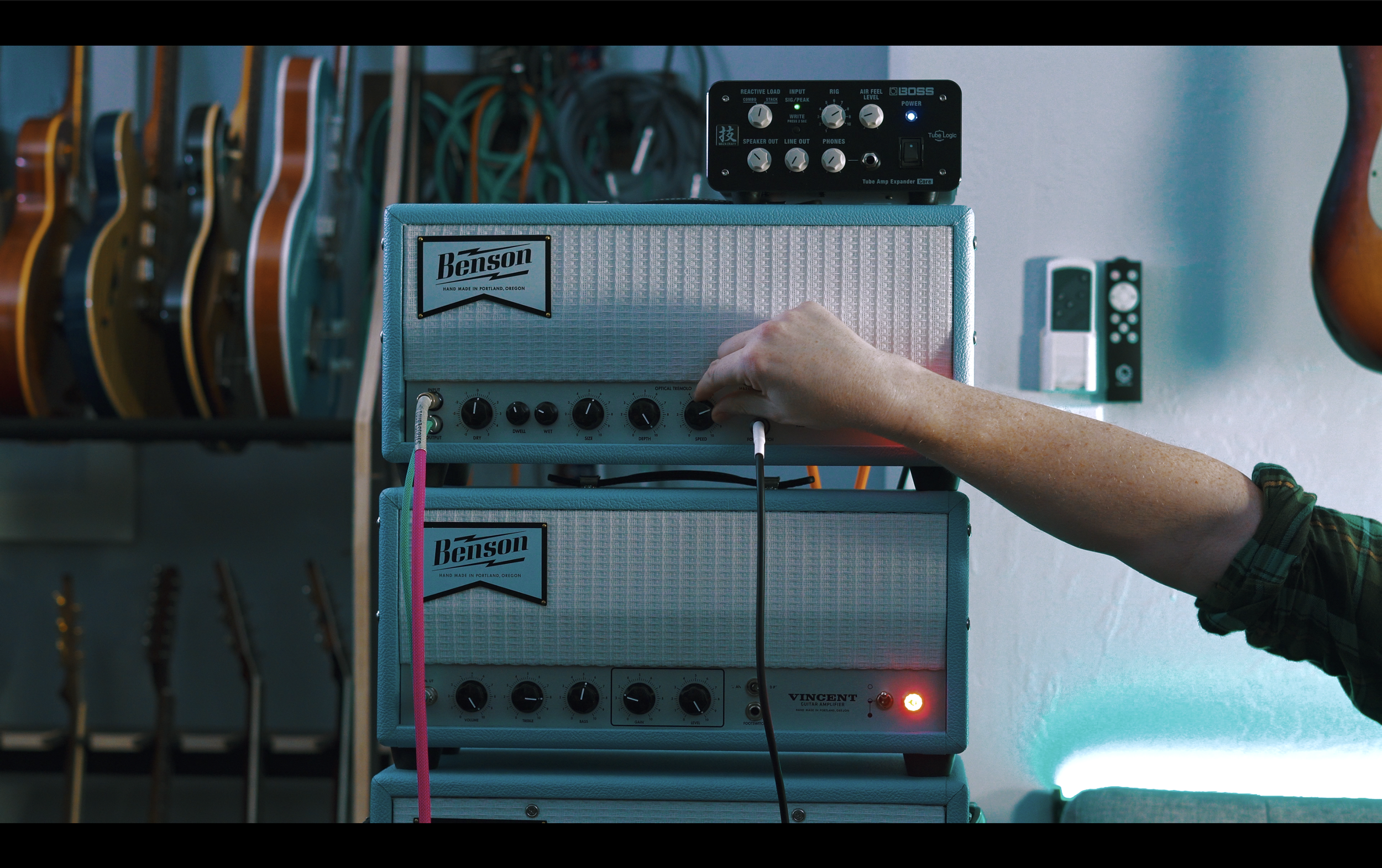
In this episode the KingTone Guitar MiniFuzz V2 takes center stage — featuring the Frank Brothers Arcade Thinline with Lollar The Bird pickups (humbucker-sized Firebirds), into the Benson Amps Monarch and Benson Tall Bird via the Boss Waza Tube Amp Expander and Benson 2x12" cabinet. The KingTone Vibe 1968 joins for the second half of the demo.
The V2 is the convergence of both previous MiniFuzz models into one pedal. The V1 required choosing between silicon or germanium at the time of purchase — the V2 puts both on the front panel via a Type toggle switch. BC183 silicon transistors (matched with the MP10b — KingTone's preferred silicon pairing, tonally identical to their germanium version but temperature-tolerant for hot stages) and hand-selected germanium transistors, switchable mid-performance.
Three-way mode toggle: Fat (full frequency range to the fuzz — classic, warm, low-end rich character), Vintage (simulates aged capacitor degradation — more mid-focused, cutting, closer to a Fuzz Face character), Zonk (mid-range focused gritty tone, especially effective at low bias settings for gated, aggressive textures). Six side-panel dipswitches expand the palette further in a Chase Bliss-style layout: Buffer On/Off (for long cable runs and complex rigs without tone loss), Tone 1 and Tone 2 (four combinations of smoother/silkier tone voicing vs. bright and gritty), Fatness/Classic (extended low-end lift), Vintage/Boost (output level boost to slam amp inputs harder). All accessible without opening the pedal.
The Bias knob is the most player-practical feature. Germanium transistors change character with temperature — what sounds great in a warm studio can behave differently on a cold stage. The MiniFuzz V2's LED indicator shows when the bias is set correctly for the current ambient temperature, eliminating the need to open the pedal and measure internal voltages before every show. Under-biasing gives gated, spitty, starved textures. Over-biasing gives smooth, thick, violin-sustain fuzz. The LED is the reference point between them.
Hand-wired. Battery simulator for DC power supplies. True bypass. 9V center negative.
🎛️ KingTone Guitar MiniFuzz V2: https://www.kingtoneguitar.com
🎸 Frank Brothers Arcade Thinline: https://www.frankbrothersguitars.com
🎸 Lollar The Bird: https://www.lollarguitars.com/lollar-pickups
🔊 Benson Amps: https://www.bensonamps.com/guitar-amplifiers
Subscribe for more boutique tone explorations.
🎸 Frank Brothers Arcade Thinline | Lollar The Bird Humbuckers (Firebird-Voiced)
🎛️ KingTone MiniFuzz V2 | Si/Ge Toggle | Fat/Vintage/Zonk | Bias LED | 6 Dipswitches | BC183 + MP10b
🎛️ Also: KingTone Vibe 1968
🔊 Benson Amps Monarch | Benson Tall Bird | Boss Waza TAE | Benson 2x12"
Recording: Universal Audio Apollo x4 | Lauten Audio LS-208 | Royer R121 & R10 | Sennheiser E906 | Ableton Live 11
Horrothia Effects Triage Germanium Pre-Amplifier
Horrothia Effects returns to the channel with a genuinely new idea in overdrive — the Triage Germanium Pre-Amp. Welcome back to Edge of Breakup.
In this episode the Horrothia Effects Triage Germanium Pre-Amp takes center stage — featuring the Novo Guitars Serus P2 with Lollar Gold Foils and Emerson Custom Treble Bleed, into the Benson Amps Monarch and Benson Tall Bird via the Boss Waza Tube Amp Expander. The Horrothia Berkeley Uni-Vibe and Meris LVX also feature later in the demo.
In Tom Oakes' own words, from Horrothia Effects in Falmouth, UK:
"The Germanium Triage is a slightly re-voiced standard Triage, with a sweepable filter on the output. The filter sends the high frequency content — swept range 50Hz to 15kHz — to a pair of NOS 1N3470 germanium diodes which act as a high frequency compression control. This adds some sizzle to the pedal but without taking away the volume which is often the case with germanium fuzz or overdrive pedals. With the control all the way one way, all frequencies above 50Hz — the whole guitar — are sent through the diodes (imagine fuzzzzz). The other way, the diodes receive only the very highest harmonics — essentially behaving as a standard Triage."
The result is a sweepable germanium clipping control that goes from subtle top-end sizzle to full-range fuzz character — an approach that lets you dial in exactly how much of your frequency spectrum gets the germanium treatment without committing to a fixed fuzz voicing. Every Germanium Triage uses hand-selected diodes and ships in a hammertone finish.
The rest of the circuit: high impedance JFET front end with output control trimmer. Completely discrete transistor op-amp secondary gain stage. HF Balance control. Mid hump/peak switch. Relay bypass. Zinc milspec footswitch. Hand-built one by one in Falmouth, South West UK.
Controls explored in this demo: Ge Diodes filter knob (new to this variant), Gain, Output, Tone, Mids switch, HF Balance.
The Novo Guitars Serus P2 is the work of Dennis Fano — the builder behind the original Novo and Fano guitar lines. The P2 body is chambered swamp ash with an eastern curly maple top and German carve, 24.75" scale, chunky C neck (.880"), quartersawn tempered maple neck, rosewood fingerboard with compound 9.5"-14" radius and MOTO hollow block inlays. This unit has been loaded with Lollar Gold Foils and wired with an Emerson Custom Treble Bleed.
🎛️ Horrothia Effects: https://www.horrothia.com
🎸 Novo Guitars: https://www.novoguitars.com
🎸 Lollar Gold Foil: https://www.lollarguitars.com/lollar-pickups
🔊 Benson Amps: https://www.bensonamps.com/guitar-amplifiers
Subscribe for more boutique tone explorations.
🎸 Novo Guitars Serus P2 | Lollar Gold Foils | Emerson Custom Treble Bleed
🎛️ Horrothia Effects Triage Germanium Pre-Amp | NOS 1N3470 Ge Diodes | Sweepable Filter | JFET + Discrete Op-Amp
🎛️ Also: Horrothia Berkeley Uni-Vibe | Meris LVX
🔊 Benson Amps Monarch | Benson Tall Bird | Boss Waza TAE | Benson 2x12"
Recording: Universal Audio Apollo x4 | Lauten Audio LS-208 | Royer R10 & R121 | Sennheiser E906 | Ableton Live 11
J. Rockett Audio Designs HRM V2
Massive gain texture, Dumble DNA, two years of firsthand research into the real thing. The J. Rockett HRM V2 is exactly what it claims to be. Welcome back to Edge of Breakup.
In this episode the J. Rockett Audio Designs Hot Rubber Monkey V2 takes center stage — featuring the Frank Brothers Ultralight Semi-Hollow with Lollar El Rayo Humbuckers and Lollar Firebird on a Blender Pot, into the Benson Amps Vincent 2x12" via the Boss Waza Tube Amp Expander, with the Effectrode Tube Vibe and Meris LVX.
The Hot Rubber Monkey circuit is J. Rockett's recreation of the Alexander Dumble ODS amp with the HRM (Hot Rubber Monkey) EQ modification — a second tonestack placed post-gain that allows players to shape the overdriven EQ independently of the clean tone. The HRM mod is what gives the Dumble its specific vocal, low-mid-centric character: that throaty, forward midrange presence that sits in exactly the frequency range where a guitar lives in a mix.
For the V2, J. Rockett spent approximately two years living with an actual Dumble amplifier with the HRM EQ mod installed — an experience that led to the complete replacement of the V1's EQ section and the sourcing of carefully selected NOS components. The result is an even more authentic version of a circuit that was already the most convincing D-style pedal they'd built.
Four controls. Level and Gain are highly interactive — they're essentially the same knob played against each other, much like a real amp's volume and master volume. Midrange shapes the important guitar midrange frequencies, controlling the thick low-mid girth. Top End shapes the high frequencies and the amount of bite in contrast to those low mids — not a standard treble knob, but a silvery bell-like presence control. The combination of Midrange and Top End dialed against each other is the entire tonal vocabulary of the HRM sound.
Even at lower gain settings the HRM V2 blooms and feedbacks like the real amp. True bypass. 9V. NOS parts throughout.
🎛️ J. Rockett Audio Designs HRM V2: https://jrockettaudiodesigns.com
🎸 Frank Brothers Ultralight: https://www.frankbrothersguitars.com
🎸 Lollar El Rayo & Firebird: https://www.lollarguitars.com/lollar-pickups
🔊 Benson Amps: https://www.bensonamps.com/guitar-amplifiers
Subscribe for more boutique tone explorations.
🎸 Frank Brothers Ultralight Semi-Hollow | Lollar El Rayo Humbuckers + Lollar Firebird (Blender Pot)
🎛️ J. Rockett HRM V2 | Hot Rubber Monkey | D-Style ODS | HRM EQ Mod | NOS Parts | 4 Controls
🎛️ Also: Effectrode Tube Vibe | Meris LVX
🔊 Benson Amps Vincent 2x12" | Boss Waza TAE
Recording: Universal Audio Apollo x4 | Lauten Audio LS-208 | Royer R10 & R121 | Ableton Live 11
LPD Seventy4 Deluxe
No one makes gain pedals like LPD Pedals. The Seventy4 Deluxe is the definitive proof of that. Welcome back to Edge of Breakup.
In this episode the LPD Pedals Seventy4 Deluxe takes center stage — featuring a new Frank Brothers Arcade build in all-Korina with Seymour Duncan Antiquity Humbuckers and a stunning aged nitro finish, into the Benson Amps Vincent and 2x12" cabinet. The board also includes the R2R Electric Vintage Wah and Pre-Amp, Greer Amps Lightspeed, Effectrode Tube Vibe, and Strymon Volante.
LPD Pedals is Lawrence Petross Design out of Arizona — one of the very few boutique builders who have made the Marshall-in-a-box category genuinely interesting. The Seventy4 name comes from 1974, the year that produced two defining Marshall platforms: the late metal-face Plexi and the newly introduced JMP, the first master volume Marshall. Both are in the Seventy4's tonal DNA.
The Deluxe is the two-channel evolution of the original single-channel Seventy4. Two footswitches: bypass, and channel switch. The channels cannot be stacked — LPD designed the pedal for deliberate, intentional switching between two dialed-in voices rather than cumulative gain stacking. Set them up and switch musically.
Red channel: the original Seventy4 circuit — immediacy, intensity, and the golden-era British full-stack character. Mid-boost voice in the toggle. Green channel: a new, complementary circuit designed specifically to work alongside the Red. It adds low-mid girth to the sonic profile — darker overall, edge-of-breakup territory, the rhythm side. More gain and high-mid presence via the Green voice toggle.
Both channels share a global four-band EQ: Bass, Mids, Treble, and Presence. This is the feature that separates the Seventy4 Deluxe from most amp-in-a-box pedals — with active EQ across the full frequency range, you can dial in the pedal to suit literally any amp or guitar combination. Each channel also has its own independent Gain and Level.
The Frank Brothers Arcade in this demo is an all-Korina build — both body and neck — with a wicked aged nitro finish with checking across the body, neck, and headstock. Seymour Duncan Antiquity Humbuckers installed. Korina is the wood Gibson used in the late '50s Flying V and Explorer — tonally similar to mahogany but lighter, with a slightly more open, airy midrange.
🎛️ LPD Pedals Seventy4 Deluxe: https://www.lpdpedals.com/audiodevices/p/seventy4dlx
🎸 Frank Brothers Guitar Company: https://www.frankbrothersguitars.com
🔊 Benson Amps: https://www.bensonamps.com/guitar-amplifiers
Subscribe for more boutique tone explorations.
🎸 Frank Brothers Arcade | All-Korina | Seymour Duncan Antiquity Humbuckers | Aged Nitro Checking
🎛️ LPD Pedals Seventy4 Deluxe | Red + Green Channels | 4-Band EQ | Voice Toggles | All-Analog
🎛️ Also: R2R Electric Vintage Wah + Pre-Amp | Greer Lightspeed | Effectrode Tube Vibe | Strymon Volante
🔊 Benson Amps Vincent | Benson 2x12"
Recording: Universal Audio Apollo x4 | Lauten Audio LS-208 | Royer R10 & R121 | Sennheiser E906 | Ableton Live 11
R2R Electric MKI Pro Fuzz
Two legendary fuzz circuits from the dawn of British rock, both inside one hand-wired NOS germanium box. The R2R Electric MKI Pro is over the moon. Welcome back to Edge of Breakup.
In this episode the R2R Electric MKI Professional Tone Bender / Zonk Machine takes center stage — featuring the Frank Brothers Ultralight with Lollar Low Wind Imperial Humbuckers, into the Benson Amps Vincent, with the R2R Electric Vintage Wah, Effectrode Tube Vibe, and Strymon Volante later in the demo. A Strat demo is coming separately.
Chris Vincent (@djlavalamp) describes the MKI Pro as his pedalboard-friendly evolution of the MKI Fuzz — the same 100% vintage and NOS hand-wired point-to-point eyelet board construction as all R2R builds, now in a compact enclosure with an LED indicator, true bypass switching with pulldown resistors to eliminate pops, and the defining new feature: a toggle switch between Tone Bender MKI mode and Zonk Machine mode.
The Tone Bender MKI and Zonk Machine are two circuits from 1965 that are close relatives but distinctly different characters. The MKI is Sola Sound's original three-transistor design — the fuzz that Jimmy Page used before the MKII existed, fat and sustaining and full. The Zonk Machine is John Hornby Skewes' version of a similar circuit — more angular, more texturally quirky, a slightly more aggressive and gnarly character. In one pedal, both voices are footswitch-accessible and directly comparable in the same rig.
Components: hand-matched set of Philips/Mullard OC75, Texas Instruments 2G308/303 germanium transistors. Vintage CTS or Stackpole 500K and 50K potentiometers. 1960s Aerovox mouldseal and paper-in-oil input capacitors. NOS ERO KT1801 or STC paper-in-oil .1uf capacitors. Every component tested, measured, and matched individually. Every R2R build is unique in parts used but verified for tonal consistency before it leaves.
Controls: Attack (gain) and Volume. Two knobs. The interaction between Attack, Volume, and your guitar's volume knob is the entire tonal palette.
Get on the R2R Electric mailing list: https://www.r2relectric.com/how-to-order
Follow Chris: https://www.instagram.com/djlavalamp/
🎸 Frank Brothers Ultralight: https://www.frankbrothersguitars.com
🎸 Lollar Low Wind Imperial: https://www.lollarguitars.com/lollar-pickups
🔊 Benson Amps: https://www.bensonamps.com/guitar-amplifiers
Subscribe for more boutique tone explorations.
🎸 Frank Brothers Ultralight | Lollar Low Wind Imperial Humbuckers
🎛️ R2R Electric MKI Professional | NOS Germanium | OC75 + 2G308/303 | Tone Bender MKI + Zonk Machine Toggle
🎛️ Also: R2R Electric Vintage Wah | Effectrode Tube Vibe | Strymon Volante
🔊 Benson Amps Vincent
Recording: Universal Audio Apollo x4 | Lauten Audio LS-208 | Royer R10 & R121 | Sennheiser E906 | Ableton Live 11
Other R2R Electric videos you might like:
https://www.edgeofbreakup.studio/latest-videos/the-best-nos-fuzz-face-r2r-electric-geface-deluxe
https://www.edgeofbreakup.studio/latest-videos/r2r-electric-uniform-fuzz
https://www.edgeofbreakup.studio/latest-videos/electric-machine-fuzz-r2r-electric-zonk-machine
https://www.edgeofbreakup.studio/latest-videos/1959-fender-tweed-deluxe-5e3-vintage-amp-showcase
https://www.edgeofbreakup.studio/latest-videos/r2r-electric-pkiii-fuzz
https://www.edgeofbreakup.studio/latest-videos/r2r-electric-mki-pro-fuzz
https://www.edgeofbreakup.studio/latest-videos/r2r-electric-pre-amp-vintage-wah
Browne Amplification Gritador Overdrive
Dave Brown's favorite overdrive, finally made exactly the way he wants it to sound. The best overdrive I have played in a long time. Welcome back to Edge of Breakup.
In this episode the Browne Amplification Gritador takes center stage — featuring the Giordano Guitars '60s S-Model, into the Benson Amps Vincent and Benson Tall Bird via the Boss Waza Tube Amp Expander, with the R2R Electric Vintage Wah and Effectrode Tube Vibe added later in the demo.
We won't pretend the Tube Screamer hasn't been cloned a thousand times. It has. The question with every new iteration is what the builder actually changed and whether those changes are improvements or just marketing. Browne Amplification's answer is specific and surgical — three targeted modifications to an otherwise faithful recreation of the TS circuit.
First: the midrange. The classic TS mid hump is preserved but refined — more nuanced, the nasal frequency that plagues lesser Screamer-style circuits dialed out. The bump is there, it's just better shaped. Second: the clipping. The stock TS uses symmetrical clipping diodes — Browne has made it slightly asymmetrical, which introduces a more complex, less compressed harmonic signature on the drive. Third: the low end. Fuller and more present than stock, while remaining tight and punchy — the low-end rolloff that makes Tube Screamers feel thin in some rigs has been corrected.
Three knobs: Volume, Drive, Tone. Soft switching with adjustable startup state. Glossy Bullfrog Belly Green finish. 9V, 40mA. The name, for those curious: Gritador means "screamer" in Portuguese.
This is the third Browne Amplification pedal on the channel after the Carbon and the Atom — the third distinct circuit from the same Kansas City builder, and possibly the most universally useful of the three.
🎛️ Browne Amplification Gritador: https://browneamps.com/the-gritador
🎸 Giordano Guitars: https://www.instagram.com/_giordanoguitars_/
🔊 Benson Amps: https://www.bensonamps.com/guitar-amplifiers
Subscribe for more boutique tone explorations.
🎸 Giordano Guitars '60s S-Model
🎛️ Browne Amplification Gritador | TS-Style Overdrive | Asymmetrical Clipping | Bullfrog Belly Green
🎛️ Also: R2R Electric Vintage Wah | Effectrode Tube Vibe | Strymon Volante
🔊 Benson Amps Vincent | Benson Tall Bird | Boss Waza TAE
Recording: Universal Audio Apollo x4 | Lauten Audio LS-208 | Royer R121 & R10 | Sennheiser E906 | Ableton Live 11
R2R Electric Pre-Amp & Vintage Wah
The R2R Electric Pre-Amp and Vintage Wah together — two pieces from the same builder that were made to complement each other. Welcome back to Edge of Breakup.
In this episode the R2R Electric Pre-Amp and Vintage Wah take center stage as a double feature — alongside freshly installed Lollar The Bird Pickups in the Frank Brothers Arcade Thinline, into the Benson Amps Vincent 2x12", with the Greer Amps Lightspeed, LPD Seventy4 Deluxe, Effectrode Tube Vibe, and Strymon Volante all in the mix.
The R2R Electric Pre-Amp is Chris Vincent's (@djlavalamp) input coloring and signal enrichment tool — built with NOS components throughout, designed to add harmonic content and three-dimensional presence to whatever follows it in the chain. Previously featured on the channel with the Frank Brothers Ultralight.
The R2R Electric Vintage Wah is a faithful recreation of the original Clyde McCoy circuit — the wah that defined the sound of Hendrix, Page, and Clapton before anyone knew what a wah actually was. Component list: Halo inductor. Vintage CTS and Centralab potentiometers. NOS 1960s Siemens BC109C silicon transistors. NOS Mullard .22uf Tropical Fish capacitors. Philips 4.7uf capacitor. NOS 1984 JAN paper-in-oil .01uf capacitors. 1962-64 Philips, Piher, and carbon comp resistors. Each unit is unique in the specific components used — the combination varies unit to unit — but every unit is tone-tested for consistency before leaving the shop. The expression controller uses a separate NOS 1970s Centralab potentiometer connected via TRS cable, and with the toggle in the up position becomes a standard expression-controlled wah. In the down position the unit operates as a fixed cocked-wah filter — which is explored in detail from 16:29 onward as a treble booster substitute.
Important note: built to original vintage specs, this wah does not work well with germanium Fuzz Face pedals placed after it in the chain. Silicon fuzz after or germanium fuzz before is the correct order.
The Lollar The Bird Pickups are a full humbucker-sized enclosure housing Lollar's Firebird-voiced mini humbucker circuit — not a traditional PAF humbucker architecture. Neck 6.1K, Bridge 7.4K. Brighter, snappier, and more percussive than a standard Imperial or Low Wind Imperial, with a tight low end and a no-hole cover for the classic Firebird aesthetic. Genuinely sounds like a cross between a hot Jazzmaster and a PAF — its own voice entirely.
Get on the R2R Electric mailing list: https://www.r2relectric.com/how-to-order
Follow Chris: https://www.instagram.com/djlavalamp/
🎸 Lollar The Bird Pickups: https://www.lollarguitars.com/lollar-pickups
🎸 Frank Brothers Guitar Company: https://www.frankbrothersguitars.com
🔊 Benson Amps: https://www.bensonamps.com/guitar-amplifiers
Subscribe for more boutique tone explorations.
🎸 Frank Brothers Arcade Thinline | Lollar The Bird Humbuckers (Neck 6.1K / Bridge 7.4K)
🎛️ R2R Electric Pre-Amp + Vintage Wah | Clyde McCoy Circuit | Halo Inductor | NOS Siemens BC109C | Centralab Pots
🎛️ Also: Greer Lightspeed | LPD Seventy4 Deluxe | Effectrode Tube Vibe | Strymon Volante
🔊 Benson Amps Vincent 2x12"
Recording: Universal Audio Apollo x4 | Lauten Audio LS-208 | Royer R121 & R10 | Sennheiser E906 | Ableton Live 11
Benson Amps Stonk Box Fuzz
You've heard a new fuzz is coming from Benson Amps. The rumors are true — this is the Stonk Box. Welcome back to Edge of Breakup.
In this episode the Benson Amps Stonk Box takes center stage — Benson's Automatic Thermal Bias technology applied to the MKI Tone Bender circuit — featuring the Frank Brothers Arcade Thinline with Righteous Sound RAF Humbuckers, into the Benson Earhart Reverb Combo via the Boss Waza Tube Amp Expander, with the JAM Pedals Ripply Fall and Meris LVX later in the demo.
The backstory matters here. The Tone Bender MKI itself is a modified version of the very first fuzz ever — the Maestro FZ-1, the pedal responsible for the Keith Richards Satisfaction riff and Mick Ronson's Spiders from Mars-era Bowie tone. Chris Benson developed the Stonk Box after David Torn lent him a collection of original vintage fuzzes to compare and contrast. The discovery: no two MKI variants sounded exactly alike. Every original is different — component drift, transistor variance, temperature sensitivity. Germanium transistors change character as they warm up and as the room temperature changes. The Stonk Box's Automatic Thermal Bias circuit solves this permanently.
Plug the Stonk Box into power and wait. The LED will change color as the circuit warms up — 2-3 minutes on average. Once stable, the thermal bias circuit automatically adjusts internal voltages in response to ambient temperature, keeping the germanium transistors at their optimal bias point regardless of conditions. What you dial in at soundcheck is what you get at the end of a three-set gig.
Four controls expand the original MKI's minimal feature set. Filter controls Q1 gain and bias — the primary character knob. Trim is a pre-gain control that sets how hard the signal hits the transistors — cranked to maximum replicates the MKI out of the box. Tone is a low-pass filter that shapes the top-end frequency response. Volume is output level. The interaction between Filter and Trim is where the Stonk Box's tonal range lives — from articulate, almost overdriven fuzz to full sputtering MKI chaos.
Buffer and pedal-order friendly. 9VDC only. No pickup simulation.
🎛️ Benson Amps Stonk Box: https://www.bensonamps.com/guitarpedals/stonkbox
🎸 Frank Brothers Guitar Company: https://www.frankbrothersguitars.com
🎸 Righteous Sound Pickups: https://www.righteoussoundpickups.com
🔊 Benson Amps: https://www.bensonamps.com/guitar-amplifiers
Subscribe for more boutique tone explorations.
🎸 Frank Brothers Arcade Thinline | Righteous Sound RAF Humbuckers (A4 Neck / A2 Bridge)
🎛️ Benson Amps Stonk Box | Automatic Thermal Bias | Germanium | MKI Tone Bender | Filter / Trim / Tone / Volume
🎛️ Also: JAM Pedals Ripply Fall | Meris LVX
🔊 Benson Earhart Reverb Combo 1x12 | Boss Waza TAE
Recording: Universal Audio Apollo x4 | Lauten Audio LS-208 | Royer R-121 & R10 | Sennheiser E906 | Ableton Live 11
O.C.E. Pedals Wrench Fuzz | Humbucker Tones
The Wrench Fuzz with humbuckers — and a very different pairing than the first demo. Welcome back to Edge of Breakup.
In this episode the O.C.E. Pedals Wrench Fuzz returns for a second look — this time featuring the Frank Brothers Ultralight with Lollar Low Wind Imperial Humbuckers, into the Benson Amps Monarch and Benson 2x12" cabinet via the Boss Waza Tube Amp Expander. Watch the first Wrench Fuzz demo with the Giordano single coils here: [LINK TO PREVIOUS DEMO]
The Wrench is Chris Evans' (@o.c.e.pedals, Burbank CA) Fuzz Face-topology silicon fuzz built around 2N2222A transistors with an internal bias trimpot set at 4.5V by default. Two knobs: Volume and Fuzz. The defining characteristic is the guitar volume cleanup — from full-range silicon destruction at guitar volume 10 down to glassy, wiry, harmonically rich lead tones as you roll back.
What the Lollar Low Wind Imperials bring to this circuit that the single coils don't: a wider low-midrange foundation that makes the Wrench feel bigger and more sustaining at full fuzz. The humbuckers' higher output pushes the fuzz input harder, which on a silicon Fuzz Face-style circuit means the transistors saturate earlier and more completely. The result is a slightly more compressed, thicker version of the Wrench's character compared to the single coil demo. The Tone knob becomes more critical here — with full humbucker output the top end can get congested, and rolling it back finds the sweet spot fast.
The cleanup behavior differs meaningfully from the single coil demo too. The Lollar Low Wind's Alnico 2 neck and Alnico 5 bridge have different cleanup curves — the neck in particular rolls off very musically, while the bridge stays tighter through the sweep. Middle position gives a blended character that's explored in the cleanup sections.
🎛️ O.C.E. Pedals: https://ocepedals.com
🎸 Frank Brothers Ultralight: https://www.frankbrothersguitars.com
🎸 Lollar Low Wind Imperial: https://www.lollarguitars.com/lollar-pickups
🔊 Benson Amps: https://www.bensonamps.com/guitar-amplifiers
Subscribe for more boutique tone explorations.
🎸 Frank Brothers Ultralight | Lollar Low Wind Imperial Humbuckers
🎛️ O.C.E. Pedals Wrench Fuzz | 2N2222A Silicon | Fuzz Face Topology | Internal Bias Trimpot
🔊 Benson Amps Monarch | Benson 2x12" | Boss Waza TAE
Recording: Royer R121 & R10 + SM57
Walrus Audio Fundamental Series — Fuzz & Delay
Walrus Audio has no business making pedals this good for under $100. The Fundamental Series Fuzz and Delay debut on the channel today — and they're remarkable. Welcome back to Edge of Breakup.
In this episode the Walrus Audio Fundamental Series Fuzz and Fundamental Series Delay take center stage together — featuring the Frank Brothers Arcade Thinline with Righteous Sound RAF Humbuckers (A4 neck / A2 bridge), into the Benson Amps Monarch, Benson Tall Bird, and Benson 2x12" cabinet via the Boss Waza Tube Amp Expander.
The Fundamental Series is Walrus Audio's challenge to themselves: design eight pedals with professional-grade tonal integrity using the simplest possible control set. Three sliders and a three-way toggle per pedal. Everything essential, nothing superfluous. Designed and assembled in Oklahoma City.
The Fundamental Fuzz is a three-mode aggressive fuzz. Gain, Tone, and Volume sliders — Tone cuts highs when dialed left, cuts lows when dialed right. The three-way toggle covers the character range: Classic is screaming fuzz with an iconic mid scoop, compressed and crunchy — the vintage silicon fuzz character. Mid+ flattens the tone stage with a mid boost, giving a compressed, full, punchy snarl — more PAF-voiced guitar-like. Gate lowers the bias voltage to create gated, spitty, starved fuzz — the dying-battery chaos Jack White built a career on. All three explored in this demo, stacked with the delay and individually.
The Fundamental Delay is three algorithms via slide switch. Digital: clean, transparent repeats with rhythmic definition. Analog: filtered and slightly distorted repeats designed to replicate bucket brigade delay character — warm, slightly wobbly, tape-adjacent. Reverse: reversed trails for building melody or pushing feedback into overload. Tap tempo by holding the bypass switch until the LED flashes. Buffered bypass with trails mode on by default.
The Righteous Sound RAF (Righteousness Applied For) Humbuckers are vintage-accurate PAF replicas — 49.2mm PAF-spec butyrate bobbins, USA-made pole screws and slugs, period-correct 42AWG plain enamel wire, vintage single braid wiring, custom fabricated nickel PAF-clone covers with no copper undercoat. This specific set: Alnico 4 in the neck, Alnico 2 in the bridge — the Derek Trucks-inspired configuration. Neck DC 7.2–7.5K / Bridge DC 7.6–7.8K. The A4 neck brings clarity and articulation; the A2 bridge brings warmth, bloom, and open harmonic complexity.
🎛️ Walrus Audio Fundamental Fuzz: https://www.walrusaudio.com/products/fundamental-series-fuzz
🎛️ Walrus Audio Fundamental Delay: https://www.walrusaudio.com/products/fundamental-series-delay
🎸 Righteous Sound Pickups: https://www.righteoussoundpickups.com
🎸 Frank Brothers Guitar Company: https://www.frankbrothersguitars.com
🔊 Benson Amps: https://www.bensonamps.com/guitar-amplifiers
Subscribe for more boutique tone explorations.
🎸 Frank Brothers Arcade Thinline | Righteous Sound RAF Humbuckers (A4 Neck / A2 Bridge)
🎛️ Walrus Audio Fundamental Fuzz (Classic / Mid+ / Gate) + Fundamental Delay (Digital / Analog / Reverse)
🔊 Benson Amps Monarch | Benson Tall Bird | Boss Waza TAE | Benson 2x12"
Recording: Universal Audio Apollo x4 | Lauten Audio LS-208 | Royer R10 & R121 | Sennheiser E906 | Ableton Live
Acorn Amps Solid State Preamplifier
The preamp section of the studio's secret weapon solid state amp — in a pedalboard-friendly box at half the price. Welcome back to Edge of Breakup.
In this episode the Acorn Amps Solid State Preamplifier takes center stage — featuring a Frank Brothers guitar loaded with Righteous Sound Gazing 1991 Pickups, into the Benson Amps Monarch and Benson 2x12" cabinet via the Boss Waza Tube Amp Expander. Watch the original Acorn Solid State demo here: [LINK TO PREVIOUS ACORN DEMO]
The backstory: in a 2021 interview, a relatively overlooked 10-watt Peavey solid state practice amp was revealed to be a studio secret weapon for achieving wiry, aggressive tones for guitar, bass, drums, and vocals — the Peavey Decade. The buzz was enough for Peavey themselves to reissue it. Acorn Amplifiers, based in Atlanta, went further: they built the Solid State, a faithful recreation of the Decade's full circuit including a power amp section capable of driving a real speaker cab from a 9V power supply. This is the preamp-only version of that pedal — same tone, smaller enclosure, half the price.
The Solid State Preamplifier features the Normal and Saturated channels of the original Decade as foot-switchable tone modes. Normal is wiry, sparkling clean drive — the Decade's famous studio character, bright and cutting, with complex harmonic response that behaves like a pushed tube amp even though there's not a tube in the circuit. Saturated is harsher, more aggressive gain — what happens when you push the Decade hard.
Five knobs cover Pre (input gain), Post (output level), and a three-band EQ. The Thick toggle adds heavy low end, additional gain, and a signal boost — and critically, this feature is not available on the original powered Solid State. It's an exclusive addition to the preamp version. The translucent backlit logo indicates which channel is active — Normal or Saturation — at a glance on a dark stage.
The Righteous Sound Gazing 1991 Pickups are designed around the shoegaze era — the early '90s studio recordings made famous in part by solid state amp distortion. The name says it all. Into the Solid State Preamplifier, they're exactly the right pairing.
True bypass. 9-18VDC, higher headroom at 18V. Under 100mA current draw. 1590B aluminum enclosure.
🎛️ Acorn Amps Solid State Preamplifier: https://www.acornamps.com/gear/solid-state-preamplifier
🎸 Righteous Sound Pickups: https://www.righteoussoundpickups.com
🔊 Benson Amps: https://www.bensonamps.com/guitar-amplifiers
Subscribe for more boutique tone explorations.
🎸 Frank Brothers Guitar | Righteous Sound Gazing 1991 Pickups
🎛️ Acorn Amps Solid State Preamplifier | Normal + Saturation Channels | Thick Switch | 3-Band EQ | 9-18V
🔊 Benson Amps Monarch | Benson 2x12" | Boss Waza TAE
J. Rockett Audio Designs Archer Select
The most versatile Klon-style overdrive ever made — seven clipping diode options, a direct output with cab sim, and all the Archer DNA intact. Welcome back to Edge of Breakup.
In this episode the J. Rockett Audio Designs Archer Select takes center stage — featuring the Frank Brothers Arcade Goldtop with Righteous Sound Monte P90s, into the Benson Amps Monarch. No direct tones in this demo — this is the Archer Select straight into the amp, the way it deserves to be heard first.
The Archer is J. Rockett's faithful interpretation of the Klon Centaur — the most mythologized overdrive in history. The Archer Select takes that foundation and adds two meaningful upgrades: a selectable clipping diode system with six additional options beyond the stock OA10 germanium, and a DI output with a built-in British 4x12 cabinet simulator for direct recording or FOH.
The clipping diode system is the centerpiece. The right footswitch is the main bypass — standard Archer behavior. The left footswitch engages whichever diode is selected on the Clipping rotary dial. With the Clipping switch off, you get the stock OA10 germanium diodes — the same warm, sweet compression of the original Archer. Engage the switch and you access the rotary, which moves from lowest to highest output: 1N270 (germanium, NOS), 1N695 (germanium, NOS), 1N34A (germanium, NOS — the same diode Bill Finnegan used in the original Klon Centaur), D9B (germanium, NOS), D9E (germanium, NOS), and Red LED (highest output, least compressed, most aggressive). The differences between the germanium options are subtle — this is a clipping circuit, and at Klon-typical low gain settings you may not hear much. At higher gain the character differences open up. The Red LED is the outlier — significantly louder and less compressed, usable as a volume boost or a genuinely different second channel.
This demo is explored in two primary modes: gain mid-to-maxed with the clipping diodes swapping in and out to hear the character differences, and low gain with level pushed hard into the Benson Monarch — the classic Klon use case, where the pedal is driving the amp's input stage rather than generating its own clipping.
🎛️ J. Rockett Audio Designs Archer Select: https://jrockettaudiodesigns.com
🎸 Frank Brothers Arcade: https://www.frankbrothersguitars.com
🎸 Righteous Sound Pickups: https://www.righteoussoundpickups.com
🔊 Benson Amps: https://www.bensonamps.com/guitar-amplifiers
Subscribe for more boutique tone explorations.
🎸 Frank Brothers Arcade Goldtop | Righteous Sound Monte P90s
🎛️ J. Rockett Audio Designs Archer Select | 7 Clipping Diodes | OA10 + 5 NOS Ge + Red LED | DI + Cab Sim
🔊 Benson Amps Monarch
O.C.E. Pedals Wrench Fuzz
The Wrench Fuzz caught fire after The JHS Show — and I grabbed the last one in stock. Absolutely worth the hype. Welcome back to Edge of Breakup.
In this episode the O.C.E. Pedals Wrench Fuzz takes center stage — featuring the Giordano Guitars '60s S-Model, into the Benson Amps Monarch and Benson 2x12" cabinet via the Boss Waza Tube Amp Expander.
O.C.E. Pedals is Chris Evans of Burbank, California (not the actor, as the internet keeps noting). His stated goal: build pedals with personality. The Wrench delivers completely on that. The Wrench is an evolution of a 2021 two-transistor fuzz circuit, modded for lower noise and more modern build techniques. The 2N2222A silicon transistors give it an aggressive sound that shines with humbuckers without losing the cleanup quality expected with classic two-transistor fuzzes.
The circuit is Fuzz Face topology — two transistors, Volume and Fuzz knobs, true bypass. But the implementation matters. An internal bias trimpot allows setting the effect's voltage, with a default at 4.5V — dial it back for spit and splat, push it for a tighter, more aggressive fuzz character.
What defines the Wrench is how it responds to the guitar volume knob. Fuzz maxed with guitar volume dimed: enormous, sustaining, full-range Fuzz Face destruction — everything Hendrix, Clapton, and Page used this topology for. Roll the guitar volume back to 3 or 4: the transistors clear up into glassy, wiry, scraping lead tones with complex harmonic texture. That cleanup transition is the Wrench's signature. In this demo it's explored at every point in the sweep, in every pickup position.
All O.C.E. Pedals are built with lead-free solder and quality components.
🎛️ O.C.E. Pedals: https://ocepedals.com
🎸 Giordano Guitars: https://www.instagram.com/_giordanoguitars_/
🔊 Benson Amps: https://www.bensonamps.com/guitar-amplifiers
Subscribe for more boutique tone explorations.
🎸 Giordano Guitars '60s S-Model
🎛️ O.C.E. Pedals Wrench Fuzz | 2N2222A Silicon | Fuzz Face Topology | Internal Bias Trimpot
🔊 Benson Amps Monarch | Benson 2x12" | Boss Waza TAE
Recording: Royer R121 & R10 + SM57
Origin Effects M-EQ Driver
A faithful reimagination of the UA 610 preamp — applied to guitar overdrive. Origin Effects is back on the channel. Welcome back to Edge of Breakup.
In this episode the Origin Effects DCX Boost takes center stage — alongside the Origin Effects Revival Drive Compact and Deluxe61, all featuring the Giordano Guitars '60s S-Model, into the Benson Amps Monarch 2x12" via the Boss Waza Tube Amp Expander.
The DCX Boost is Origin Effects' translation of the Universal Audio 610 recording preamp into a guitar pedal. The 610 is one of the most prized studio tube preamps in existence — famous for adding vintage analog color and harmonic richness to anything run through it, at any gain level. Push the level and you get rich harmonic saturation of the kind that makes analog hardware a must-have in present-day studios.
Four knobs: Level, Drive, LF (Low Frequency), HF (High Frequency). Two switches: Mode (EQ or OD) and Voice (Dark, Flat, Medium treble rolloff).
In EQ mode, Origin's Adaptive Circuitry keeps the top end completely flat when the signal is clean, with a subtle treble rolloff that progressively increases as the pedal begins to overdrive — responding to playing dynamics and guitar volume knob changes for a seamless transition between warmer overdrive tones and sparkling cleans. In OD mode, the treble rolloff is always active regardless of dynamics — a more consistent, higher-gain voicing.
The LF and HF knobs give precise control over bass and treble at frequencies specifically chosen for electric guitar, designed to deliver powerful EQ shaping without sacrificing low-end clarity or overemphasising upper harmonics. Boost bass without mud. Boost treble without harshness. Fully flat at noon on both controls.
The gain range spans clean boost through direct-to-console color through edge-of-breakup to quasi-fuzz at maximum Drive — the full sweep of what a cranked studio preamp can sound like. This demo explores the OD mode in depth, then the EQ mode, and then the DCX slamming both the Deluxe61 and the Revival Drive Compact.
🎛️ Origin Effects DCX Boost: https://origineffects.com/product/dcx-boost/
🎸 Giordano Guitars: https://www.instagram.com/_giordanoguitars_/
🔊 Benson Amps: https://www.bensonamps.com/guitar-amplifiers
Subscribe for more boutique tone explorations.
🎸 Giordano Guitars '60s S-Model
🎛️ Origin Effects DCX Boost | UA 610 Inspired | EQ + OD Mode | Adaptive Circuit | LF/HF EQ
🎛️ Also: Origin Effects Revival Drive Compact | Origin Effects Deluxe61
🔊 Benson Amps Monarch 2x12" | Boss Waza TAE
Walrus Audio Fable
Granular resampling meets delay — and it grabbed me immediately. The Walrus Audio Fable is a genuinely different kind of pedal. Welcome back to Edge of Breakup.
In this episode the Walrus Audio Fable Granular Soundscape Generator takes center stage — featuring the Frank Brothers Signature with Lollar '50s Wind P90 (neck) and Lollar Low Wind Imperial (bridge), into the Benson Amps Monarch cranked with guitar volume for cleanup, Fable running in the effects loop of the Boss Waza Tube Amp Expander. Also: first appearance of the Lauten Audio LS-208 Condenser in the recording rig — immediately hooked.
Granular synthesis is a digital technique where audio is sliced into tiny fragments called grains, manipulated individually (reversed, pitch-shifted, time-stretched, randomized), and reassembled. The Fable applies this to a dual-DSP delay architecture where your signal passes through two separate effects in series — independently controlled by the Feedback and Regen knobs — and then recirculates through both chips again. The result ranges from smooth lush ambience to organic reverberance to chaotic glitchy swarms, depending on the program and the Feedback/Regen relationship.
Five programs, all explored in this demo:
Program I — Reverse Delay into Reverse Granular. Unique ping-pong effects as grains reverse and then re-reverse with feedback building.
Program II — Forward Delay into Octave Up Granular. Exaggerates pitched effects with the feedback parameters — shimmery, ascending.
Program III — Analog-Style Delay into Octave Down Granular. Dense and low, with the delay's analog character feeding the pitch-down granular engine.
Program IV — Multi-Tap Granular into Multi-Tap Granular (Grain-Verb). Time in this program controls time-stretching of both algorithms, changing the length and tonal character simultaneously.
Program V — Forward Delay into Randomized Pitch Granular. Each grain is played back at a randomly selected speed and direction — pitched up, pitched down, normal, forward, or reversed from grain to grain. The X knob controls the rate of randomized pitch modulation.
Eight knobs total: Feedback, Regen, Mod, Mix, X, Time, Tone, Program. Tap tempo. Trails on bypass.
🎛️ Walrus Audio Fable: https://www.walrusaudio.com/products/fable-granular-soundscape-generator
🎸 Frank Brothers Signature: https://www.frankbrothersguitars.com
🎸 Lollar Pickups: https://www.lollarguitars.com/lollar-pickups
🔊 Benson Amps: https://www.bensonamps.com/guitar-amplifiers
Subscribe for more boutique tone explorations.
🎸 Frank Brothers Signature | Lollar '50s Wind P90 (Neck) + Low Wind Imperial (Bridge)
🎛️ Walrus Audio Fable | Granular Soundscape Generator | 5 Programs | Dual DSP
🔊 Benson Amps Monarch (Effects Loop via Boss Waza TAE)
Recording debut: Lauten Audio LS-208 Condenser
Chase Bliss Gravitas Tremolo
The Chase Bliss Gravitas with a Telecaster and the Benson Vincent — clean and dirt — is exactly as good as it sounds. Welcome back to Edge of Breakup.
In this episode the Chase Bliss Gravitas Analog Tremolo takes another run through its paces — this time with a Telecaster loaded with Lollar Pickups, into the Benson Amps Vincent clean and dirt channels.
If you missed the first Gravitas demo, the short version: the Gravitas is 100% analog signal path, built around Analog Devices AD823 op-amps, with a digital brain controlling every parameter for a depth of modulation control that purely analog circuits can't achieve. It is discontinued — find one used.
This demo goes deeper into two specific features that weren't fully explored in the first video.
Waveform mixing. The Gravitas lets you set the initial waveform shape and the end waveform shape independently — the tremolo morphs between them over the cycle. Sine to Sine is the classic smooth tremolo. Both to Square is the choppy, gated stutter. But Sine to Square, Triangle to Sine, or any combination in between creates hybrid tremolo characters that are genuinely their own sounds. Fast Square-to-Sine mimics reverse guitar attack — the note starts with a sharp cut and releases softly, the opposite of natural guitar decay. That's at 05:05.
The Ramp knob. When assigned via dipswitch to Rate, the Ramp causes the tremolo speed to change gradually over time — it accelerates and decelerates on a curve set by the Ramp knob. The result at moderate settings is an ebb-and-flow tremolo that breathes on its own schedule, independent of your playing. When assigned to Tone, the Ramp cycles the tonal shaping across the amplitude tremolo — harmonic tremolo character appearing and disappearing at a rate separate from the main Rate control. The exploration from 09:31 onward is where this gets genuinely strange and useful.
This pedal is discontinued. Find one while you can.
🔍 Search for Chase Bliss Gravitas on Reverb: https://reverb.com/marketplace?query=chase+bliss+gravitas
🔊 Benson Amps: https://www.bensonamps.com/guitar-amplifiers
🎸 Lollar Pickups: https://www.lollarguitars.com/lollar-pickups
Subscribe for more boutique tone explorations.
🎸 Telecaster | Lollar Pickups
🎛️ Chase Bliss Audio Gravitas | Analog Tremolo | Waveform Mixing | Ramp | Dipswitches
🔊 Benson Amps Vincent
R2R Electric Rangemaster OC44
The pedal version of the best Rangemaster I've ever played — this time with OC44 black glass germanium transistors. Welcome back to Edge of Breakup.
In this short demo the R2R Electric R2RGeMaster Treble Booster (pedal format, OC44 black glass version) takes center stage — running with the Frank Brothers Arcade Goldtop loaded with Lollar Mini Humbuckers, into the Benson Amps Monarch.
I demoed the amp-top-box version of the R2RGeMaster a few months ago and loved it immediately. The amp-top version featured NOS Philips/Mullard AC107 black glass transistors with a 6-position NOS input capacitor switch. This is the standalone pedal format version — and Chris has built this one around OC44 black glass germanium transistors, a different but equally exceptional NOS device with its own character. The OC44 is a particularly sought-after transistor for treble booster circuits — tight in the low end with a cutting, glassy top that opens up the high-mid harmonic content of whatever guitar signal it receives.
The Lollar Mini Humbuckers installed in the Frank Brothers Arcade Goldtop are a genuinely interesting pairing for a treble booster — the Mini Humbucker sits tonally between a full humbucker and a single coil, with a clear, bright top end that reveals the R2RGeMaster's character clearly at every gain position of the guitar volume knob. The glassy setting explored at 01:52 is the one I keep coming back to.
Get on the R2R Electric mailing list — it's the only way to get one: https://www.r2relectric.com/how-to-order
Follow Chris: https://www.instagram.com/djlavalamp/
🎸 Frank Brothers Guitar Company: https://www.frankbrothersguitars.com
🎸 Lollar Mini Humbucker: https://www.lollarguitars.com/lollar-pickups
🔊 Benson Amps: https://www.bensonamps.com/guitar-amplifiers
Subscribe for more boutique tone explorations.
🎸 Frank Brothers Arcade Goldtop | Lollar Mini Humbuckers | B5 Bigsby
🎛️ R2R Electric R2RGeMaster Treble Booster | OC44 Black Glass | Pedal Format
🔊 Benson Amps Monarch
Other R2R Electric videos you might like:
https://www.edgeofbreakup.studio/latest-videos/the-best-nos-fuzz-face-r2r-electric-geface-deluxe
https://www.edgeofbreakup.studio/latest-videos/r2r-electric-uniform-fuzz
https://www.edgeofbreakup.studio/latest-videos/electric-machine-fuzz-r2r-electric-zonk-machine
https://www.edgeofbreakup.studio/latest-videos/1959-fender-tweed-deluxe-5e3-vintage-amp-showcase
https://www.edgeofbreakup.studio/latest-videos/r2r-electric-pkiii-fuzz
https://www.edgeofbreakup.studio/latest-videos/r2r-electric-mki-pro-fuzz
https://www.edgeofbreakup.studio/latest-videos/r2r-electric-pre-amp-vintage-wah
Cornerstone Imperivm Dual Overdrive | Humbucker Tones
Second run with the Cornerstone Imperivm — this time with humbuckers and a Firebird in the mix. Welcome back to Edge of Breakup.
In this episode the Cornerstone Imperivm takes center stage — the new successor to the Gladio Double Preamp — featuring the Frank Brothers Ultralight with Lollar El Rayo Humbuckers and Lollar Firebird in the middle position on a Blender Pot, into the Benson Amps Monarch.
Watch the first demo with the Giordano '60s S-Model single coils here: https://www.youtube.com/watch?v=YNSjUADdqz4
The Imperivm combines the Gladio SC (Dumble-inspired) on the right and the Antique (TS808-inspired) on the left — each with their own footswitch and a stacking Order switch. Both sides are explored individually and stacked in both directions in this demo.
The El Rayo Humbucker is a particularly compelling pairing with the Gladio's Dumble-voiced circuit. The El Rayo is itself designed for single-coil-like clarity in a humbucker format — Alnico 5 magnets, 3.5K neck / 4.0K bridge, percussive attack — so the combination with the Gladio's compressed, harmonically rich voicing doesn't get muddy the way a hotter humbucker might. The Clean knob on the Gladio side does significant work here, blending the dry signal to preserve the El Rayo's native character under the drive.
The Lollar Firebird in the Blender Pot middle position adds single-coil clarity and mid-forward brightness to either or both humbucker positions — a significant tonal resource throughout this demo, particularly useful for cutting through the Gladio's compression.
The Antique side in this demo benefits from the Mids switch and Presence knob being explored in more detail — the higher-output humbucker context reveals how the Antique's TS-derived mid hump stacks differently than with single coils.
🎛️ Cornerstone Imperivm: https://www.cornerstonemusicgear.com/product/imperium2/
🎸 Frank Brothers Ultralight: https://www.frankbrothersguitars.com
🎸 Lollar El Rayo & Firebird: https://www.lollarguitars.com/lollar-pickups
🔊 Benson Amps: https://www.bensonamps.com/guitar-amplifiers
#Cornerstone #Imperivm #Gladio #Antique #DumbleOverdrive #TubeScreamer #FrankBrothers #LollarPickups #BensonAmps #GuitarPedals #GuitarTone #GuitarDemo #BoutiqueOverdrive #Humbucker #EdgeOfBreakup
Subscribe for more boutique tone explorations.
🎸 Frank Brothers Ultralight | Lollar El Rayo Humbuckers + Lollar Firebird (Blender Pot)
🎛️ Cornerstone Imperivm | Gladio SC (Dumble) + Antique (TS808) | Stackable | Order Switch
🔊 Benson Amps Monarch
Browne Amplification Atom Overdrive
Browne Amplification is back on the channel with their latest standalone overdrive — and it's the other half of the Protein. Welcome back to Edge of Breakup.
In this episode the Browne Amplification Atom Nashville Overdrive takes center stage — with the Browne Carbon also on board for stacking, plus the Universal Audio Starlight, Strymon Lex, Caroline Guitar Arigato, and JAM Pedals Fuzz Phrase all explored in the later portion of the demo — into the Nash T63 Telecaster with Lollar Pickups, Benson Amps Monarch and Benson Tall Bird, Benson 2x12" cabinet via the Boss Waza TAE.
The Atom is the "green side" of the Browne Protein Dual Overdrive now available as a standalone pedal. Pairing it with the Carbon (the "blue side") gives you the exact equivalent of the Protein, but with the freedom to put effects between the two circuits, reverse the stacking order, or place them across a larger pedalboard where the Protein's footprint might not fit.
The Atom takes the Nashville drive pedal — the Nobels ODR-1 — as its starting point, incorporating tonal ingredients from the Ibanez Tube Screamer: the smoother, fuller-bottomed nature of the ODR-1 combined with the more mids-focused snarl of TS-type circuits. Browne lowered the gain across the full sweep, adjusted the EQ section to be less scooped, restored midrange, and tightened the low end — adding the right amount of low-mid beef without muddiness. The redesigned power section makes it feel more like a tube amp being worked hard.
The result is an overdrive that makes a quiet or thin-sounding amp feel like it's pushing air and has real weight behind the notes. Three knobs: Volume, Gain, Tone. Soft switching, adjustable startup state, top-mounted jacks. Flat Dark Earth matte powder coat.
Stacked with the Carbon later in the demo — Atom into Carbon, then Carbon into Atom — the two circuits reveal a dramatically different character in each direction.
🎛️ Browne Amplification Atom: https://browneamps.com/the-atom
🎛️ Browne Amplification Carbon: https://browneamps.com/thecarbon
🎸 Nash Guitars T63: https://nashguitarsusa.com
🎸 Lollar Pickups: https://www.lollarguitars.com/lollar-pickups
🔊 Benson Amps: https://www.bensonamps.com/guitar-amplifiers
Subscribe for more boutique tone explorations.
🎸 Nash T63 Telecaster | Lollar Pickups
🎛️ Browne Amplification Atom | Nashville Overdrive | ODR-1 + TS Hybrid | Standalone Protein Green Side
🎛️ Also: Browne Carbon | UA Starlight | Strymon Lex | Caroline Arigato | JAM Pedals Fuzz Phrase
🔊 Benson Amps Monarch | Benson Tall Bird | Boss Waza TAE | Benson 2x12"
Recording: Universal Audio Apollo x4 | Royer R121 + SM57 + Royer R10 + Sennheiser E906 | Ableton Live 11
Ground Control Audio Bread Oath Overdrive
The hits keep coming in 2023. Ground Control Audio's Bread Oath is a thoughtfully evolved overdrive that earns its place on the board immediately. Welcome back to Edge of Breakup.
In this episode the Ground Control Audio Bread Oath Overdrive takes center stage — featuring the Frank Brothers Signature with Lollar '50s Wind P90 and Lollar Low Wind Imperial Humbucker, into the Benson Amps Monarch.
Built around the foundation of Ground Control's very first pedal — 2016's Blood Oath — the Bread Oath retains the character that made the original unique while offering revised filters, tighter tonal response, and over six years of user feedback incorporated into the design. Ground Control is a Montreal boutique builder — the Bread Oath is the evolution of company owner Sébastien Vézina's original signature circuit.
An opamp-based, low-to-mid gain overdrive designed to push an amp into breakup and add flexible flavors of diode clipping. Four controls: Volume (output), Gain (main clipping stage), Tone (rolls off highs entering the clipping stage), and Pre (controls the secondary preamp stage gain).
The key feature is the dual clipping architecture. A top-mounted toggle selects between silicon diodes (tighter, more modern, more compressed character) and germanium diodes (more open, rawer, vintage character). These aren't radical differences — they're the subtle textural shift that makes a real difference in context, particularly with the Frank Brothers Signature's ability to blend a P90 and a humbucker simultaneously.
A separate pre-gain stage can be engaged via the left footswitch. This stage sits before the clipping diodes, driving them harder for additional bite and saturation. A low-pass filter between the two gain stages shaves high-end harmonics from the pre-gain stage to avoid harsh distortion. The Pre level is set independently with its own knob — dial it in for just a touch of extra cut during leads, or max it for significantly more gain and presence.
Built in Canada. True bypass. 9V DC center negative, no battery.
🎛️ Ground Control Audio Bread Oath: https://www.groundcontrolaudio.com
🎸 Frank Brothers Signature: https://www.frankbrothersguitars.com
🎸 Lollar Pickups: https://www.lollarguitars.com/lollar-pickups
🔊 Benson Amps: https://www.bensonamps.com/guitar-amplifiers
Subscribe for more boutique tone explorations.
🎸 Frank Brothers Signature | Lollar '50s Wind P90 + Lollar Low Wind Imperial
🎛️ Ground Control Audio Bread Oath | Opamp OD | Si/Ge Clipping | Pre Boost Footswitch
🔊 Benson Amps Monarch