

Edge of Breakup
Video Categories
Cunningham Amps Zonk MKI Fuzz Pedal
The Cunningham Amps Zonk MKI Pedalboard Edition returns — this time with humbuckers, to show the other half of what this NOS germanium dual fuzz can do. Welcome back to Edge of Breakup.
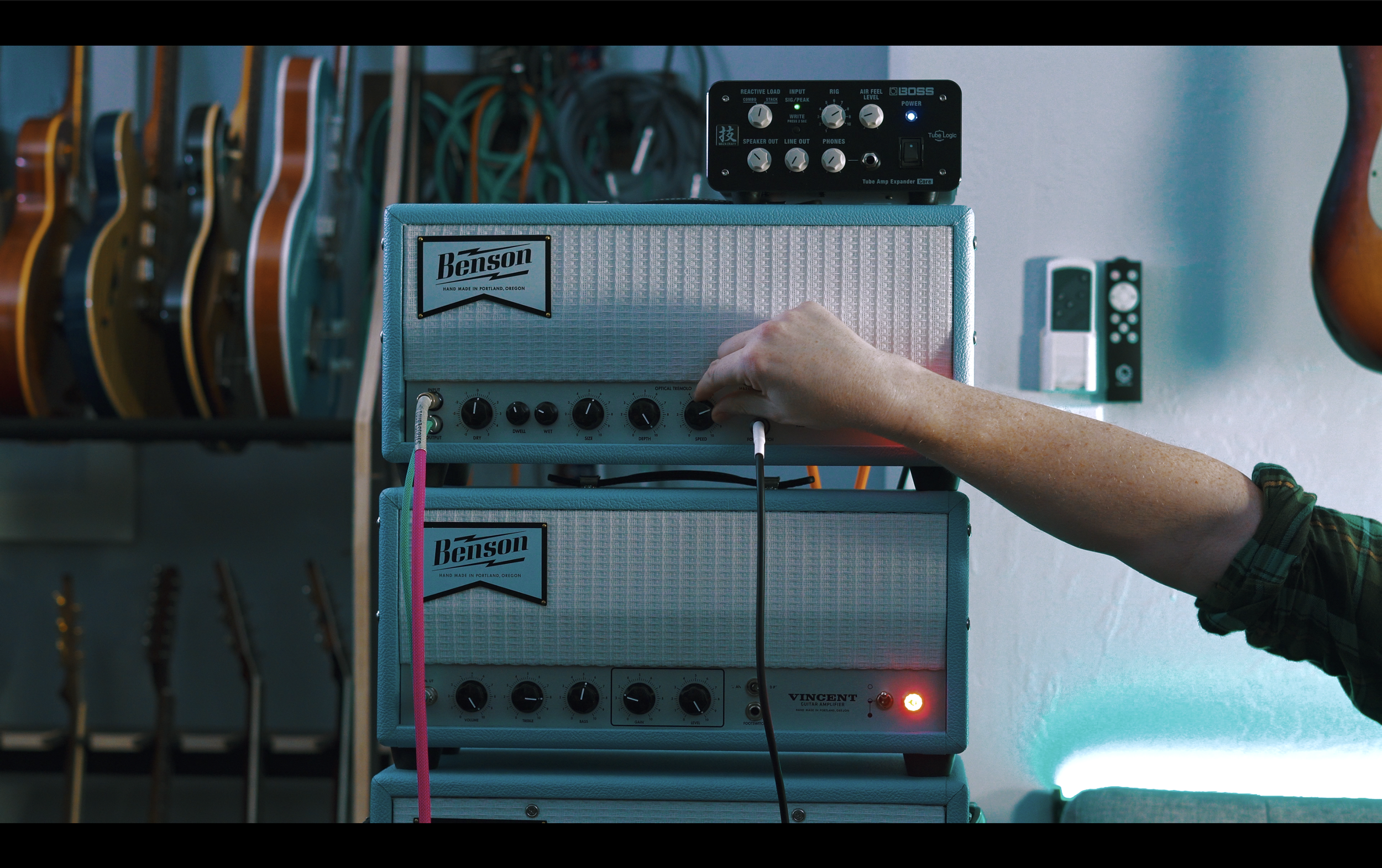
In this episode the Cunningham Amps Zonk MKI Pedalboard Edition takes a second run — featuring the Frank Brothers Arcade with Seymour Duncan Antiquity Humbuckers, into the Benson Amps Vincent via the Boss Waza Tube Amp Expander with Benson Tall Bird Reverb in the effects loop. The Strymon Volante, R2R Electric Vintage Wah, and Effectrode Tube Vibe also feature.
Watch the first Zonk MKI Pedalboard Edition demo with the Giordano Guitars single coils here: https://youtu.be/jsbdWrYMtho
Get on the Cunningham Amps email list and follow Tim on Instagram — limited drops go extremely quickly: https://www.cunninghamamps.co.nz
Quick recap: the Zonk MKI Pedalboard Edition is Tim Cunningham's compact-format dual fuzz housing both the Hornby Skewes Zonk Machine and Sola Sound Tone Bender MKI circuits in one enclosure. This run features NOS Texas Instruments 2N1307 (Q1), Black Glass OC45 (Q2), and Texas Instruments 2G308 (Q3) germanium transistors, hand-matched and individually biased. The MKI input capacitor is ten times larger than the Zonk's — fuller bass and midrange, throatier attack. The Zonk is more angular, more gating, more gnarly character. Mode switch selects between them. Fuzz/Attack and Swell/Level are the two controls.
What humbuckers reveal here that single coils don't: the Seymour Duncan Antiquity's higher output — particularly in the neck position — pushes the germanium transistors earlier into saturation, giving the MKI mode a fatter, more compressed character at identical fuzz settings. The Zonk mode's gating behavior is less dramatic with the higher-output humbucker signal, which paradoxically makes it feel more controlled and usable across a wider portion of the Fuzz sweep. The octavia-like tones that emerge at 08:01 with the Strymon Volante and guitar volume rolled back are a direct result of the humbucker's output interacting with the NOS transistors at a specific bias point.
The "cannot set it wrong" moment in this demo — 13:11, adjusting Fuzz and Volume in different amounts across both modes — is the best demonstration of the circuit's essential character. Two knobs, two modes, infinite useful results.
🎛️ Cunningham Amps: https://www.cunninghamamps.co.nz
🎸 Frank Brothers Guitar Company: https://www.frankbrothersguitars.com
🔊 Benson Amps: https://www.bensonamps.com/guitar-amplifiers
Subscribe for more boutique tone explorations.
🎸 Frank Brothers Arcade | Seymour Duncan Antiquity Humbuckers
🎛️ Cunningham Amps Zonk MKI Pedalboard Edition | NOS Ge (2N1307 / OC45 / 2G308) | Zonk Machine + Tone Bender MKI
🎛️ Also: Strymon Volante | R2R Electric Vintage Wah | Effectrode Tube Vibe
🔊 Benson Amps Vincent | Benson Tall Bird | Boss Waza TAE
Recording: Universal Audio Apollo x4 | Lauten Audio LS-208 | Royer R121 & R10 | Sennheiser E906 | Ableton Live 11
Meris MercuryX
The hottest reverb release of 2023 — Meris is back on the channel with the MercuryX. Welcome back to Edge of Breakup.
In this episode the Meris MercuryX Modular Reverb System takes center stage — Presets 1 through 10, tweaked to taste — featuring the Kauer Banshee with Lollar Pickups, recorded in true stereo with the Benson Amps Monarch and Milkman Super Creamer running simultaneously, mic'd with Royer R10/R121, Lauten LS-208, and Sennheiser E906. The Mask Audio Electronics Part Garden Germanium Fuzz joins throughout.
The MercuryX is what happens when Meris takes the Mercury7's legendary algorithms — Ultraplate and Cathedra, both inspired by the moody sci-fi reverb textures of Blade Runner — and expands them into the full modular architecture first introduced with the LVX. The result is simultaneously the most flexible reverb pedal ever built and one of the most immediately playable.
Eight reverb structures: Ultraplate (lush plate, fast build, wide studio texture), Cathedra (massive and ethereal, slow build — the deep sci-fi algorithm), 78 Room (inspired by a classic studio reverb unit), 78 Plate, 78 Hall, Spring, Prism, and Gravity. Each structure has Gate Envelope controls for percussive gated reverb, reverse-tail sounds, and slow breathing textures. Each also has an independently configurable Predelay Blend — some or all of the predelay reflections can run in parallel with the reverb tank rather than in series.
Five categories of processing elements can be placed in multiple positions before and after the predelay and reverb structure: Dynamics, Preamp, Filter, Pitch, and Modulation. Processing elements include 79 Chorus, Vibrato, Vowel Mod, Tremolo, Hazy Lo-Fi and more. A Deep Modifier section routes control signals — LFOs, envelope generator, sample and hold, sequencer — to processing parameters for animated, evolving presets.
2.54 seconds of stereo predelay with modular feedback routing. 99 presets in 33 banks plus a Favorites Bank for the three most-used. Hold Modifier footswitch for real-time freeze, tremolo, and tap tempo of predelay. ARM processor. MIDI I/O with full CC and program change. Expression pedal and external footswitch compatible. Color display with graphic view UI. Designed and built in California.
The two-amp stereo setup in this demo — Monarch dry, Super Creamer wet — means every preset is heard with true spatial separation rather than blended mono. It makes a profound difference for any reverb, and the MercuryX's stereo algorithms are specifically designed for this kind of rig.
🎛️ Meris MercuryX: https://meris.us/product/mercuryx/
🎸 Kauer Guitars: https://www.kauerguitars.com
🎸 Lollar Pickups: https://www.lollarguitars.com/lollar-pickups
🔊 Benson Amps: https://www.bensonamps.com/guitar-amplifiers
Subscribe for more boutique tone explorations.
🎸 Kauer Banshee | Lollar Pickups
🎛️ Meris MercuryX | Modular Reverb System | 8 Algorithms | 99 Presets | ARM Processor | Stereo
🎛️ Also: Mask Audio Electronics Part Garden Germanium Fuzz
🔊 Benson Amps Monarch + Milkman Super Creamer (stereo wet/dry)
Recording: Universal Audio Apollo x4 | Lauten Audio LS-208 | Royer R10 & R121 | Sennheiser E906 | Ableton Live 11
Lollar Overdrive
100 units. Sold out in three hours. Lollar Pickups' first-ever pedal — and it's extraordinary. Welcome back to Edge of Breakup.
In this episode the Lollar Overdrive takes center stage — the limited edition collaboration between Lollar Pickups and KGR Harmony Effects, demonstrated across four completely different guitars and pickup configurations: Novo Serus P2 with Lollar Gold Foils, Frank Brothers Arcade Thinline with Lollar The Bird pickups, Gibson SG with Lollar El Rayo Humbuckers, and Nash T63 Telecaster with Lollar Vintage Neck and Special Bridge Telecaster pickups.
Get on the Lollar Pickups email list for future drops: https://www.lollarguitars.com/lollar-pickups
The Lollar Overdrive is the product of a specific visit. KGR Harmony Effects owner and pedal designer Keijiro Fukushima traveled from Japan to the Lollar workshop in Washington — the team played through his pedal with a wide variety of Lollar pickups and found it to be the ideal platform. Limited to 100 units worldwide, one per customer, all sales final.
The enclosure is the immediate first thing. Keijiro builds his enclosures using nambu-tekki — a centuries-old Japanese cast iron forging technique originating from Iwate Prefecture, best known for producing traditional cast iron teapots. The forge used for this collaboration has been in continuous operation for over 200 years, since before the American Civil War. The result is a heavy, beautifully textured cast iron enclosure unlike anything else on a pedalboard.
The circuit inside is a Timmy-influenced overdrive with an active 3-band EQ — Volume, Gain, and Bass/Mid/Treble controls. The active mid control in particular is the feature that Lollar found made their pickups respond most musically: it allows compensation for the natural EQ character of each pickup type rather than fighting it. Gold Foils, single coils, Firebird-style minis, full humbuckers, and Telecaster single coils all respond differently — this demo covers all of them sequentially so you can hear exactly how the pedal behaves across the full range of Lollar's catalog.
This pedal is sold out and Lollar has no announced plans to reissue it. If you find one, you'll understand why it sold out in three hours.
🎸 Lollar Pickups: https://www.lollarguitars.com/lollar-pickups
🔊 Benson Amps: https://www.bensonamps.com/guitar-amplifiers
Subscribe for more boutique tone explorations.
🎸 Novo Serus P2 (Lollar Gold Foils) → Frank Brothers Arcade Thinline (Lollar The Bird) → Gibson SG (Lollar El Rayo) → Nash T63 (Lollar Vintage T + Special Bridge)
🎛️ Lollar Overdrive | KGR Harmony Effects | 100 Units | Nambu-Tekki Cast Iron | Volume / Gain / 3-Band EQ
🔊 Benson Amps Monarch
Recording: Universal Audio Apollo x4 | Lauten Audio LS-208 | Royer R10 & R121 | Sennheiser E906 | Ableton Live 11
Dazatronyx Germanium Amplifier
Dazatronyx returns to the channel — this time with the Class A Germanium Amplifier, a vintage-voiced treble booster that's not for the hi-fi crowd. Welcome back to Edge of Breakup.
In this episode the Dazatronyx Class A Germanium Amplifier takes center stage — featuring the Baum Guitars Wingman, into the Benson Amps Monarch 2x12" via the Boss Waza Tube Amp Expander, with the Echo Fix EF-X3 Tape Echo/Spring Reverb/Analog BBD Chorus throughout.
Dazatronyx is Darron Thornbury, building pedals by hand in Melbourne, Australia. The Germanium Amplifier has been part of the Dazatronyx lineup since the beginning — a Class A single-transistor boost built around a PNP germanium "tin can" transistor, hand-selected for low leakage and suitable gain, individually biased for that specific transistor's character. No two germanium transistors are identical, so no two Germanium Amplifiers sound exactly alike.
This is not a clean boost and Darron is explicit about that. The transistor runs at its limits — a hard strum causes the circuit to break up, and the output has its own levels of distortion and grit built into the character. It's a germanium amplifier in the Dallas Rangemaster tradition: a vintage-voiced boost that reshapes tone, adds sustain, and slams an amp or fuzz's input stage with warm, rounded harmonic content. Best appreciated by fuzz players.
Three EQ modes via the frequency selection switch: Mid (effective at boosting for drive without the low end getting flabby — the most amp-pushing focused setting), Bright (slightly fuller than a classic treble booster — brighter but not thin), Full Cream (extra body and fat tone — point it straight up and leave it there). The Ge/Si switch mechanically hot-swaps the transistor — Si mode offers less background noise and sharper clipping, useful in extreme temperatures or for a different gain texture. Note: expect a small pop when switching between Ge and Si.
Power note: positively grounded circuit — requires isolated power supply or battery. Not compatible with daisy-chain power.
🎛️ Dazatronyx: https://www.dazatronyx.com
🎸 Baum Guitars Wingman: https://baumguitars.com
🔊 Benson Amps: https://www.bensonamps.com/guitar-amplifiers
Subscribe for more boutique tone explorations.
🎸 Baum Guitars Wingman | Goldsound Jabmaster Pickups
🎛️ Dazatronyx Class A Germanium Amplifier | PNP Ge Transistor | Mid / Bright / Full Cream | Ge/Si Hot Swap | Hand-Selected | Individually Biased
🎛️ Also: Echo Fix EF-X3 Tape Echo / Spring Reverb / Analog BBD Chorus
🔊 Benson Amps Monarch 2x12" | Boss Waza TAE
Recording: Universal Audio Apollo x4 | Lauten Audio LS-208 | Royer R10 & R121 | Sennheiser E906 | Ableton Live 11
Boss Pedals DM-101 Delay Machine
Two amps, four mics, stereo wet/dry, and the most sophisticated analog delay pedal Boss has ever built. Welcome back to Edge of Breakup.
In this episode the Boss DM-101 Delay Machine takes center stage — featuring the Black Bobbin JM by Iconic Guitars with Lollar Black Bobbin Jazzmaster Pickups, running wet/dry into the Benson Amps Monarch 2x12" (dry) and Milkman Super Creamer 2x10" (wet), with the Boss DS-1W Waza Craft Distortion joining for the second half.
This is the DM-101's killer feature used properly: stereo wet/dry. Dry guitar goes to one amp for the unprocessed signal; wet delay goes to the second amp entirely. The result is a physically separated stereo image where your clean guitar tone and your delay ambience occupy different points in the room — a sound that's impossible to achieve through any single-amp setup regardless of how good the pedal is.
The DM-101's engineering is what makes this possible cleanly. Eight 2048-stage BBD chips under precision CPU control — smaller than the common 4096-stage BBD, which allows finer tuning of each chip's behavior across the 12 modes. The signal path is 100% analog throughout. The CPU controls clocking rates, BBD connection order, and low-pass filter settings per mode without touching the audio signal. The result is analog warmth and character with digital-level mode flexibility and parameter control.
Twelve modes — all explored in this demo:
Classic: Traditional warm BBD delay up to 1200ms, modulation waveform selectable via Variation knob. Doubling + Delay: Short pre-delay doubles the source before the main delay tail. Wide: Expanded stereo field, modulation phase-shifted between outputs. Dual Mod: Independent modulation on each BBD path. Pan: Each BBD and its feedback loop routes to alternating stereo positions. Pattern: Rhythmic delay with selectable note division patterns. Modern: Extended high-frequency clarity, cleaner BBD character. Multi-Head: Multiple virtual tape heads producing complex rhythmic repeats. Non-Linear: Unusual decay characteristics without traditional feedback behavior. Ambience: Short reverb-like wash from the BBD circuit. Reflect: Reverse-character ambience. Vintage: Direct homage to the 1981 Boss DM-2.
Seven knobs: Delay Time, Intensity (feedback), Delay Volume (mix), Mod Rate, Mod Depth, Variation (mode-specific), Mode selector. Four onboard presets. 127 MIDI memories. Tap tempo with note subdivisions. Carryover on bypass.
🎛️ Boss DM-101 Delay Machine: https://www.boss.info/global/products/dm-101/
🎸 Black Bobbin: https://blackbobbin.com
🎸 Lollar Pickups: https://www.lollarguitars.com/lollar-pickups
🔊 Benson Amps: https://www.bensonamps.com/guitar-amplifiers
Subscribe for more boutique tone explorations.
🎸 Black Bobbin JM (Iconic Guitars) | Lollar Black Bobbin Jazzmaster Pickups
🎛️ Boss DM-101 Delay Machine | 8x BBD | 12 Modes | Stereo | Wet/Dry | 127 Presets | MIDI
🎛️ Also: Boss DS-1W Waza Craft Distortion (second half)
🔊 Benson Amps Monarch 2x12" (dry) + Milkman Super Creamer 2x10" (wet) | Boss Waza TAE
Recording: Universal Audio Apollo x4 | Lauten Audio LS-208 | Royer R10 & R121 | Sennheiser E906 | Ableton Live 11
BeeTronics Nectar Tone Sweetener
A Beetronics channel debut — and a new guitar debut on the same day. Welcome back to Edge of Breakup.
In this episode the Beetronics Nectar Tone Sweetener takes center stage — alongside the channel debut of the Kauer Guitars Banshee with Lollar Mini Humbucker bridge and Lollar Firebird neck pickups, into the Benson Amps Monarch 2x12" via the Boss Waza Tube Amp Expander. The Echo Fix EF-X3 Analog Tape Delay/Reverb runs in the Waza effects loop throughout.
Beetronics FX is known for striking enclosure artwork and equally striking tones. The Nectar Tone Sweetener is their most approachable pedal — two gain modes in a compact enclosure, three controls, and a tonal range that spans vintage tweed crunch to full-bodied overdrive to modern high-gain fuzz, all accessible from the same three knobs.
Three controls: Honey (gain), Taste (tone), Volume. A top-mounted toggle switch selects between Drive mode and Fuzz mode — LEDs indicate the selected mode even when the pedal is bypassed, so you always know which voice you're queued up for before you stomp. Drive mode is harmonically rich, smooth, and full-bodied — warm overdrive with plenty of headroom and dynamic response. Fuzz mode is tight, saturated, and modern-voiced — controlled compression, contemporary edge. The Taste (tone) control and Honey (gain) control interact with the character of each mode differently, giving each voice its own useful range of shaping. True bypass. 9V 30mA.
The Kauer Banshee is Doug Kauer's take on the reverse Firebird outline — the "winged" guitar silhouette that Kauer has made a signature of the brand since around 2010. Built from solid Spanish Mahogany body and three-piece neck-through construction, 24.75" scale, wenge fretboard. Artists who have worked with the Banshee include Brad Whitford (Aerosmith), Scott Holiday (Rival Sons), Tom Dumont (No Doubt/DREAMCAR), and Dennis Casey (Flogging Molly). This specific build combines Lollar Mini Humbucker in the bridge and Lollar Firebird in the neck — a pairing that covers the Banshee's full tonal range from the Mini Humbucker's tight, articulate PAF-adjacent clarity to the Firebird's mid-forward, snappy bark.
🎛️ Beetronics FX Nectar: https://www.beetronicsfx.com/products/nectar-tone-sweetener-p-babee-series
🎸 Kauer Guitars: https://www.kauerguitars.com
🎸 Lollar Pickups: https://www.lollarguitars.com/lollar-pickups
🔊 Benson Amps: https://www.bensonamps.com/guitar-amplifiers
Subscribe for more boutique tone explorations.
🎸 Kauer Guitars Banshee | Lollar Mini Humbucker (Bridge) + Lollar Firebird (Neck) | Neck-Through Mahogany
🎛️ Beetronics Nectar Tone Sweetener | Drive + Fuzz Modes | Honey / Taste / Volume | True Bypass
🎛️ Also: Echo Fix EF-X3 Analog Tape Delay/Reverb (effects loop)
🔊 Benson Amps Monarch 2x12" | Boss Waza TAE
Recording: Universal Audio Apollo x4 | Lauten Audio LS-208 | Royer R10 & R121 | Sennheiser E906 | Ableton Live 11
Part Garden Germanium Fuzz — Mask Audio Electronics
In this episode the Mask Audio Electronics Part Garden Germanium takes center stage — featuring the Frank Brothers Arcade with Righteous Sound Gazing 1991 Pickups, into the Benson Amps Monarch 2x12" via the Boss Waza Tube Amp Expander, with the Echo Fix EF-X3 Analog Tape Delay/Reverb throughout the demo.
Mask Audio Electronics is the work of Alec Breslow — a builder who started with DIY projects and has grown into a line of production pedals, making the things he wants to see out in the world for people who share the love of fuzz and noise. The Part Garden concept grew from a simple idea: what if you took two fuzz circuits, tuned them to bring out the best in each other, and built the stacking architecture directly into the pedal? The original Part Garden is silicon. The Germanium version is a softer, more vintage-voiced interpretation — "if Part Garden is a fuzz that can be turned into an overdrive, Germanium Garden is an overdrive that can be turned into a fuzz."
Four controls, no tone knob — because the gain controls do the tone shaping.
Knob I sets how much signal enters the first fuzz stage — the general gain level. Set it higher for clangy, high-end-forward character. Knob II sets the gain between the two fuzz circuits, and subtly attenuates bass frequencies as it's turned down — higher II for thicker, lower-mid content. Knob III is master volume. Because all three knobs interact with each other's tonal character as well as level, every combination is a slightly different voice. There is no wrong setting — compensate with III and you've found a new tone.
The Texture knob changes the gain structure of the first stage — increasing gain and compression as it's turned clockwise. At maximum it's so compressed nothing passes through unless boosted by an external pedal. The YUH toggle switch changes the effective range of the Texture control: up position gives optimal range for general adjustment, down position allows finer tuning of more extreme compressed sounds — functioning as a second channel in practice.
The guitar volume knob cleanup on this pedal is exceptional. Rolling back produces glassy, open, bell-like tones that retain all the harmonic complexity of the fuzz without the saturation — this demo explores that range in depth, particularly in combination with the EF-X3 tape echo.
🎛️ Mask Audio Electronics: https://maskaudioelectronics.com
🎸 Frank Brothers Guitar Company: https://www.frankbrothersguitars.com
🎸 Righteous Sound Pickups: https://www.righteoussoundpickups.com
🔊 Benson Amps: https://www.bensonamps.com/guitar-amplifiers
Subscribe for more boutique tone explorations.
🎸 Frank Brothers Arcade | Righteous Sound Gazing 1991 Pickups
🎛️ Mask Audio Electronics Part Garden Germanium | Dual Fuzz | I / II / III / Texture / YUH | No Tone Knob
🎛️ Also: Echo Fix EF-X3 Analog Tape Delay/Reverb
🔊 Benson Amps Monarch 2x12" | Boss Waza TAE
Recording: Universal Audio Apollo x4 | Lauten Audio LS-208 | Royer R10 & R121 | Sennheiser E906 | Ableton Live 11
Origin Effects DCX Boost
The Origin Effects DCX Boost back on the channel — this time going deeper into how it interacts with other Origin Effects pedals in the chain. Welcome back to Edge of Breakup.
In this episode the Origin Effects DCX Boost takes center stage alongside the Origin Effects Revival Drive Compact and Deluxe61 — featuring the Giordano Guitars '60s S-Model, into the Benson Amps Monarch 2x12" via the Boss Waza Tube Amp Expander.
The DCX is Origin Effects' translation of the Universal Audio 610 recording preamp into guitar pedal format — a studio preamp that engineers have used for decades at all gain levels, from transparent signal enrichment to saturated harmonic complexity. Four knobs: Level, Drive, LF, HF. Two switches: Mode (EQ or OD) and Voice (Dark, Flat, Medium).
OD mode keeps the treble rolloff fixed and active regardless of dynamics — the more consistent, higher-gain voicing. EQ mode engages Origin's Adaptive Circuitry: treble stays flat when the signal is clean, then progressively rolls off as overdrive increases, responding to picking dynamics and guitar volume changes. This makes the DCX behave like a living signal chain rather than a fixed EQ.
The LF and HF knobs are active EQ specifically voiced for electric guitar — bass boost without mud, treble boost without harshness, flat at noon on both. This demo begins in OD mode with Gain maxed, moves into EQ mode, then inverts the control scheme — Level maxed, Gain used as a level control to push the amp — before the DCX is used as a boost slamming the Deluxe61 and Revival Drive Compact. Using the DCX as a clean line boost driving another overdrive's input is where the 610 preamp character really opens up — the LF and HF shaping changes the frequency content feeding the downstream pedal, not just the level.
🎛️ Origin Effects DCX Boost: https://origineffects.com/product/dcx-boost/
🎸 Giordano Guitars: https://www.instagram.com/_giordanoguitars_/
🔊 Benson Amps: https://www.bensonamps.com/guitar-amplifiers
Subscribe for more boutique tone explorations.
🎸 Giordano Guitars '60s S-Model
🎛️ Origin Effects DCX Boost | UA 610 Inspired | EQ + OD Mode | Adaptive Circuit | LF/HF EQ
🎛️ Also: Origin Effects Revival Drive Compact | Origin Effects Deluxe61
🔊 Benson Amps Monarch 2x12" | Boss Waza TAE
Recording: Universal Audio Apollo x4 | Lauten Audio LS-208 | Royer R10 & R121 | Sennheiser E906 | Ableton Live 11
Cunningham Amps Zonk MKI Fuzz Pedalboard Edition
Cunningham Amps returns to the channel with the Pedalboard Edition of the Zonk MKI — the same two legendary circuits from the collaboration version, now in a pedalboard-friendly enclosure. Welcome back to Edge of Breakup.
In this episode the Cunningham Amps Zonk MKI Pedalboard Edition takes center stage — featuring the Giordano Guitars '60s S-Model, into the Benson Amps Vincent via the Boss Waza Tube Amp Expander with the Benson Tall Bird Reverb in the effects loop. The R2R Electric Vintage Wah and Effectrode Tube Vibe also feature in the demo.
Get on the Cunningham Amps email list and follow Tim on Instagram — limited drops go extremely quickly: https://www.cunninghamamps.co.nz
The Zonk MKI Pedalboard Edition pays homage to two legendary circuits from 1965 that are close relatives but meaningfully different: the Hornby Skewes Zonk Machine and the Sola Sound Tone Bender MKI. Both are descended from the Maestro FZ-1 Fuzz-Tone. A single mode switch selects between them, and two knobs — Fuzz/Attack (gain) and Swell/Level (output) — cover both circuits.
This run of the Pedalboard Edition uses three hand-matched NOS transistors: Texas Instruments 2N1307 in Q1, a Black Glass OC45 in Q2, and Texas Instruments 2G308 in Q3. Tim optimises each build specifically for its transistors — no two Cunningham builds are exactly alike.
The two circuits differ in one critical way: the Tone Bender MKI's input capacitor is ten times larger than the Zonk Machine's. This allows significantly more bass and midrange content through the circuit, delivering a fuller, throatier, more fat attack. The Zonk Machine, by contrast, is more angular — more distinctively gating, more mid-forward and gnarly, particularly when adjusting guitar volume or pick attack. Both respond dramatically to the guitar volume knob, which is explored in depth throughout this demo. Level set higher adds low-mid body and fattens the overall character; lower Level is brighter and more articulate. The interaction between Fuzz, Level, and guitar volume is the core of this pedal.
Signed certificate of authenticity and custom carry bag included. Handmade in New Zealand by Tim Cunningham.
🎛️ Cunningham Amps: https://www.cunninghamamps.co.nz
🎸 Giordano Guitars: https://www.instagram.com/_giordanoguitars_/
🔊 Benson Amps: https://www.bensonamps.com/guitar-amplifiers
Subscribe for more boutique tone explorations.
🎸 Giordano Guitars '60s S-Model
🎛️ Cunningham Amps Zonk MKI Pedalboard Edition | NOS Ge (2N1307 / OC45 / 2G308) | Zonk Machine + Tone Bender MKI | Mode Switch
🎛️ Also: R2R Electric Vintage Wah | Effectrode Tube Vibe | Strymon Volante
🔊 Benson Amps Vincent | Benson Tall Bird | Boss Waza TAE
Recording: Universal Audio Apollo x4 | Lauten Audio LS-208 | Royer R121 & R10 | Sennheiser E906 | Ableton Live 11
Kingtone Duellist v2
KingTone Guitar returns to the channel with the V2 of their most celebrated dual overdrive. Welcome back to Edge of Breakup.
In this episode the KingTone Guitar Duellist V2 takes center stage — featuring the Frank Brothers Arcade Thinline with Lollar The Bird Humbuckers, into the Benson Amps Monarch and Benson 2x12" via the Boss Waza Tube Amp Expander. The KingTone Vibe 1968 joins for the second half.
Jesse Davey (based in Los Angeles, building KingTone pedals by hand in the USA) describes the Duellist's origin: on tour, he would run two overdrive pedals — one for rhythm, one for lead, both together for full-on moments. The Duellist puts both in one box with independent footswitches, plus the ability to stack them in either order and add extensive tonal shaping via dipswitches.
Two channels. String Singer (Side A) is built around Tube Screamer DNA — vocal, mid-forward, singing lead tones from the cleanest of cleans through crunched lead. Heavy Hand (Side B) is built around the Marshall Bluesbreaker — highly dynamic, sensitive to pick attack, blues-to-Marshall breakup territory.
Each channel has Drive, Volume, and Tone controls plus the Fat/Stock/Glass pre-clipping EQ voicing switch unique to KingTone. Fat is the amp-like, full-bodied setting with more low-mid content — cranked tube amp character. Stock is the circuit at its standard voicing. Glass is brighter and more cutting, pulling back low-mid content for a cleaner, more articulate attack. These three voicings dramatically expand the usable tonal range of each channel independently.
The V2 additions over V1: a custom CNC-machined 6061 aluminum enclosure. Side-panel quad dipswitches — Add Warmth to Side A, Symmetrical Clipping for Side A, Add Distortion to Side B, Symmetrical Clipping for Side B — accessible without opening the pedal, adding near-infinite tonal variations when combined with the Fat/Stock/Glass switches and the stacking. A-B/B-A channel order switch on the right side panel (V1 required TRS cables to swap order). TRS FX loop between the two drives still available for inserting effects between the channels. High quality 4558 op-amp chips. Hand-wired. 9V DC or internal battery.
🎛️ KingTone Duellist V2: https://www.kingtoneguitar.com
🎸 Frank Brothers Guitar Company: https://www.frankbrothersguitars.com
🎸 Lollar The Bird: https://www.lollarguitars.com/lollar-pickups
🔊 Benson Amps: https://www.bensonamps.com/guitar-amplifiers
Subscribe for more boutique tone explorations.
🎸 Frank Brothers Arcade Thinline | Lollar The Bird Humbuckers (Firebird-Voiced)
🎛️ KingTone Duellist V2 | String Singer (TS) + Heavy Hand (BB) | Fat/Stock/Glass | Quad Dipswitches | A-B/B-A Switch
🎛️ Also: KingTone Vibe 1968
🔊 Benson Amps Monarch | Boss Waza TAE | Benson 2x12"
Recording: Universal Audio Apollo x4 | Lauten Audio LS-208 | Royer R121 & R10 | Sennheiser E906 | Ableton Live 11
Walrus Audio Lore
Five programs of time-warping reverse delay and reverb, two DSP chips feeding into each other, and Mix that goes 100% full wet. The Walrus Audio Lore is an ambient creation machine. Welcome back to Edge of Breakup.
In this episode the Walrus Audio Lore Reverse Soundscape Generator takes center stage — all five programs explored in full — featuring the Frank Brothers Arcade Goldtop with Lollar Mini Humbuckers, into the Benson Amps Monarch and Benson 2x12" via the Boss Waza Tube Amp Expander.
The Lore is built around two discrete DSP chips running in series, each with their own independent analog feedback path. The feedback paths interact differently in each program — they ping-pong, swell, and feed into each other in ways that change character based on where Feedback and Regen are set. The X knob changes function per program.
Five programs:
Program 1 — Reverse Delay into Reverse Reverb. The feedback paths ping-pong the reverses into each other, building atmosphere that swells and expands. X controls the depth of the reversal. Full wet Mix with this mode is the highlight of this demo.
Program 2 — Reverse Delay into Octave Up Reverb. The Regen knob introduces a shimmering octave-up harmonic into the reverb decay. X controls the reverb decay.
Program 3 — Reverse Delay into Octave Down Reverb. The counterpart to Program 2 — the octave is pulled down instead of up, giving an oceanic, heavy atmospheric weight below the dry signal. Some of the most musical and immediately usable sounds in this demo.
Program 4 — Reverse Reverb into Forward Reverb. The Feedback knob adds a lower octave to the reverse reverb; Regen adds an octave up. X controls the decay of the forward reverb. Time-stretching allows control of the size and character of the space — transforms guitar into rich ambient pads instantly.
Program 5 — Pitch Delay into Pitch Delay. Two complementary pitch delays working together. Can function as a harmonizer at short delay times or a step sequencer at longer settings.
Seven controls: Feedback, Regen, Mod, X, Mix, Tone, Time. Tap tempo. Momentary Dive/Rise (hold tap switch to warp clock rate). Mod rate adjustable by holding bypass and turning Mod knob. Buffered bypass. 9VDC 300mA.
🎛️ Walrus Audio Lore: https://www.walrusaudio.com/products/lore-reverse-soundscape-generator
🎸 Frank Brothers Guitar Company: https://www.frankbrothersguitars.com
🎸 Lollar Mini Humbucker: https://www.lollarguitars.com/lollar-pickups
🔊 Benson Amps: https://www.bensonamps.com/guitar-amplifiers
Subscribe for more boutique tone explorations.
🎸 Frank Brothers Arcade Goldtop | Lollar Mini Humbuckers
🎛️ Walrus Audio Lore | Reverse Soundscape Generator | 5 Programs | Dual DSP | Analog Feedback | 100% Wet
🔊 Benson Amps Monarch | Boss Waza TAE | Benson 2x12"
Recording: Universal Audio Apollo x4 | Lauten Audio LS-208 | Royer R121 & R10 | Sennheiser E906 | Ableton Live 11
Reeves Electro Darlington Flyer Fuzz | Humbucker Tones!
The Darlington Flyer returns — this time with humbuckers, to show the other half of what this pedal can do. Welcome back to Edge of Breakup.
In this episode the Reeves Electro Darlington Flyer takes a second run — this time featuring the Frank Brothers Arcade Thinline with Righteous Sound RAF Humbuckers (A4 neck / A2 bridge), into the Benson Amps Monarch. The Effectrode Tube Vibe joins for the second half.
Watch the first Darlington Flyer demo with the Giordano Guitars single coils here: https://www.youtube.com/watch?v=MPrLfFMoBXk&t=2s
The Daughterboard Series is built entirely by Izzy Reeves — Markus' daughter — in their garden workshop in Northamptonshire, UK. Izzy handles the design, powder coating, drilling, screen printing, and assembly. Get on the Reeves Electro mailing list, these sell out extremely quickly: https://reeveselectro.co.uk
Quick recap of the circuit: a single-transistor fuzz with two switchable transistor voices. The Darlington Flyer mode uses a 1979 Motorola MPSA013 Darlington transistor — smooth, compressed, high-sustain. The Bipolar Junction mode uses a late-1980s Philips Silverface BC546 — more open, grittier, slightly gated. Fat Controller EQ toggle is full-range and bold. Narrow Gauge (Skinny) reduces low end for a more focused forward voice. Volume is the only knob. Fuzz gain is fixed.
What humbuckers reveal here versus the single coil demo: the Righteous Sound RAF's higher output — particularly the Alnico 4 neck pushing more signal into the circuit — compresses the Darlington transistor earlier and more completely, giving the Darlington Flyer mode an even thicker, more saturated character than with single coils. The Bipolar Junction mode's gated quality shifts meaningfully with humbuckers — the gating is less dramatic with higher output, which actually makes the BJT mode more immediately usable across more of the volume sweep. The Narrow Gauge switch does more useful work with humbuckers than with single coils, tightening up the low end that the RAF's alnico magnets naturally emphasize.
🎛️ Reeves Electro Darlington Flyer: https://reeveselectro.co.uk/products/the-darlington-flyer-switchable-transistor-fuzz
🎸 Frank Brothers Guitar Company: https://www.frankbrothersguitars.com
🎸 Righteous Sound Pickups: https://www.righteoussoundpickups.com
🔊 Benson Amps: https://www.bensonamps.com/guitar-amplifiers
Subscribe for more boutique tone explorations.
🎸 Frank Brothers Arcade Thinline | Righteous Sound RAF Humbuckers (A4 Neck / A2 Bridge)
🎛️ Reeves Electro Darlington Flyer | MPSA013 Darlington + BC546 BJT | Fat Controller / Narrow Gauge | Daughterboard Series
🎛️ Also: Effectrode Tube Vibe
🔊 Benson Amps Monarch
Recording: Universal Audio Apollo x4 | Lauten Audio LS-208 | Royer R10 & R121 | Sennheiser E906 | Ableton Live 11
Dazatronyx Transistor Fuzz
The most faithful recreation of the Tall Font Russian Muff available — hand-built in Melbourne, with one very welcome addition. Welcome back to Edge of Breakup.
In this episode the Dazatronyx ТРАНЗИСТОР (Transistor) Fuzz takes its channel debut — featuring the Black Bobbin JM by Iconic Guitars with Lollar Black Bobbin Jazzmaster Pickups, into the Benson Amps Monarch, with the Echo Fix EF-X3 Tape Echo added later in the demo.
🎛️ Grab a Transistor: https://www.dazatronyx.com/#transistor
Dazatronyx is the work of Darron Thornbury, building pedals entirely by hand at home in Melbourne, Australia — designed, powder coated with Dulux Australia's industrial powder coat (tougher than the originals), drilled, printed, soldered, and assembled in one place by one person.
The ТРАНЗИСТОР (Transistor) — the Cyrillic spelling is the point — is a faithful recreation of the V7C Tall Font Russian Big Muff, the most sought-after variant of the Russian-era Electro-Harmonix muffs produced in the 1990s. The Tall Font Russian is famous for its more musical low-frequency clarity and bloom compared to earlier muff variants — thicker in the low end, smoother in the midrange, less nasal and scooped. Darron has kept the entire design true to the original: carbon film resistors (period-correct), polystyrene capacitors in a 1000pF dual series configuration at each gain stage (exactly as the originals), and Soviet black glass clipping diodes.
The one addition that Darron considers too useful to leave out: a Mids control. Rotated fully counterclockwise it delivers exactly the original Russian Muff tone — the deep mid scoop that defines the circuit. Move it clockwise and the mid scoop fills in progressively, taking the Transistor from classic scooped Muff territory into a more focused, present, cutting character. The Mids control interacts with the Tone knob in a way that expands the usable range of the circuit significantly beyond what the original hardware could do.
Controls: Volume, Sustain (fuzz gain), Tone, Mids. All hand-wired.
🎛️ Dazatronyx: https://www.dazatronyx.com
🎸 Black Bobbin: https://blackbobbin.com
🔊 Benson Amps: https://www.bensonamps.com/guitar-amplifiers
Subscribe for more boutique tone explorations.
🎸 Black Bobbin JM (Iconic Guitars) | Lollar Black Bobbin Jazzmaster Pickups
🎛️ Dazatronyx Transistor Fuzz | V7C Tall Font Russian Muff | Soviet Black Glass Diodes | Polystyrene Caps | + Mids Control
🎛️ Also: Echo Fix EF-X3 Tape Echo
🔊 Benson Amps Monarch
Recording: Universal Audio Apollo x4 | Lauten Audio LS-208 | Royer R10 & R121 | Sennheiser E906 | Ableton Live 11
Lauren Audio Aerocomet
The preamp section of the most recorded compressor in history — extracted from the compression circuit and put in a pedal. God tone. Welcome back to Edge of Breakup.
In this episode the Lauren Audio Aerocomet takes center stage — a guitar preamp built around the preamp stage of the UREI 1176 Rev. A Blue Stripe compressor, featuring the Giordano Guitars '60s S-Model, into the Benson Amps Monarch.
A note on the name: Lauren Audio is a small independent pedal builder — not related to Lauten Audio, who makes the LS-208 microphone in my recording rig.
The UREI 1176 is one of the most recorded pieces of audio hardware in history — the FET-based peak limiter used on countless records across every genre since 1968. Its compression is famous, but a closely held studio secret is that many engineers use the 1176 with the compression circuit bypassed entirely, running the signal through the preamp stage only. The preamp imparts a specific mid and low-frequency coloration, harmonic saturation, and girth that is difficult to describe and immediately recognizable once heard. That specific quality — the 1176's preamp coloration without any compression — is what the Aerocomet delivers in pedalboard format.
Three controls. Gain takes the preamp from warm saturation up through increasingly fuzzy distortion — the 1176 preamp stage was not designed for guitar-level signals and it saturates in a uniquely musical way as gain increases. Filter is a variable low-pass filter for dialing back high-frequency content as needed — essential when pushing Gain hard, as the saturation adds upper harmonic content that can become harsh without it. Output sets the overall level. The tonal character is mid and low focused with increased harmonics throughout the sweep — it adds girth and color to anything, and pushes an amp's input stage with a unique quality that no conventional overdrive circuit produces.
Built by James with premium audio-grade components. Limited production.
🎛️ Lauren Audio Aerocomet: https://www.lauren.audio/products/aerocomet
🎸 Giordano Guitars: https://www.instagram.com/_giordanoguitars_/
🔊 Benson Amps: https://www.bensonamps.com/guitar-amplifiers
Subscribe for more boutique tone explorations.
🎸 Giordano Guitars '60s S-Model
🎛️ Lauren Audio Aerocomet | UREI 1176 Rev. A Blue Stripe Preamp | Gain / Filter / Output | 3 Knobs
🔊 Benson Amps Monarch
Recording: Universal Audio Apollo x4 | Lauten Audio LS-208 | Royer R10 & R121 | Sennheiser E906 | Ableton Live 11
R2R Electric MKI Pro Fuzz | Strat Tones!
The best Tone Bender ever made, now with Stratocaster single coils. Welcome back to Edge of Breakup.
In this episode the R2R Electric MKI Professional Tone Bender / Zonk Machine returns for its second demo — this time featuring the Giordano Guitars '60s S-Model, into the Benson Amps Vincent 2x12" via the Boss Waza Tube Amp Expander with the Benson Tall Bird Reverb in the effects loop. The R2R Electric Vintage Wah, Effectrode Tube Vibe, and Strymon Volante also feature throughout.
Watch the first demo with the Frank Brothers Ultralight and Lollar Low Wind Imperial Humbuckers here: https://www.youtube.com/watch?v=EQDwI-UY-4M
The MKI Pro houses two fully independent vintage fuzz circuits switchable via a front-panel toggle — a Tone Bender MKI and a Zonk Machine — built with hand-matched Philips/Mullard OC75 and Texas Instruments 2G308/303 NOS germanium transistors, vintage CTS/Stackpole potentiometers, 1960s Aerovox and paper-in-oil capacitors, and NOS resistors throughout. Every R2R build is unique in its specific component selection but verified for tonal consistency before shipping.
What single coils reveal in this pedal that humbuckers don't: the Giordano's Stratocaster-style pickup response is faster and more transparent at the input of the fuzz, meaning the Bias control's sweep has a wider audible range — the transition from starved and gated at minimum to full and blooming at maximum is more dramatic and more musically useful across the sweep. The middle pickup position and bridge/neck comparisons expose how differently the two circuits interact with varying input impedance and output level, even within the same guitar.
The Bias control is the primary creative variable throughout this demo: minimum bias gives spitting, dying-battery MKI chaos; maximum gives the full bloom and sustain the circuit is capable of. The Rapid Comparison section at 11:19 puts both circuits directly against each other at identical settings — the most direct way to hear what Tone Bender MKI versus Zonk Machine actually means in practice.
Get on the R2R Electric mailing list: https://www.r2relectric.com/how-to-order
Follow Chris: https://www.instagram.com/djlavalamp/
🎸 Giordano Guitars: https://www.instagram.com/_giordanoguitars_/
🔊 Benson Amps: https://www.bensonamps.com/guitar-amplifiers
Subscribe for more boutique tone explorations.
🎸 Giordano Guitars '60s S-Model
🎛️ R2R Electric MKI Professional | NOS Germanium | OC75 + 2G308/303 | Tone Bender MKI + Zonk Machine | Bias Control
🎛️ Also: R2R Electric Vintage Wah | Effectrode Tube Vibe | Strymon Volante
🔊 Benson Amps Vincent 2x12" | Benson Tall Bird | Boss Waza TAE
Recording: Universal Audio Apollo x4 | Lauten Audio LS-208 | Royer R121 & R10 | Sennheiser E906 | Ableton Live 11
Reeves Electro Darlington Flyer Fuzz | Strat Tones!
A debut that matters — Reeves Electro on the channel for the first time, with the pedal that started the Daughterboard Series. Welcome back to Edge of Breakup.
In this episode the Reeves Electro Darlington Flyer takes center stage — featuring the Giordano Guitars '60s S-Model, into the Benson Amps Monarch. The Effectrode Tube Vibe joins for the second half of the demo.
Reeves Electro is the work of Markus Reeves in Northamptonshire, UK — a builder best known for stunning point-to-point handwired designs with equally stunning enclosures. The Daughterboard Series is a new chapter: PCB-based builds designed, built, painted, drilled, and screen-printed entirely by Markus' daughter Izzy in their garden workshop. The Darlington Flyer is the first Daughterboard Series release, and Izzy is nailing it. Get on the Reeves Electro mailing list — these sell out extremely quickly: https://reeveselectro.co.uk
The Darlington Flyer is a single-transistor fuzz with two switchable transistor voices occupying the same circuit at different times — two very different tonal characters from a minimal control set.
The Darlington Flyer mode uses a 1979 Motorola MPSA013 Darlington transistor. A Darlington pair is an arrangement of two transistors in a single package wired in series — the output of the first transistor drives the input of the second, yielding extremely high current gain from a single circuit position. The sonic result is smooth, compressed, high-sustain fuzz — the MPSA013 tracks notes with a polished, violin-like quality at high fuzz settings and a singing lead voice as it cleans up.
The Bipolar Junction (BJT) mode uses a late-1980s Philips Silverface BC546 transistor — a standard single bipolar junction transistor that is fundamentally different in character. More open, grittier, slightly gated at the low end of the volume sweep, with less compression than the Darlington. Where the MPSA013 smooths and sustains, the BC546 bites and spits.
Two toggles complete the control set. The transistor selector (Darlington Flyer / Bipolar Junction) is on the right. The Fat Controller / Narrow Gauge EQ switch is on the left — Fat Controller is full range and bold, Narrow Gauge (Skinny) is a leaner, more forward voicing with reduced low end. Fuzz gain is fixed at the optimal level — Volume is the only knob. The optional Plexiglass bottom panel lets you see the beautiful internals.
🎛️ Reeves Electro Darlington Flyer: https://reeveselectro.co.uk/products/the-darlington-flyer-switchable-transistor-fuzz
🎸 Giordano Guitars: https://www.instagram.com/_giordanoguitars_/
🔊 Benson Amps: https://www.bensonamps.com/guitar-amplifiers
Subscribe for more boutique tone explorations.
🎸 Giordano Guitars '60s S-Model
🎛️ Reeves Electro Darlington Flyer | MPSA013 Darlington + BC546 BJT | Fat Controller / Narrow Gauge | Fixed Fuzz | Daughterboard Series
🎛️ Also: Effectrode Tube Vibe
🔊 Benson Amps Monarch
Recording: Universal Audio Apollo x4 | Lauten Audio LS-208 | Royer R10 & R121 | Sennheiser E906 | Ableton Live 11
Echo Fix EF-P2 Spring Reverb
Real springs in a pedalboard enclosure, and the most glassy silicon fuzz cleanup I've ever heard. Two channel debuts on the same day. Welcome back to Edge of Breakup.
In this episode the Echo Fix EF-P2 Spring Reverb and R2R Electric Si Distorter TFK take center stage together — featuring the Giordano Guitars '60s S-Model, into the Benson Amps Monarch and Benson 2x12" via the Boss Waza Tube Amp Expander. Also debuting today: the Echo Fix EF-X3 Tape Echo, used here only as a preamp — the delay, reverb, and chorus are bypassed to keep the sonic focus on the EF-P2.
The Echo Fix EF-P2 is a genuine three-spring reverb tank in a pedalboard-format enclosure — not a digital simulation, not a bucket-brigade approximation. Real springs. The three-spring tank is visible through a clear acrylic window with a blue LED glow that intensifies as the Spring Drive is pushed harder. A VU meter shows exactly how hard the signal is hitting the springs — keep it at 0 for clean reverb, push past 0 for spring breakup and harmonic distortion in the wet signal. The Bass and Treble controls boost or cut from flat at noon — effective and wide-ranging, enough to take the EF-P2 from bright and splashy surf territory to deep, dark, washy ambience. A Kill Dry footswitch removes the direct signal entirely for wet-only use on a studio aux send or parallel FX loop. Hidden function: hold the bypass switch to engage tremolo on the reverb. Internally boosted voltage for studio-grade headroom. 9VDC 200mA.
The R2R Electric Si Distorter TFK is a special limited edition of Chris Vincent's (@djlavalamp) silicon fuzz built around NOS Telefunken transistors — not the standard 1972 Siemens BC109B silicon transistors used in the regular Si Distorter. The circuit is Chris's blend of the 1970s silicon Fuzz Face and the 1970s Schaller Distorter — two circuits similar in topology but with meaningfully different tonal characters that he has merged into a unique voice that sounds like both and neither. Silicon transistors are temperature-stable — no warm-up ritual, no bias drift between the studio and a cold stage — while still achieving the glassy, harmonically rich cleanup that defines the best silicon fuzz. Roll back the guitar volume for crystal clean tones; push it up for full-range fuzz. The TFK Telefunken transistors give this version a slightly different upper-midrange character compared to the BC109B standard version.
Note: as with all R2R vintage fuzz builds, the Si Distorter TFK works best placed first in the signal chain before any buffered pedals.
Get on the R2R Electric mailing list: https://www.r2relectric.com/how-to-order
Follow Chris: https://www.instagram.com/djlavalamp/
🎛️ Echo Fix EF-P2 Spring Reverb: https://echofix.com/products/echo-fix-ef-p2-spring-reverb-pedal
🎸 Giordano Guitars: https://www.instagram.com/_giordanoguitars_/
🔊 Benson Amps: https://www.bensonamps.com/guitar-amplifiers
Subscribe for more boutique tone explorations.
🎸 Giordano Guitars '60s S-Model
🎛️ R2R Electric Si Distorter TFK | NOS Telefunken | Silicon Fuzz Face + Schaller Distorter | Temperature Stable
🎛️ Echo Fix EF-P2 | Real 3-Spring Reverb Tank | Spring Drive | Bass/Treble EQ | Kill Dry | VU Meter
🎛️ Echo Fix EF-X3 (preamp only)
🔊 Benson Amps Monarch | Benson 2x12" | Boss Waza TAE
Recording: Universal Audio Apollo x4 | Lauten Audio LS-208 | Royer R10 & R121 | Sennheiser E906 | Ableton Live 11
Origin Effects Halcyon Gold
Origin Effects has finally taken on the Klon — and done it with the full Adaptive Circuitry treatment the Green Halcyon brought to the Tube Screamer. Welcome back to Edge of Breakup.
In this episode the Origin Effects Halcyon Gold Overdrive takes center stage — featuring the Frank Brothers Arcade Thinline with Lollar The Bird Humbuckers (humbucker-sized Firebirds), into the Benson Amps Monarch and Benson Tall Bird via the Boss Waza Tube Amp Expander, with the Horrothia Effects Berkeley Uni-Vibe and Meris LVX in the demo.
Also on the channel: Origin Effects Halcyon Green and DCX Boost.
The Klon Centaur's defining characteristic is its parallel clean blend — wet and dry signals combined, which is why it sounds both driving and transparent at the same time. Its limitation is that the mid hump and clipping characteristics are locked in at whatever the Gain control is set to. Roll back the guitar volume to clean up and the mid hump stays exactly where it was — you get a quieter, cleaner version of the same EQ shape, not an actually different tone.
Origin's Adaptive Circuitry fixes this. The Adapt switch has three positions: 0 is standard Klon behavior, no adaptation. Position II is maximum adaptation — as you roll back your guitar volume, the mid hump gradually fades and the frequency response flattens toward the transparent boost tones the Centaur is famous for at low gain settings. Position I is intermediate. The Adaptive behavior is more noticeable the higher the Drive is set — which means you can run the Gold with more drive than you'd normally use on a Klon, then roll back the guitar to access the clean, transparent boost character without touching the pedal.
The Voice switch adds two distinct characters. KLN is the classic Klon — resonant, focused mid peak, vintage diode clipping. MOD is broader mid hump, softer clipping, more compressed and rounded — particularly well suited to single coil pickups and higher gain tones. The Dry knob makes the parallel clean blend adjustable — the original Centaur had a fixed clean blend ratio; turning Dry down emphasizes the wet drive signal, turning it up adds body and definition.
Six controls total: Level, Drive, Tone, Dry, Adapt (0/I/II), Voice (KLN/MOD). Built in the UK.
🎛️ Origin Effects Halcyon Gold: https://origineffects.com/product/halcyon-gold/
🎸 Frank Brothers Guitar Company: https://www.frankbrothersguitars.com
🎸 Lollar The Bird: https://www.lollarguitars.com/lollar-pickups
🔊 Benson Amps: https://www.bensonamps.com/guitar-amplifiers
Subscribe for more boutique tone explorations.
🎸 Frank Brothers Arcade Thinline | Lollar The Bird Humbuckers (Firebird-Voiced)
🎛️ Origin Effects Halcyon Gold | Klon Centaur | Adaptive Circuitry | KLN + MOD Voice | Dry Blend | Adapt 0/I/II
🎛️ Also: Horrothia Berkeley Uni-Vibe | Meris LVX
🔊 Benson Amps Monarch | Benson Tall Bird | Boss Waza TAE
Recording: Universal Audio Apollo x4 | Lauten Audio LS-208 | Royer R121 & R10 | Sennheiser E906 | Ableton Live 11
Horrothia Effects Triage Germanium Pre-Amp
The Horrothia Triage Ge returns — this time with humbuckers and a semi-hollow body to show the other side of what this germanium preamp can do. Welcome back to Edge of Breakup.
In this episode the Horrothia Effects Triage Germanium Pre-Amp takes a second run with the Frank Brothers Ultralight Semi-Hollow loaded with Lollar El Rayo Humbuckers and Lollar Firebird on a Blender Pot, into the Benson Amps Monarch. The Horrothia Berkeley Uni-Vibe and Meris LVX join throughout the demo.
Watch the first Triage Ge demo with the Novo Serus P2 and Lollar Gold Foils here: [LINK TO FIRST DEMO]
Also on the channel: Horrothia Teeth Overdrive and Horrothia Berkeley Uni-Vibe.
The single coil pairing from the first video confirmed what germanium diode clipping does when it's working with inherently bright, articulate pickups — the Ge filter control adds sizzle and fuzz texture without robbing the Gold Foils of their natural shimmer. This demo is the other side of that picture: what happens with the warmer, fuller, higher-output Lollar El Rayo humbucker into the Triage Ge, particularly in the semi-hollow Frank Brothers Ultralight which has its own acoustic resonance and harmonic complexity underneath the pickups.
In Tom Oakes' own words:
"The Germanium Triage is a slightly re-voiced standard Triage, with a sweepable filter on the output. The filter sends the high frequency content — swept range 50Hz to 15kHz — to a pair of NOS 1N3470 germanium diodes which act as a high frequency compression control. This adds some sizzle to the pedal but without taking away the volume which is often the case with germanium fuzz or overdrive pedals. With the control all the way one way, all frequencies above 50Hz — the whole guitar — are sent through the diodes (imagine fuzzzzz). The other way, the diodes receive only the very highest harmonics — essentially it behaves as a standard Triage. Every Germanium Triage uses hand-selected diodes and ships in a hammertone finish."
The rest of the circuit: high impedance JFET front end with output control trimmer. Completely discrete transistor op-amp secondary gain stage. HF Balance control. Mid hump/peak switch. Relay bypass. Zinc milspec footswitch. Hand-built one by one in Falmouth, South West UK.
The Lollar Firebird on the Blender Pot adds a third voice throughout this demo — blending single coil clarity and mid-forward bark into the El Rayo humbucker signal. The combination of all three pickups cleaned up through the Triage Ge at 12:46 with the Berkeley Uni-Vibe and Meris LVX is the highlight.
🎛️ Horrothia Effects: https://www.horrothia.com
🎸 Frank Brothers Ultralight: https://www.frankbrothersguitars.com
🎸 Lollar El Rayo & Firebird: https://www.lollarguitars.com/lollar-pickups
🔊 Benson Amps: https://www.bensonamps.com/guitar-amplifiers
Subscribe for more boutique tone explorations.
🎸 Frank Brothers Ultralight Semi-Hollow | Lollar El Rayo Humbuckers + Lollar Firebird (Blender Pot)
🎛️ Horrothia Effects Triage Ge | NOS 1N3470 Germanium Diodes | Sweepable Filter | JFET + Discrete Op-Amp
🎛️ Also: Horrothia Berkeley Uni-Vibe | Meris LVX
🔊 Benson Amps Monarch
Recording: Universal Audio Apollo x4 | Lauten Audio LS-208 | Royer R10 & R121 | Sennheiser E906 | Ableton Live 11
Cunningham Amps Octave Fuzz
Cunningham Amps is back on the channel — this time with Tim's latest release, an absolutely perfectly tuned NOS octave fuzz. Welcome back to Edge of Breakup.
In this episode the Cunningham Amps Octave Fuzz takes center stage — through the Benson Amps Monarch and Benson 2x12" cabinet with the Benson Tall Bird for reverb. The KingTone Vibe 1968 and Meris LVX join later in the demo.
Tim Cunningham has been building fuzz pedals in Auckland, New Zealand for years — each one hand-built, individually voiced, and signed with a numbered certificate of authenticity. The Octave Fuzz is Tim's hand-wired interpretation of the Foxx Tone Machine — the 1971 circuit that combined a Big Muff-adjacent fuzz with an upper octave generator, and that became one of the most sought-after octave fuzz circuits of the vintage era. The Foxx Tone Machine format descended from the Roger Mayer Octavia, the pedal responsible for the upper-octave lead tones on Hendrix's Purple Haze and Third Stone from the Sun. Tim's build uses a hybrid Germanium/Silicon circuit with four transistors and four diodes, voiced specifically for this build.
Two modes: Fuzz (standard, full-range analog fuzz without the octave) and Octave Fuzz (the upper octave summoned with full fuzz underneath). The octave effect is most pronounced at the bridge pickup on single notes in the upper register of the neck — the demo explores where and how to use it musically rather than just as a novelty.
Five controls give this Cunningham build significant tonal flexibility for an octave fuzz. Sustain dials the fuzz intensity. Volume sets output. Tone and Mids shape the overall frequency character of the fuzz — an EQ capability rarely found on octave circuits of this type. The Octave Hi-Cut switch is the unique addition: three positions, each applying a different level of treble attenuation to the octave signal, allowing the upper harmonic to be dialed to sit anywhere from piercing to mellowed into the fuzz body.
Beautifully built. Signed and numbered certificate of authenticity. Custom carry bag included. Handmade in New Zealand.
🎛️ Cunningham Amps: https://www.cunninghamamps.co.nz
🔊 Benson Amps: https://www.bensonamps.com/guitar-amplifiers
Subscribe for more boutique tone explorations.
🎛️ Cunningham Amps Octave Fuzz | NOS Ge/Si Hybrid | Foxx Tone Machine | 4 Transistors | Sustain / Volume / Tone / Mids | Octave Hi-Cut Switch
🎛️ Also: KingTone Vibe 1968 | Meris LVX
🔊 Benson Amps Monarch | Benson Tall Bird | Benson 2x12"
Recording: Universal Audio Apollo x4 | Lauten Audio LS-208 | Royer R10 & R121 | Sennheiser E906 | Ableton Live 11
Still need the guitar and pickups for this one when you have them.