

Edge of Breakup
Video Categories
Three Legendary Muffs In One Box | Jam Pedals Red Muck MK.2
Three legendary Big Muff circuits. One box. Handmade in Athens, Greece. Welcome back to Edge of Breakup.
In this episode, the JAM Pedals Red Muck MK.2 takes center stage — running into my Kauer Guitars Electroliner loaded with Lollar Sixty-Four Stratocaster pickups, into my 1957 Fender Tweed Princeton 5F2-A with a 12" speaker.
The Red Muck MK.2 draws its inspiration from three of the most celebrated Electro-Harmonix Big Muff circuits ever made: the 1971 Triangle — the very first Big Muff, and still considered by many to be the finest — and the later Red Army and Civil War Muffs, two of the most revered designs to come out of the St. Petersburg, Russia production line in the late 1980s and early 1990s. The Triangle brought lyrical, singing sustain and a scooped midrange that defined a generation of lead tone. The Russian variants brought heavier, smoother, bass-forward weight and a compression character that feels almost amp-like in its bloom. The Red Muck MK.2 sets out to capture the best of all three.
The MK.2 evolution over the original Red Muck adds serious firepower. A dedicated Boost footswitch engages a separately tuned section of the circuit, hitting the front end of the Red Muck to generate even fatter walls of fuzz-distortion — or, with the Gain set lower, it functions as a high-gain stage footswitch, effectively giving you two distinct gain levels in a single pedal. A two-way toggle switch selects between symmetrical clipping — exactly like the MK.1 — and asymmetrical clipping, labeled "+", which opens up a looser, more dynamic, more complex character. From early lyrical Gilmour-style sustain to massive stoner-fuzz-distortion walls of sound, the range is genuinely enormous.
Into a 5-watt, single 6V6, Class A tweed Princeton circuit and the pre-CBS Alnico clarity of Lollar Sixty-Four single coils, the Red Muck MK.2 reveals something important: at minimum gain, it thickens and fattens the signal in a way that feels more like pushing a small tube amp than engaging a conventional fuzz. The pedal cleans up beautifully off the guitar volume throughout the range, and its tone sits naturally in the mix without the battle for space that some Muff-style circuits require. JAM hand-paints every Red Muck, meaning each one varies slightly in appearance — a fitting touch for a pedal with this much personality.
This is the Big Muff lineage, distilled and elevated. Athens built it right.
Subscribe for more boutique tone explorations.
🎸 Kauer Guitars Electroliner | Lollar Sixty-Four Stratocaster Set
🎛️ JAM Pedals Red Muck MK.2 / Jam Pedals Retrovibe MK.4
🔊 1957 Fender Tweed Princeton 5F2-A | 12" Speaker
The Jimmy Page Fuzz Secret - On Your Pedalboard! | Cunningham Amps MKII Professional Fuzz (OC76 Ge)
The Jimmy Page Fuzz Secret - On Your Pedalboard!
A trio of NOS Mullard OC76 metal can germanium transistors. Sherwood Green, aged and relic'd. And one of the most important fuzz circuits of the 1960s, hand-built in Auckland, New Zealand. Welcome back to Edge of Breakup.
In this episode, the Cunningham Amps MKII Professional Fuzz takes the spotlight — running into my Kauer Guitars Electroliner loaded with Lollar Sixty-Four Stratocaster pickups, into my 1957 Fender Tweed Princeton 5F2-A with a 12" speaker.
The Tone Bender Professional MKII is one of the most consequential fuzz circuits ever created. Sola Sound introduced it in 1966, designed by Gary Hurst on Denmark Street in London's Tin Pan Alley. The MKII evolved from the earlier MK1.5 — adding a crucial third transistor gain stage to the front end that slams the circuit harder, producing more sustain, gain, and midrange density. Think of it as a Fuzz Face with a booster built into the front. Jimmy Page, Eric Clapton, and Jeff Beck all used the MKII to define the sound of late 60s British rock. The MKII was also manufactured for Vox and Marshall, making it one of the most widely distributed boutique fuzz circuits of the era.
Tim Cunningham's MKII Professional Fuzz is his deeply faithful hand-crafted take on this legendary circuit, built in a heavy-duty wedge enclosure with premium components throughout. This Sherwood Green aged and relic'd edition features Tim's weathered paintwork and hardware treatment, giving it the look and feel of a pedal that has genuinely lived a full life. The transistor selection is a trio of NOS Mullard OC76 metal can germanium transistors — components with plenty of gain on tap for massive fuzz tones, wide dynamic control, and beautiful cleanup off the guitar volume and with pick attack.
Each Cunningham MKII is built by hand, one at a time, and individually voiced to its specific trio of transistors — no two are ever exactly the same. Level sets the overall output and Attack dials up the intensity, ranging from soft and subtle to full sonic destruction. Raising the Level hits your amp's input harder, unlocking natural preamp breakup and beautiful overtones throughout. The three-way Gain Mode switch is the secret weapon: Low is a bright, firm boost setting, Med adds overdrive character, and High delivers fat, juicy, fully saturated germanium fuzz. Each setting imparts its own distinct character and makes the pedal remarkably versatile across different guitars, amps, and musical situations.
Into a 5-watt, single 6V6, Class A tweed Princeton and the pre-CBS Alnico clarity of Lollar Sixty-Four single coils, the Cunningham MKII finds exactly the environment it was born for. This is the British Invasion in a box — built by hand in the Southern Hemisphere, sounding like Denmark Street in 1966.
Subscribe for more boutique tone explorations.
🎸 Kauer Guitars Electroliner | Lollar Sixty-Four Stratocaster Set
🎛️ Cunningham Amps MKII Professional Fuzz | Sherwood Green Aged Relic | NOS Mullard OC76 Germanium Transistors
🔊 1957 Fender Tweed Princeton 5F2-A | Modded Baffle with 12" Speaker
Your Octave Fuzz Search is Over | Jam Pedals Octaurus LTD
Early-60s NOS silicon transistors, turret-board point-to-point construction, and an octave that blooms across the entire fretboard. All wrapped in olive drab suede. Welcome back to Edge of Breakup.
In this episode, the JAM Pedals Octaurus LTD takes the spotlight — running into my Kauer Guitars Electroliner loaded with Lollar Sixty-Four Stratocaster pickups, into my 1957 Fender Tweed Princeton 5F2-A with a re-coned vintage Jensen P12Q.
The Octaurus LTD is the latest entry in JAM Pedals' Custom Shop line of limited edition pedals — an octave fuzz inspired by the octafuzz tones from the golden era of guitar music. But this isn't an attempt to clone the classics. Instead, JAM identified their favorite behavioral traits scattered across many of the legendary octafuzzes of the past, and set out to bring all of those qualities together into a single standalone device. The result builds on that rich lineage rather than simply emulating it.
At the heart of the LTD is a batch of early 60s NOS silicon transistors — made by Transitron or General Instrument, or both — similar to the 2N335 and 2N336. The pedal is built using intricate turret-based point-to-point construction for uncompromised signal integrity. In true Custom Shop fashion, it comes embossed in fine olive drab suede, and even features a see-through bottom plate, also wrapped in suede, with a zip for visual access to the board.
The control layout is refreshingly simple — Volume, Tone, and Gain — but two toggle switches unlock the pedal's full range of sonic dimensions. The left toggle moves between a scooped, metallic snarl and a full-bodied, harmonically rich roar. The scooped voicing is ideal for tight riffing and an even more pronounced octave effect, while the full-range voicing offers a singing fuzz quality that soars in the mix for lead work. The right toggle switches between symmetrical and asymmetrical clipping — symmetrical for tightness and precise definition, asymmetrical for a looser, more dynamic and unpredictable feel.
One of the LTD's signature traits is a clear apparent octave across all pickup positions — it retains your note's body all the way across your guitar's entire register. Roll back your guitar's volume and you get just the right amount of ring-modulator-type effect, and even then you can still play double stops and have the fundamental intervals pop out.
The single-coil clarity of the Lollar Sixty-Fours helps that apparent octave bloom across every pickup position, and into the warm, compressed voice of the 5F2-A's single 6V6 circuit and the mid-focused alnico character of the vintage Jensen P12Q, the Octaurus finds a perfect home. House tip from JAM — don't shy away from the gain and tone knobs at full throttle. That's where the strong octave and rich harmonics of this pedal really shine.
This is what happens when a builder distills decades of octafuzz history into one obsessively crafted device.
Subscribe for more boutique tone explorations.
🎸 Kauer Guitars Electroliner | Lollar Sixty-Four Stratocaster Set
🎛️ JAM Pedals Octaurus LTD Octave Fuzz | Early-60s NOS Silicon Transistors
🔊 1957 Fender Tweed Princeton 5F2-A | Re-coned Vintage Jensen P12Q
Cunningham Amps MK 1.6 (Silicon, BC108)
The missing link between two of the greatest fuzz circuits ever made — built by hand in New Zealand. Welcome back to Edge of Breakup.
The Cunningham Amps MK 1.6 Fuzz runs into the Kauer Guitars Electroliner — Lollar Sixty-Four Stratocaster pickups — into the vintage 1957 Fender Tweed Princeton 5F2-A with a re-coned vintage Jensen P12Q. The JAM Pedals RetroVibe MK.4 joins from 03:39.
The MK 1.6 is Tim Cunningham's clever bridge between two mid-1960s legends — drawing from both the MK 1.5 Tone Bender and the Dallas Arbiter Fuzz Face, sitting right in the fertile middle ground where so much classic British fuzz tone actually lived. This particular unit is built around a first-class pair of NOS BC108 silicon transistors — a brighter, tighter, more aggressive voice than the warmer germanium variants, with excellent note definition and a firm low end that cuts beautifully through a mix.
Explored from Attack cranked with Volume at amp unity (00:35), boosting the amp with fuzz volume above unity from 01:37, pushing further from 02:22, then reducing fuzz volume for less amp compression at 02:44, with extensive volume knob cleanup from 03:14. The JAM Pedals RetroVibe MK.4 joins from 03:39 with guitar volume fuzz cleanup, and Uni-Vibe on the bridge pickup with guitar volume at 10 closes the demo from 05:00.
Like every Cunningham build, the MK 1.6 is made by hand, one at a time, individually voiced to its specific pair of transistors — no two are ever exactly alike. Built on a precision-etched board with the highest quality components. The tonal range spans from sparkling cleans through tube-like overdrive to fully saturated fuzz. Attack dials up fuzz intensity, Level sets output from soft and subtle to sonic destruction — raising Level also slams the amp's input harder for beautiful overtones and natural breakup.
The three-way Gain Mode switch offers Low, Med, and High settings — Low is a bright, firm boost, High is fat, juicy, and fully saturated. Designed to provide significant volume boost — this is a fuzz that will not disappear in the mix.
Into the warm, compressed voice of the 5F2-A's single 6V6 circuit and the mid-focused alnico character of the vintage Jensen P12Q, the silicon-fueled MK 1.6 absolutely sings. The Lollar Sixty-Four single coils — scatter-wound, Alnico 5, degaussed to pre-CBS spec — give the circuit exactly the clarity and midrange it wants to chew on.
Every MK 1.6 ships with a custom carry bag, signed and numbered certificate of authenticity, and instruction card.
This is what happens when a builder understands exactly where two legends meet.
🎛️ Cunningham Amps: https://www.cunninghamamps.co.nz 🎸 Kauer Guitars: https://www.kauerguitars.com 🎛️ JAM Pedals: https://www.jampedals.com
Subscribe for more boutique tone explorations.
🎸 Kauer Guitars Electroliner | Lollar Sixty-Four Stratocaster Pickups 🎛️ Cunningham Amps MK 1.6 Fuzz | NOS BC108 Silicon Transistors | JAM Pedals RetroVibe MK.4 🔊 Vintage 1957 Fender Tweed Princeton 5F2-A | Re-coned Vintage Jensen P12Q Alnico 12"
Cunningham Amps Gypsy Eyes Fuzz | The Fuzz Face - Perfected!
Cunningham Amps Gypsy Eyes Fuzz. Two NOS military germanium transistors. A sand-cast enclosure that feels like it was pulled from an attic. And a 5-watt tweed Princeton pushing a vintage Jensen into the room. Welcome back to Edge of Breakup.
The Cunningham Amps Gypsy Eyes Fuzz runs into the Kauer Guitars Electroliner — Lollar Sixty-Four Stratocaster pickups — into the vintage 1957 Fender Tweed Princeton 5F2-A with a re-coned vintage Jensen P12Q. The JAM Pedals RetroVibe MK.4 joins from 02:36.
The Gypsy Eyes is Tim Cunningham's deeply faithful take on the Dallas Arbiter Fuzz Face — one of the most iconic and influential guitar effects ever created. Designed in London by Ivor Arbiter in 1966, the circuit is strikingly minimal: two transistors, four resistors, three capacitors, two potentiometers, and a bypass switch. Jimi Hendrix found one almost immediately upon arriving in London in late September 1966, using the germanium version throughout Are You Experienced — Foxy Lady, Purple Haze — to define a tone that still hasn't been bettered on its own terms.
The transistors in this Gypsy Eyes are NOS Newmarket CV9068 Red Dots — military designated OC71s. Lower gain devices, deliberately chosen for a fat, crunchy fuzz that never tips into over-saturation or heavy compression — calibrated for pushing an amp on the edge of breakup into gloriously rich fuzz and overdrive tones. Explored from Fuzz Gain and Volume cranked at 00:23, with extensive guitar volume cleanup from 01:21 and neck pickup cleanup from 02:14. Rolling back the guitar volume pulls from full, singing fuzz sustain all the way back to a whisper-clean tone in one smooth motion.
Tim builds each Gypsy Eyes by hand in Auckland, New Zealand, one at a time, in a heavy-duty sand-cast enclosure that nods directly to the original Fuzz Face housing. NOS finish with aged external hardware gives it the patina of a pedal that's lived a full life — without the compromises of actually playing a 60-year-old circuit. Every Gypsy Eyes is individually voiced to its specific pair of transistors, so no two are ever exactly the same. Ships in a hand-made wooden presentation box with a signed and numbered certificate of authenticity.
Into the warm, compressed voice of the 5F2-A's single 6V6 circuit and the mid-focused alnico character of the vintage Jensen P12Q, the Gypsy Eyes finds a natural home. The Lollar Sixty-Four single coils — scatter-wound, Alnico 5, degaussed to pre-CBS spec — are exactly the pickup this circuit was designed to work with. The JAM Pedals RetroVibe MK.4 adds a swirling all-analog Uni-Vibe dimension from 02:36 through the bridge pickup pass at 03:09.
This is the Fuzz Face as it was always meant to sound. Tim Cunningham just happened to get there first.
🎛️ Cunningham Amps: https://www.cunninghamamps.co.nz 🎸 Kauer Guitars: https://www.kauerguitars.com 🎛️ JAM Pedals: https://www.jampedals.com
Subscribe for more boutique tone explorations.
🎸 Kauer Guitars Electroliner | Lollar Sixty-Four Stratocaster Set 🎛️ Cunningham Amps Gypsy Eyes Fuzz | NOS Newmarket CV9068 Red Dot OC71s | JAM Pedals RetroVibe MK.4 🔊 Vintage 1957 Fender Tweed Princeton 5F2-A | Re-coned Vintage Jensen P12Q
1981 Inventions DRV No. 2 (LED Mod)
One of the most talked-about distortion pedals in the boutique world — in its most unique configuration yet. Welcome back to Edge of Breakup.
The 1981 Inventions DRV No. 2 Blackout, running in LED clipping mode, pairs with the Kauer Guitars Electroliner — Lollar Sixty-Four Stratocaster pickups — into the vintage 1957 Fender Tweed Princeton 5F2-A with a re-coned vintage Jensen P12Q. The JAM Pedals RetroVibe MK.4 joins from 05:18.
The DRV2 is builder Matt's new standard circuit and enclosure — heavily textured black powder coat, slightly raised logo, long pointer black knobs. But the real story is what's happening inside: this unit runs LED clipping, specifically white LEDs, Matt's current personal favorite iteration of the circuit — and it changes the pedal's character in meaningful ways.
With standard diode clipping, the DRV has a familiar compression and softness at lower gain. LED clipping rewires that entirely. At zero gain the pedal is cleaner, firmer, more open — barely clipping clean, genuinely one of the most beautiful tones this circuit produces. More output, less compression, striking clarity on complex chords that lets the Lollar Sixty-Fours breathe fully. Explored from cranked Gain with Volume at amp unity (00:23), increasing DRV volume to slam the amp harder from 01:36, brighter tones with the Cut knob lowered from 03:23, and lower gain territory with Drive at noon from 04:26. Opening the CUT knob all the way is one of the great discoveries with this circuit — an unexpectedly excellent sound that rewards experimentation, explored at 05:56.
The DRV V2 circuit itself was over a year in development. Originally engineered by Jon Ashley of Bondi Effects, subsequently redesigned by John Snyder of Electronic Audio Experiments — who also worked on the LVL circuit. Quieter, more efficient, capable of running at 9V or 18V via internal switch. Hand assembled in Nashville, Tennessee.
Into a 5-watt, single 6V6 Class A Tweed Princeton with a vintage Jensen P12Q providing warm, mid-focused alnico character, the LED-clipped DRV2 finds a sweet spot a higher-wattage amp might never reveal. The JAM Pedals RetroVibe MK.4 brings its all-analog photocell-and-bulb Uni-Vibe character back into the chain, with tap tempo, ramping, and Chorus/Vibrato modes.
This is a rig built around the edge. Every knob setting tells a different story.
🎛️ 1981 Inventions: https://1981inventions.com 🎸 Kauer Guitars: https://www.kauerguitars.com 🎛️ JAM Pedals: https://www.jampedals.com
Subscribe for more boutique tone explorations.
🎸 Kauer Guitars Electroliner | Lollar Sixty-Four Stratocaster Set 🎛️ 1981 Inventions DRV No. 2 Blackout (LED Clipping) | JAM Pedals RetroVibe MK.4 🔊 Vintage 1957 Fender Tweed Princeton 5F2-A | Re-coned Vintage Jensen P12Q
Cunningham Amps Supa Fuzz | Guitar Pedal Demo
Cunningham Amps Supa Fuzz: Handmade New Zealand fuzz. A shell-pink relic Kauer. Lollar Sixty-Four single coils. A 5-watt tweed Princeton pushing a re-coned vintage Jensen into the room. And a photocell Uni-Vibe swirling through all of it. Welcome back to Edge of Breakup.
The Cunningham Amps Supa Fuzz runs into the Kauer Guitars Electroliner — Lollar Sixty-Four Stratocaster pickups — feeding a vintage 1957 Fender Tweed Princeton 5F2-A with a re-coned vintage Jensen P12Q, with the JAM Pedals RetroVibe MK.4 along for the ride.
The Cunningham Supa Fuzz is Auckland builder Tim Cunningham's faithful interpretation of the legendary Sola Sound Supa Fuzz — the circuit that sits between a Tone Bender and a Fuzz Face in character, used to define British rock tone in the mid-to-late 1960s. Tim builds each Supa Fuzz by hand, one at a time, in a heavy-duty sand-cast Olivetti-style enclosure that nods directly to the original hardware. Each pedal is individually voiced to its specific trio of NOS germanium transistors — no two are the same. Explored from cranked Attack with Volume at amp unity (00:17), boosting fuzz volume to slam the amp into compression from 01:11, and Attack and Volume both maxed at 03:03, with guitar volume lowered for clarity at 03:37.
The 1957 Fender Princeton 5F2-A is about as stripped-down and honest an amp platform as exists — single 6V6 power tube, 12AX7 preamp, 5Y3 rectifier, 5-watt Class A circuit with a smooth negative feedback loop keeping the breakup warm and musical. This unit has been fitted with a re-coned vintage Jensen P12Q in place of the original 8" speaker — an alnico-magnet, mid-focused 12" that was found in some of the most revered tweed-era American amps, giving a bigger, fuller low end and warm upper-mid bite.
The Lollar Sixty-Four Stratocaster set brings pre-CBS 1964 character — scatter-wound, wax-potted, Alnico 5 magnets degaussed to vintage spec. Prominent mids, clear treble, full piano-like attack — everything the classic Fuzz Face circuit was designed to work with.
The JAM Pedals RetroVibe MK.4 joins from 04:08 — the latest generation of JAM's celebrated all-analog Uni-Vibe, staying true to the photocell-and-bulb topology of the original 1960s units while adding tap tempo, a ramping function, and expression pedal control. Built in Athens, Greece.
This is a rig built for feel, not features. Every element in the chain earns its place.
🎛️ Cunningham Amps: https://www.cunninghamamps.co.nz
🎸 Kauer Guitars: https://www.kauerguitars.com
🎛️ JAM Pedals: https://www.jampedals.com
Subscribe for more boutique tone explorations.
🎸 Kauer Guitars Electroliner | Lollar Sixty-Four Stratocaster Set
🎛️ Cunningham Amps Supa Fuzz | JAM Pedals RetroVibe MK.4
🔊 Vintage 1957 Fender Tweed Princeton 5F2-A | Re-coned Vintage Jensen P12Q
Benson Amps Benmaster – with Filtertrons! | Feat. Gronlund Guitars SC-18
Germanium fuzz. Germanium boost. A tube-driven Uni-Vibe. And one of the most coveted boutique amps ever made. Welcome back to Edge of Breakup.
An all-Benson Amps signal chain — the Benson Germanium Fuzz and Germanium Boost, through the Effectrode Tube Vibe, into the Benson Benmaster. The Gronlund Guitars SC18 with TV Jones TV Classic Filter'Trons carries the tone throughout.
The Benmaster is Benson's masterful take on the 5E7 Bandmaster circuit — a 35-watt, 3x10" combo running a pair of 5881 power tubes through a custom Soursound transformer set, housed in a dovetailed pine cabinet with birch ply baffle. Chris Benson describes the 5E7's character as everything the 5F6A Bassman is not — a semi-mythical tweed circuit with a gutsy, pure personality that rewards touch and dynamics at every level of the dial. At 35 watts it has ample clean headroom and takes pedals like a champion. Explored across a genuine gain sweep: cleaner tones from 00:47, amp volume to noon at 03:26, 2 o'clock at 05:37, and fully cranked at 08:20 — with extensive volume knob cleanup and Uni-Vibe from 09:10.
The Benson Germanium Fuzz is built around two matched germanium transistors in the classic 1960s circular fuzz topology, and is the first fuzz pedal with automatic thermal bias technology — staying locked in regardless of temperature. A Class A input buffer feeds a passive pickup simulator circuit, followed by an Impedance control that simulates rolling back the guitar volume for a tight, sparkly response without touching the guitar at all. The circuit spans from clean boost to aggressive fuzz with octave overtones, with Impedance and Gain deeply interactive throughout. Explored from 17:00.
The Benson Germanium Boost uses the same voltage-controlled error correction circuit developed during the Fuzz's design process — a stable germanium clean boost impervious to component drift, leakage, and temperature, with increased input headroom and impedance that keeps the signal full and natural. Notes take on a simultaneously smoother and more detailed character, like a compressor but different. Explored from 14:52.
The Effectrode Tube Vibe's preamp, mixer, and phase-shifter sections run on triode tubes at real amp plate voltages, with a 1MΩ input impedance that keeps single coil pickups open and clear. Dual LFOs: Classic mode for deep, swampy Uni-Vibe throb, Smooth mode for dreamy, ethereal chorus voicings, with a Chorus/Vibrato switch moving between Hendrix-style vibe and detuned pitch-bend vibrato.
Filter'Trons into germanium into tubes into tweed. This is the session.
🔊 Benson Amps: https://www.bensonamps.com/guitar-amplifiers 🎸 Gronlund Guitars: https://www.gronlundguitars.com
Subscribe for more boutique tone explorations.
🎸 Gronlund Guitars SC18 | TV Jones TV Classic Filter'Trons 🎛️ Benson Amps Germanium Fuzz | Benson Amps Germanium Boost | Effectrode Tube Vibe 🔊 Benson Amps Benmaster | 5E7 Bandmaster Interpretation | 35W | 2x 5881 | Custom Soursound Transformers | 3x10" | Dovetailed Pine + Birch Ply Baffle
Kauer Guitars Electroliner: The Stratocaster, Perfected
What if someone took everything great about a vintage Stratocaster — and actually fixed the things Leo left on the table? That's the Kauer Guitars Electroliner. Welcome back to Edge of Breakup.
The Kauer Guitars Electroliner — Lollar Sixty-Four Strat Pickup Set — runs through a vintage 1966 Fender Princeton Reverb via the Boss Waza Tube Amp Expander Core. The JAM Pedals RetroVibe MK.4, JAM Pedals Fuzz Phrase Black OC44, and JAM Pedals Double Dreamer all feature.
Doug Kauer built the Electroliner for one reason: the world didn't need another Strat copy, but it absolutely needed a better S-type. Born out of Doug's own admitted obsession with the format, the Electroliner takes the 25.5" scale and single-coil DNA of the classic '50s and '60s Stratocaster and surrounds it with a genuinely modern platform — offset body contours for superior playing comfort, a roasted maple neck with a wenge fretboard at a 12" radius that blows past Fender's vintage 7.25" compound curve, 1.65" nut width, and universal pickup routing that opens the guitar up to near-infinite configuration possibilities with great boutique pickup makers like Lollar, TV Jones, and Wolfetone. The tremolo is a Wilkinson unit upgraded with Highwood saddles. Every Kauer is Plek'd in-house, built by hand in Elk Grove, California.
In Doug Kauer's own words: "Don't tell anyone but Doug is secretly a S-Type fan at heart. To be fair, aren't we all? Here's the thing, no hate from us but the last thing the world needs is just another S style copy out there claiming the best the best. Yawn. That's where Electroliner comes in. Offset vibes? Check. Modern playing neck? You know it! Universal routing for near infinite pickup options? Absolutely."
This particular Electroliner (Serial #159) is one of the most visually arresting guitars to ever appear on this channel — a heavily distressed white relic over a black undercoat revealing bits of stunning sunburst, with the underlying wood grain fully exposed through the wear. The black pickguard against that weathered finish is a perfect contrast.
Full specs: Old growth pine body. Weathered White over Black finish, pine revealed through the wear. 25.5" scale roasted maple neck with wenge fretboard. Standard C neck profile, black neck binding. Satin finished neck with matching headstock. 12" radius, 1.65" nut width. Jescar 47095NS medium/jumbo frets. Neck: 0.88" at first fret, 0.93" at 12th. Hipshot open gear tuners. 6-point Wilkinson trem upgraded with Highwood saddles. Volume/Tone/5-way switch. 7 lbs 8 oz. Plek'd in-house.
Onboard are Lollar Sixty-Four Strat pickups — Jason Lollar's definitive take on the pre-CBS 1964 Strat sound. Scatter-wound, wax-potted coils, Alnico 5 magnets degaussed to vintage '60s specs. Prominent midrange, clear treble, full bass response with a defined, piano-like attack. Middle pickup is RWRP for hum-cancelling in positions 2 and 4.
Explored across clean tones from 00:54, boosted tones from 05:27, overdriven tones from 09:34 (JAM Pedals Double Dreamer), cranked overdrive with the RetroVibe MK.4 from 13:04, and the JAM Pedals Fuzz Phrase Black OC44 with the RetroVibe from 17:15.
This is what it sounds like when an obsessive craftsman improves on a legend.
🎸 Kauer Guitars: https://www.kauerguitars.com 🎸 Lollar Pickups: https://www.lollarguitars.com/lollar-pickups 🎛️ JAM Pedals: https://www.jampedals.com
Subscribe for more boutique tone explorations.
🎸 Kauer Guitars Electroliner (Serial #159) | Old Growth Pine | Weathered White/Black Relic | Lollar Sixty-Four Strat Set | Wilkinson Trem + Highwood Saddles | 25.5" | Hand-Built in Elk Grove, CA 🎛️ JAM Pedals RetroVibe MK.4 | JAM Pedals Fuzz Phrase Black OC44 | JAM Pedals Double Dreamer 🔊 Vintage 1966 Fender Princeton Reverb | Boss Waza TAE Core
Your Tube Screamer Search is Over | Jam Pedals Double Dreamer
Six gain stages, a swirling Uni-Vibe, a shell of single-coil clarity, and one very special 60-year-old amp. Welcome back to Edge of Breakup.
The JAM Pedals Double Dreamer Dual Overdrive and JAM Pedals RetroVibe MK.4 pair with the Nash Guitars S63 — Lollar Blonde Special Stratocaster Set — into a vintage 1966 Fender Princeton Reverb.
The Double Dreamer is a handmade Greek masterpiece housing two of JAM's most celebrated overdrives in a single enclosure. Tubedreamer (left) is JAM's take on the legendary TS808 — carbon comp resistors, the JRC4558D chip (the same one found in original sought-after 808s), asymmetrical clipping via three diodes that makes it exceptionally responsive to picking and fretting nuance. Lucydreamer (right) is a Dry/Wet overdrive with less mid-hump and more low-end reach than the Tubedreamer, spanning from dynamic tube-amp-style breakup to full-bodied high-gain saturation via a high-gain-stage footswitch. A 3-way toggle assigns that footswitch to either side or both — up to six distinct gain stages accessible in real time.
Explored from 00:13 with Tubedreamer's Level and Gain cranked, Lucydreamer stacked into Tubedreamer from 03:45, the High Gain function engaged on both sides from 08:40, and each side isolated for boosted clean tones from 12:36 and 13:59. High Gain Mode revisited from 16:03, with both sides on and the RetroVibe MK.4 joining from 17:08.
The RetroVibe MK.4 is built with photocells, a bulb, original NOS 2SC828 transistors, and carbon comp resistors — delivering the character of the best vintage Uni-Vibe pedals in a modern, pedalboard-friendly enclosure with 9V DC operation internally lifted to 15V.
Through the warm, compressed voice of the Princeton Reverb's 6V6 circuit and the clear, touch-sensitive response of Lollar's Blonde Special set, the swirl gets intimate in all the right ways.
This is boutique tone done right — NOS components, handmade in Athens, singing through one of Fender's finest small-watt vintage circuits.
🎛️ JAM Pedals Double Dreamer: https://jampedals.com/shop/double-dreamer/ 🎛️ JAM Pedals RetroVibe MK.4: https://jampedals.com/shop/retrovibe/ 🎸 Nash Guitars: https://www.nashguitars.com 🎸 Lollar Pickups: https://www.lollarguitars.com/lollar-pickups
Subscribe for more boutique tone explorations.
🎸 Nash Guitars S63 | Lollar Blonde Special Stratocaster Set 🎛️ JAM Pedals Double Dreamer (Tubedreamer + Lucydreamer, Up to 6 Gain Stages) | JAM Pedals RetroVibe MK.4 (NOS 2SC828) 🔊 Vintage 1966 Fender Princeton Reverb
Nash Guitars S63 | Feat. R2R Electric Time-O-Lite Fuzz & ‘66 Fender Princeton Reverb
Warm. Blooming. Alive. The R2R Electric x Waterslide Time-O-Lite Fuzz meets a Nash Guitars S63 and a vintage 1966 Fender Princeton Reverb. Welcome back to Edge of Breakup.
The Nash Guitars S63 — Lollar Vintage Blonde (Neck + Middle), Lollar Special Strat (Bridge) — pairs with the R2R Electric x Waterslide Guitars Time-O-Lite Fuzz into a vintage 1966 Fender Princeton Reverb sourced from LA Vintage Gear in Los Angeles. The Effectrode Tube Vibe joins from 04:20.
This is the same rig used for the Keeley-Modded Ibanez TS-9 video — same guitar, same amp, same mics. Two completely different conversations.
The Nash S63 came home from Vision Guitar in the Bay Area — one of the great independent guitar shops in California. Nash's pairing of Vintage Blonde neck and middle pickups with the Special Strat bridge is exactly right — warm and glassy where you need it, with enough push in the bridge to thicken things up once the fuzz hits.
The R2R Electric x Waterslide Time-O-Lite Fuzz is Chris Vincent's collaboration with Waterslide Guitars — NOS OC44 black glass germanium transistors from the 1950s and '60s, housed in a genuine antique darkroom timer enclosure, a run of just 25 units. Rich harmonic bloom, touch-sensitive cleanup, and complex midrange grind. Explored near-cranked on the bridge pickup from 00:00, with the Effectrode Tube Vibe joining from 04:20 for classic post-fuzz modulation placement, and extensive volume knob cleanup with the Vibe engaged from 05:34.
The '66 Princeton Reverb, sourced from LA Vintage Gear in Los Angeles, is smaller and more intimate than a Deluxe Reverb — it pushes into breakup faster and blooms differently, giving this NOS germanium circuit a genuinely different conversation than a bigger blackface platform would.
If you love vintage Strat tones, NOS germanium fuzz, and amps on the edge of breakup, this one is for you.
Join the R2R Electric email list for your best chance at a Time-O-Lite — they sell out in seconds: https://www.r2relectric.com/ Check out Vision Guitar for more Nash Guitars: https://www.visionguitar.com/collections/nash
🎛️ R2R Electric: https://www.r2relectric.com 🎸 Nash Guitars: https://www.nashguitars.com 🎸 Lollar Pickups: https://www.lollarguitars.com/lollar-pickups
Subscribe for more boutique tone explorations.
🎸 Nash Guitars S63 | Lollar Vintage Blonde (Neck + Middle) + Lollar Special Strat (Bridge) 🎛️ R2R Electric x Waterslide Guitars Time-O-Lite Fuzz | NOS OC44 Black Glass Ge | Antique Darkroom Timer | 25 Units Only | Effectrode Tube Vibe 🔊 Vintage 1966 Fender Princeton Reverb
Keeley-Modded Ibanez TS9 | The Most Sought After Tube Screamer Strat Tone
Warm. Singing. Unmistakably Tube Screamer. The Keeley Plus-modded Ibanez TS-9 is one of the most respected modifications ever applied to one of the most iconic overdrive circuits in guitar history. Welcome back to Edge of Breakup.
The Keeley Plus-Modded Ibanez TS-9 pairs with the Nash Guitars S63 — Lollar Vintage Blonde (Neck + Middle), Lollar Special Strat (Bridge) — into a vintage 1966 Fender Princeton Reverb sourced from LA Vintage Gear in Los Angeles. The Effectrode Tube Vibe joins from 08:49.
This is the same rig used for the R2R Electric x Waterslide Time-O-Lite Fuzz video — same guitar, same amp, same mics. Two completely different conversations. Watch that video here: https://youtu.be/M_EAIZxNRRU
Robert Keeley has been modding Tube Screamers since the early 2000s, and the Plus mod remains the benchmark. True bypass, enhanced clipping options, and a refinement of the TS-9 circuit that brings out its best qualities without losing what made the original special. Explored from cranked Volume and Gain with Tone at 2 o'clock at 00:00, through darker tones and lower gain from 04:20, gain cranked back up from 07:46, and the Effectrode Tube Vibe joining from 08:49 for classic post-overdrive modulation placement.
The Nash Guitars S63's pickup combination — Lollar Vintage Blonde in the neck and middle, Lollar Special Strat in the bridge — is a considered choice that delivers warmth and articulation where you need it and push where you don't, giving the Keeley-modded TS-9 a genuinely dynamic foundation to work from.
If you've been chasing that singing, vocal Tube Screamer tone into a vintage Fender, this is what it sounds like done right.
🎸 Nash Guitars: https://www.nashguitars.com 🎸 Lollar Pickups: https://www.lollarguitars.com/lollar-pickups 🎛️ Keeley Electronics: https://www.robertkeeley.com
Subscribe for more boutique tone explorations.
🎸 Nash Guitars S63 | Lollar Vintage Blonde (Neck + Middle) + Lollar Special Strat (Bridge) 🎛️ Ibanez TS-9 (Keeley Plus Mod) | True Bypass | Effectrode Tube Vibe 🔊 Vintage 1966 Fender Princeton Reverb
WAT Ranges Overdrive I Met This Builder at NAMM and His Overdrive Blew My Mind
Wonderful Audio Technology returns to the channel — this time with the Ranges Overdrive, a hand-wired, garage-built cascading gain machine from Ralf Gottschalk in Redlands, California. Welcome back to Edge of Breakup.
The Wonderful Audio Technology (W.A.T.) Ranges Overdrive pairs with the Wide Sky Guitars Tawa Semi-Hollow — Curtis Novak Humbuckers, Emerson Custom wiring and treble bleeds — into the Cunningham Amps Custom 35 through a 2x12" cab with Scumback H75-PVC speakers. The Effectrode Tube Vibe joins from 13:21.
Buy a WAT Ranges Overdrive: https://www.wonderfulaudiotechnology.com/ranges
Also on the channel: the WAT Fuzz Lands.
Warm. Dynamic. Endlessly explorable. The Ranges is built around three carefully voiced JFET gain stages that cascade into each other through a full 3-band EQ, with a "More" switch that adds a fourth gain stage when you need to push further. From clean preamp shimmer to full-bore crunch, this pedal covers more tonal ground than anything previously featured on this channel.
Ralf Gottschalk was met at Wood Wire Volts during NAMM 2026 in Los Angeles — and the Ranges immediately felt like it belonged in this signal chain. Explored from unity level into a clean amp at 00:00, boosting the amp with pedal volume above unity from 10:18, and with the Effectrode Tube Vibe layered in for modulation from 13:21.
The Wide Sky Guitars Tawa's Curtis Novak Humbuckers and Emerson Custom wiring give the Ranges' cascading JFET stages plenty of dynamic range to work with — the treble bleed keeping clarity intact as the volume knob interacts with three or four stages of gain.
If you've ever wondered what happens when a boutique overdrive meets a boutique amp with no shortcuts in the signal chain — this is it.
🎛️ Wonderful Audio Technology Ranges: https://www.wonderfulaudiotechnology.com/ranges 🎸 Wide Sky Guitars: https://www.wideskyguitars.com 🎸 Curtis Novak Pickups: https://www.curtisnovak.com 🔊 Cunningham Amps: https://www.cunninghamamps.co.nz
Subscribe for more boutique tone explorations.
🎸 Wide Sky Guitars Tawa | Curtis Novak Humbuckers | Emerson Custom Wiring + Treble Bleeds 🎛️ Wonderful Audio Technology Ranges Overdrive | 3-4 Cascading JFET Gain Stages | 3-Band EQ | "More" Switch | Effectrode Tube Vibe 🔊 Cunningham Amps Custom 35 2x12" | Scumback H75-PVC
Now THIS is a MKI Tone Bender!!! | Cunningham Amps MKI Fuzz
Cunningham Amps returns to the channel with the MKI Fuzz — Tim Cunningham's take on the iconic Tone Bender MKI circuit. Welcome back to Edge of Breakup.
The Cunningham Amps MKI Fuzz pairs with the Gibson Custom Murphy Lab SG — Righteous Sound RAF A4/A2 Humbuckers — into the Benson Amps Vincent 2x12" with Scumback H75-PVC speakers.
The Tone Bender MKI is the original British fuzz — the 1965 Sola Sound circuit that predates the Fuzz Face and produces a distinctly saggy, compressed, explosive character. Tim Cunningham's take brings vintage-inspired fuzz tone with his own modern refinements — the same raw, expressive attitude that made the original a favorite of the earliest British Invasion players.
Explored from the introduction with Attack cranked and Volume at amp unity, pulling Attack back to noon from 00:59 for a more controlled character, and settling into a genuinely chug-tastic rhythm territory from 01:55. The Righteous Sound RAF A4 neck (~6.9K) and A2 bridge (~7.5K) humbuckers give the MKI a vintage-correct PAF foundation — open and airy in the neck, warm and vintage-voiced in the bridge — that suits the fuzz's saggy, compressed character particularly well.
🎛️ Cunningham Amps MKI Fuzz: https://www.cunninghamamps.co.nz/effect-pedals 🎸 Righteous Sound Pickups: https://www.righteoussoundpickups.com 🔊 Benson Amps: https://www.bensonamps.com/guitar-amplifiers
Subscribe for more boutique tone explorations.
🎸 Gibson Custom Murphy Lab SG | Righteous Sound RAF (A4 Neck / A2 Bridge) 🎛️ Cunningham Amps MKI Fuzz | Tone Bender MKI Circuit | Attack + Level 🔊 Benson Amps Vincent 2x12" | Scumback H75-PVC
Does a resonator sound good through a guitar amp? | Mule Resophonic Tri-Cone Resonator
Some guitars find you. This one found Jules Leyhe at NAMM 2026 — a stunning Mule Resophonic Tri-Cone Resonator, debuting for the first time on camera. Welcome back to Edge of Breakup.
Jules Leyhe's Mule Resophonic Tri-Cone Resonator runs straight into a vintage 1955 Fender Tweed Deluxe 5E3 — the real thing, not a reissue. The Effectrode Tube Vibe makes a guest appearance from 04:31.
Blues guitarist Jules Leyhe spent time with Mule Resophonic founder and owner Matt Eich at NAMM 2026 — and couldn't walk away without this instrument. Built by hand in Saginaw, Michigan, Mule's resonators are designed for players who want warmth, depth, and nuance from raw steel — not built for the wall or exclusively for slide. Matt Eich builds them to be equally comfortable flat-picked and fretted in standard tuning, fingerpicked as baritones, and everything in between, with string gauge and tuning chosen to suit the player's ear.
Jules runs the Tri-Cone into the 1955 Fender Tweed Deluxe 5E3 across a genuine gain sweep — low gain from 01:54, medium gain from 03:27, and high gain from 05:45 — with the Effectrode Tube Vibe adding slow, liquid movement behind the resonator's natural shimmer from 04:31. Sag, bloom, and harmonic swirl fully intact from the original, untouched 5E3 circuit.
This is working class. The new sound is steel.
🎸 Mule Resophonic: https://www.muleresophonic.com
Follow Jules Leyhe: https://www.instagram.com/julesleyhe/
Subscribe for more boutique tone explorations.
🎸 Mule Resophonic Tri-Cone Resonator | Hand-Built in Saginaw, Michigan
🎛️ Effectrode Tube Vibe
🔊 Vintage 1955 Fender Tweed Deluxe 5E3 (Original)
The Rarest American Fuzz, Recreated | R2R Electric Right-Fuzz
The Mosrite Fuzz-Rite — the rarest American fuzz circuit — recreated to exacting standards with original-era NOS parts by R2R Electric. Welcome back to Edge of Breakup.
The R2R Electric Right-Fuzz pairs with the Shock the Fox TGF — Righteous Sound King St. P90, Emerson Custom wiring with Treble Bleed — pushing a Benson Redland 35 head through a Benson 2x12" cab. The Benson Tall Bird Plus adds reverb depth, and the JAM Pedals Retro Vibe MK4 makes a guest appearance running after the fuzz.
Designed in Bakersfield, California in 1966, the Mosrite Fuzz-Rite was America's answer to the Tone Bender and Fuzz Face — while the boutique fuzz world has spent decades obsessing over British germanium, this circuit has been hiding in plain sight. Fewer than 250 germanium versions ever left the factory before Mosrite went bankrupt in 1968. You've heard it on Iron Butterfly's "In-A-Gadda-Da-Vida" and The Stooges' "I Wanna Be Your Dog."
This R2R Electric Right-Fuzz was picked up directly from Chris Vincent at NAMM 2026, at the Wood Wire Volts booth in Los Angeles — and it hasn't left the board since. Three prototypes went into this build, loaded with USA-made germanium transistors, 1960s CTS pots, and period-correct capacitors — an exacting recreation of a circuit most players have never had the chance to hear, let alone own.
Explored from the introduction with Attack and Volume both cranked, through lower Attack levels from 01:42, and max Attack with the JAM Pedals Retro Vibe MK4 engaged from 03:22. Fuzz Attack maxed while exploring lower Volume levels from 05:53, with brighter amp EQ from 06:57. The new Benson Redland 35's Bass Scoop EQ knob gets its own dedicated exploration from 07:42, showing how the reimagined Redland tone stack interacts with a genuinely rare vintage American fuzz circuit.
The Shock the Fox TGF's Righteous Sound King St. P90 gives the Right-Fuzz exactly the raw, gnarly American character this circuit was built around — a single-pickup platform that lets the fuzz's unique voicing come through unobstructed.
If you've been sleeping on American germanium fuzz, this is your wake-up call.
🎛️ R2R Electric: https://www.r2relectric.com 🎸 Shock the Fox: https://www.instagram.com/shockthefox 🎸 Righteous Sound Pickups: https://www.righteoussoundpickups.com 🔊 Benson Amps: https://www.bensonamps.com/amps/redland-35-head
Subscribe for more boutique tone explorations.
🎸 Shock the Fox TGF | Righteous Sound King St. P90 | Emerson Custom Wiring + Treble Bleed 🎛️ R2R Electric Right-Fuzz | Mosrite Fuzz-Rite Recreation | USA Germanium | 1960s CTS Pots | Period-Correct Caps | JAM Pedals Retro Vibe MK4 🔊 Benson Amps Redland 35 Head | Benson Tall Bird Plus | Benson 2x12" | Boss Waza TAE
Which Benson Amp Should I Get? | Monarch vs Earhart vs Vincent vs Redland | Feat. Jules Leyhe
Which Benson Amp should you buy? The question I get every single day — so here's the full shootout, once and for all. Welcome back to Edge of Breakup.
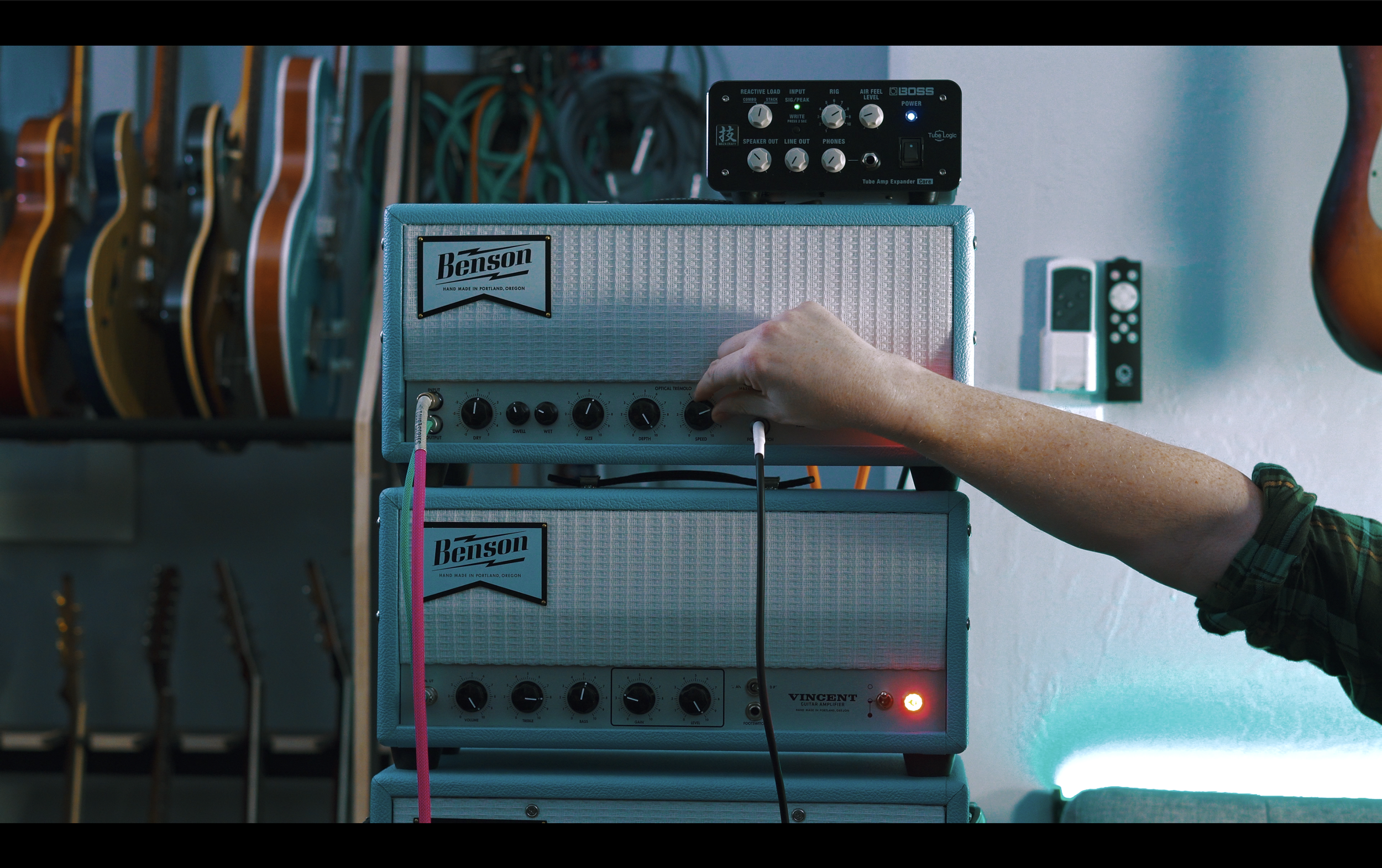
A complete four-way comparison across the Benson Amps Monarch, Earhart, Vincent, and the brand new Redland 35 — all running through the same Benson Amps 2x12" cab for a true apples-to-apples comparison. The Benson Tall Bird Plus also features. Featuring the Josh Williams Guitars Mockingbird — Tone Specific Bloombuckers, Emerson Custom Treble Bleeds — with the R2R Electric Treble Booster (NOS OC44 Black Glass Germanium) pushing the front end, via the Boss Waza Tube Amp Expander.
Joining for this one is renowned blues guitarist Jules Leyhe — his feel and touch bring out exactly what each of these amps is capable of. Check out his music, live shows, and educational guitar content.
Today is focused exclusively on pushed-to-cranked tones with humbuckers — no clean tones, no hedging, just the comparison everyone actually wants to hear. A quick comparison section up front (02:11) lets you hear the differences immediately, followed by deep dives into each amp across all pickup positions:
Benson Monarch (03:54) — the amp that's anchored the majority of channel demos, Chimera-adjacent clean-to-pushed voicing. Benson Earhart (10:38) — EL84 Class A top boost and tube reverb combo, the brightest and most compressed of the four. Benson Vincent (18:08) — the cascading Vinny/Clean Channel architecture, 1W dirt feeding a 30W clean stage. Benson Redland 35 (26:35) — the newest addition, reimagined EQ stack, extended American clean palette with 6L6 muscle.
If you've been sitting on the fence about which Benson to buy, this is the answer.
🔊 Benson Amps: https://www.bensonamps.com/guitar-amplifiers 🎸 Josh Williams Guitars: https://joshwilliamsguitars.com 🎸 Tone Specific: https://www.tonespecific.com 🎛️ R2R Electric: https://www.r2relectric.com
Subscribe for more boutique tone explorations.
🎸 Josh Williams Guitars Mockingbird | Tone Specific Bloombuckers | Emerson Custom Treble Bleeds 🎛️ R2R Electric Treble Booster | NOS OC44 Black Glass Ge 🔊 Benson Amps Monarch | Earhart | Vincent | Redland 35 | Tall Bird Plus | Benson 2x12" | Boss Waza TAE
This Silicon Fuzz Face is the holy grail | Reeves Electro 2n2 Face
Fast. Articulate. Dangerously loud. The Reeves Electro 2N2 Face is not your typical silicon Fuzz Face — a high volume, point-to-point hand-wired circuit tuned entirely by ear. Welcome back to Edge of Breakup.
The Reeves Electro 2N2 Face pairs with the Gronlund Guitars SC18 — TV Jones TV Classic Filter'Trons — into the Greer Amps Mini Chief and Smallblock 1x12" cab via the Boss Waza Tube Amp Expander. The Effectrode Tube Vibe joins from 04:10.
The 2N2 Face is built around carefully selected 2N2222A transistors, JB capacitors, and Fischer resistors, tuned by ear in Markus Reeves' garden workshop in Northamptonshire, England — no boards, no circuit traces, just components, solder, and decades of instinct.
What sets it apart from every other Fuzz Face on the market is the sheer volume on tap. Unity sits around 9-10 o'clock with the fuzz maxed — meaning cranked, this pedal becomes a massive boost into a breaking amp, unlocking complex overtones and harmonic richness most Fuzz Faces simply can't reach. Tight bass response, fast attack, articulate note separation, and a decay that never gets fizzy or spitty. Control the gain from the guitar's volume knob — that's the whole game.
Explored from 01:28 with fuzz volume at amp unity, moving through the neck pickup at 02:54 and extensive volume knob cleanup — "that Fuzz Face thing" — from 03:34. The Effectrode Tube Vibe joins from 04:10 for classic Uni-Vibe modulation. Bridge pickup into a gainier amp from 05:26, with volume knob cleanup revisited on neck at 06:02 and with the Tube Vibe from 07:14.
The fuzz volume itself is pushed to slam the amp from 09:50, with amp volume progressively reduced for headroom and guitar volume reduced for clarity from 10:33 — a genuinely careful balancing act between all three variables that this circuit rewards. Maxed fuzz volume with the amp volume lowered to accommodate closes the demo from 12:56.
If you've been chasing the holy grail Fuzz Face tone, this might be the last stop.
🎛️ Reeves Electro 2N2 Face: https://reeveselectro.co.uk 🎸 Gronlund Guitars: https://www.gronlundguitars.com 🔊 Greer Amps: https://www.greeramps.com
Subscribe for more boutique tone explorations.
🎸 Gronlund Guitars SC18 | TV Jones TV Classic Filter'Trons 🎛️ Reeves Electro 2N2 Face | 2N2222A Si | JB Caps | Fischer Resistors | Point-to-Point | Effectrode Tube Vibe 🔊 Greer Amps Mini Chief | Greer Smallblock 1x12" | Boss Waza TAE
The Perfect Octavia Fuzz | Reeves Electro Twin Sound
Raw. Harmonically rich. Brutally musical. The Reeves Electro Twin Sound is not your typical octave fuzz — a vintage NOS circuit that snarls, blooms, and cleans up with a sensitivity that makes every note feel alive. Welcome back to Edge of Breakup.
The Reeves Electro Twin Sound Octave Fuzz pairs with the Gronlund Guitars SC18 — TV Jones TV Classic Filter'Trons — into the Greer Amps Mini Chief and Smallblock 1x12" cab via the Boss Waza Tube Amp Expander. The Effectrode Tube Vibe joins from 11:01.
The Twin Sound is built around three vintage NOS transistors: a 1968 Micro Electronics BC137, a 1980 CIL BC108 (white ceramic), and a 1980s Philips BC549c silver face. Not a straightforward octave fuzz clone — this circuit snarls, blooms, and cleans up with a sensitivity that makes every note feel genuinely alive.
The Attack knob is the primary character control, explored extensively across the demo. Different octave fuzz tones on the neck pickup from 03:06, very low Attack settings from 04:19, and Attack maxed alongside amp gain for high gain octave fuzz from 05:11 — with max Attack "absolutely wailing" from 06:37. Lower Attack levels revisited from 07:57 for contrast.
Fuzz volume pushed to boost the cranked amp for more compression from 08:28, then amp volume reduced to noon from 09:51 to make room for the fuzz volume to be cranked further. Extensive guitar volume knob cleanup from 10:37, with the Effectrode Tube Vibe joining from 11:01 for classic Uni-Vibe modulation on top of the octave fuzz character.
The TV Jones TV Classic Filter'Trons in the Gronlund SC18 give the Twin Sound plenty of clarity and chime to cut through with — from snarling octave lead lines to massive, piano-like low-end textures.
If you live on the edge of breakup and beyond, this one is for you.
🎛️ Reeves Electro Twin Sound: https://reeveselectro.co.uk 🎸 Gronlund Guitars: https://www.gronlundguitars.com 🔊 Greer Amps: https://www.greeramps.com
Subscribe for more boutique tone explorations.
🎸 Gronlund Guitars SC18 | TV Jones TV Classic Filter'Trons 🎛️ Reeves Electro Twin Sound Octave Fuzz | 1968 ME BC137 + 1980 CIL BC108 + 1980s Philips BC549c | NOS | Effectrode Tube Vibe 🔊 Greer Amps Mini Chief | Greer Smallblock 1x12" | Boss Waza TAE
The Perfect P90 for a Single Pickup Junior! | Ron Ellis in a Grez Mendocino Jr
Ron Ellis Pickups returns to the channel with a P90 bridge pickup, installed in the Grez Guitars Mendocino Junior. Welcome back to Edge of Breakup.
The Ron Ellis P90 bridge pickup — installed in the Grez Guitars Mendocino Junior with Emerson Custom Prewired Kit, 500K pots, and Treble Bleed on the volume pot — runs into the Benson Amps Vincent 2x12" with Scumback H75-PVC speakers. The Expresso FX Beige Dual Ge/Si Fuzz and Ge Boost and Effectrode Tube Vibe both feature.
The Ron Ellis P90 brings Ron's molecular-level materials research to the soapbar format — the same engineering approach he applies to his humbuckers, delivering clarity and dynamic touch response rather than the raw, uncontrolled midrange some P90s are known for. Paired with the Mendocino Junior's compact offset body, the result is articulate and expressive across clean, pushed, and cranked amp tones.
The Expresso FX Beige Dual Ge/Si Fuzz and Ge Boost is a two-circuit pedal from Sof, built in the UK with zero compromise on components. The Fuzz Face-style side is switchable between three transistors — NOS CV7005 germanium, NOS OC202 silicon, and NOS AC188 — giving three distinct fuzz voicings from a single circuit. The Ge Boost side uses an NOS OC45 germanium transistor — the same transistor found in the earliest Dallas Rangemaster units — delivering classic treble booster character.
The Emerson Custom Prewired Kit's Treble Bleed keeps the P90's clarity intact through the full volume knob sweep, and the Effectrode Tube Vibe rounds out the demo with rich, three-dimensional modulation.
🎸 Ron Ellis Pickups: https://www.ronellispickups.com 🎸 Grez Guitars: https://www.grezguitars.com 🎛️ Expresso FX: https://expressofx.com 🔊 Benson Amps: https://www.bensonamps.com/guitar-amplifiers
Subscribe for more boutique tone explorations.
🎸 Grez Guitars Mendocino Junior | Ron Ellis P90 (Bridge) | Emerson Custom Prewired Kit | 500K Pots | Treble Bleed 🎛️ Expresso FX Beige Dual Ge/Si Fuzz & Ge Boost | CV7005 + OC202 + AC188 (Fuzz) | OC45 (Boost) | Effectrode Tube Vibe 🔊 Benson Amps Vincent 2x12" | Scumback H75-PVC