

Edge of Breakup
Video Categories
Analog Noir Moon Lion Germanium Fuzz & Boost
Analog Noir returns to the channel — this time with the Moon Lion, a dual pedal combining a Square Face-spec Fuzz Face and a Rangemaster Treble Booster in one box. Welcome back to Edge of Breakup.
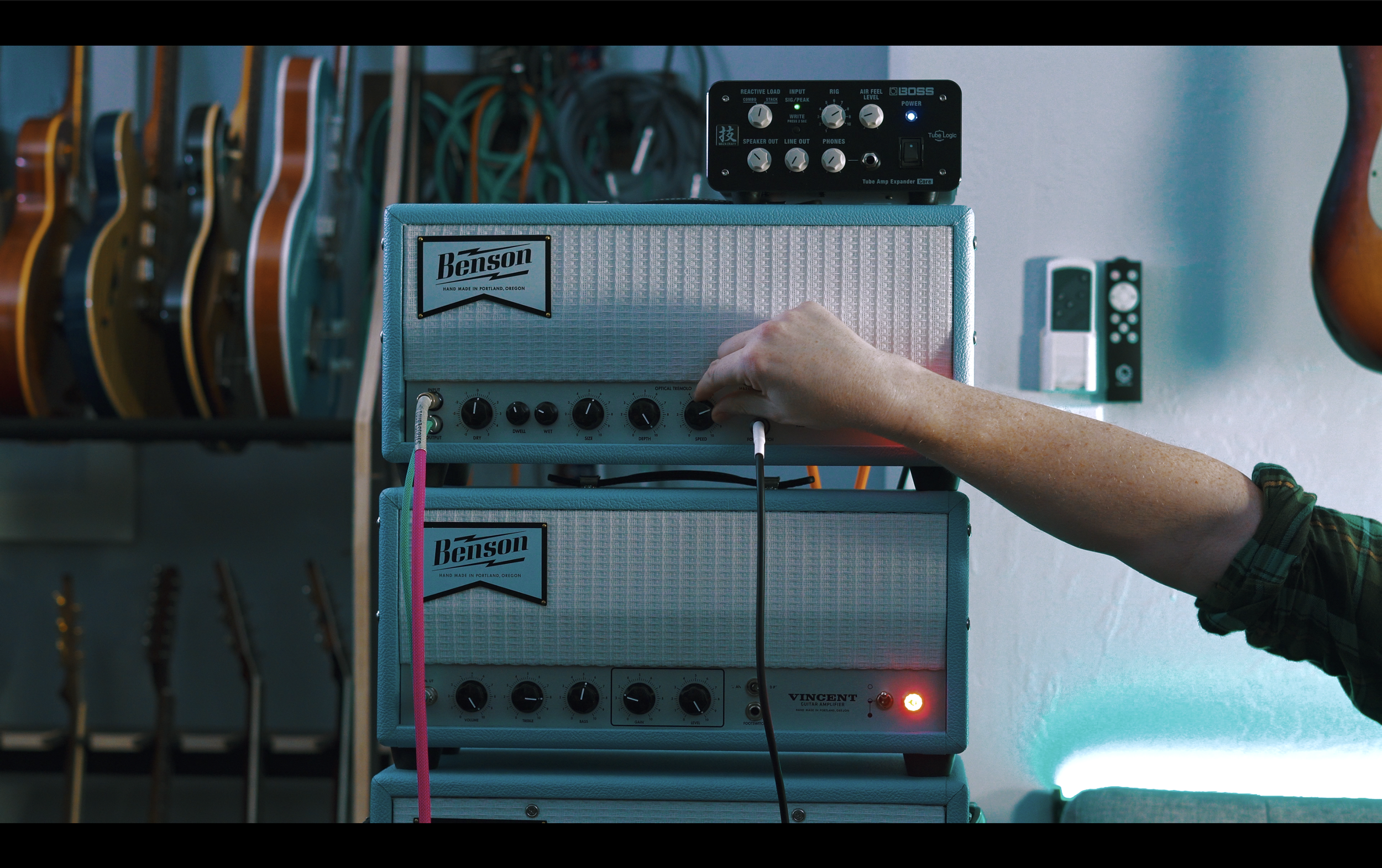
In this episode the Analog Noir Moon Lion takes center stage — featuring the Fender Custom Shop 1960 Journeyman Relic Stratocaster with Curtis Novak Strat-V High Wind (Neck + Middle) and Curtis Novak Strat-TB (Bridge) and Emerson Custom Wiring and Treble Bleed, into the Benson Amps Monarch 2x12" via the Boss Waza Tube Amp Expander with the Echo Fix EF-X3 Chorus Echo.
Get a Moon Lion: https://www.analognoirelectric.com/shop/p/dual-rangemaster-fuzz-face All Analog Noir pedals: https://www.analognoirelectric.com/shop
Also on the channel: the Analog Noir MKI Tone Bender.
The concept of the Moon Lion is simple and powerful: the Fuzz Face and the Rangemaster Treble Booster are the two most important germanium circuits in British guitar history. The Fuzz Face came first — Jimi Hendrix's defining dirt circuit. The Rangemaster shaped Clapton's woman tone on the Beano record, Tony Iommi's thick early Sabbath crunch, and Brian May's entire guitar voice. Putting them in one box with independent footswitches means you don't have to choose which one goes first in the chain — you can run Fuzz Face alone, Rangemaster alone, or stack the Fuzz Face into the Rangemaster together.
The Fuzz Face side is built to Cesar Diaz's Square Face specification. Cesar Diaz was Stevie Ray Vaughan's amp tech — known as "The Amp Doctor" — and worked with Bob Dylan, Eric Clapton, Keith Richards, and Neil Young. SRV's original round Fuzz Faces were unreliable, so Diaz built him modified versions in rectangular enclosures with true bypass switching and circuit modifications that became known as the Square Face. Analog Noir's version is loaded with Mullard GET113 and CV7355 mil spec germanium transistors. Vintage TRW polypropylene film capacitors. Vintage carbon composition resistors. Full point-to-point hand-wired construction. Bias knob for dialing in the sweet spot or inducing gated and spitting textures (explored from 04:25).
The Rangemaster side is a faithful reproduction of the 1965 Dallas Arbiter Rangemaster Treble Booster with a three-position EQ switch — High (the original Rangemaster setting), Mid (boosting mid frequencies into the amp), Low (extending the boost into the low end for a fuller range push). Explored from 13:51 through 18:20. The sweet spot of Rangemaster into a pushed amp at the edge of breakup is exactly what this demo is about.
Both sides stacked from 19:20 — Fuzz Face into Rangemaster — with volume knob cleanup explored from 20:24.
🎛️ Analog Noir Effects: https://www.analognoirelectric.com 🎸 Curtis Novak Pickups: https://www.curtisnovak.com 🔊 Benson Amps: https://www.bensonamps.com/guitar-amplifiers
Subscribe for more boutique tone explorations.
🎸 Fender Custom Shop '60 Journeyman Relic Strat | Curtis Novak Strat-V (Neck + Middle) + Strat-TB (Bridge) | Emerson Custom Wiring + Treble Bleed 🎛️ Analog Noir Moon Lion | Square Face (Diaz Spec) + Rangemaster | Mullard GET113 + CV7355 Ge | TRW Film Caps | Carbon Comp | Point-to-Point | 3-Way EQ Switch 🎛️ Also: Echo Fix EF-X3 🔊 Benson Amps Monarch 2x12" | Boss Waza TAE
Recording: Universal Audio Apollo x4 | Lauten Audio LS-208 | Royer R10 & R121 | Sennheiser E906 | Ableton Live 12
Lauren Audio B100 Fuzz
Lauren Audio returns to the channel with the B100 Fuzz — a germanium fuzz derived from the preamp card inside a Neve recording console. Welcome back to Edge of Breakup.
In this episode the Lauren Audio B100 Fuzz takes center stage — featuring the Prisma Guitars Mattsonia with Lollar Standard Wind Imperial PAF Humbuckers and Emerson Custom Treble Bleed and Wiring Kit, into the Benson Amps Monarch via the Boss Waza Tube Amp Expander with the Echo Fix EF-X3 Chorus Echo.
Also on the channel: the Lauren Audio Aerocomet (UREI 1176 preamp).
The story behind James's approach at Lauren Audio is consistent across all his designs: find a piece of pro audio studio gear that imparts a specific coloration and character, understand why it sounds the way it does, and build a guitar pedal that delivers that quality — then push it further than the original hardware ever could. The B100 is based on the Neve B100 preamp card found in the 1053 console channel strip, the predecessor to the now-legendary 1073. When researching the B100 module, James found that the circuit topology was similar to a two-transistor fuzz. Starting from that discovery, he carried over unique circuit elements from the original Neve design that aren't typically found in fuzz pedals — creating a circuit that has the width, compression, and warmth of a vintage fuzz with the cut and focus of something more modern.
This batch uses 2N404A germanium transistors — auditioned and matched per build. Carbon film 1/2 watt resistors paired with polypropylene film caps for classic tone and fast, responsive feel. A high-grade bipolar MUSE capacitor is the only electrolytic in the audio path. Internal bias trimpot for dialing in the sweet spot or compensating for temperature effects.
Three controls: Input (affects low end — lower Input tightens and brightens, higher Input thickens and warms), Gain (affects mids and highs), Output (makeup gain stage). This three-way interaction functions as a pseudo-EQ — no dedicated tone knob is needed because the Input and Gain controls reshape the frequency character of the fuzz as they're adjusted. Explored thoroughly across the demo: warm fuzz at unity (02:21), reduced Input for brighter character (03:57), Output cranked for amp-slamming (05:17), all the way to all knobs maxed (11:44).
🎛️ Lauren Audio B100: https://www.lauren.audio/products/b100-fuzz 🎸 Prisma Guitars: https://www.prismaguitars.com 🎸 Lollar Pickups: https://www.lollarguitars.com/lollar-pickups 🔊 Benson Amps: https://www.bensonamps.com/guitar-amplifiers
Subscribe for more boutique tone explorations.
🎸 Prisma Guitars Mattsonia | Lollar Standard Wind Imperial PAF Humbuckers | Emerson Custom Treble Bleed + Wiring Kit 🎛️ Lauren Audio B100 Fuzz | Neve B100 Inspired | 2N404A Germanium | Input / Gain / Output | Internal Bias 🎛️ Also: Echo Fix EF-X3 🔊 Benson Amps Monarch | Boss Waza TAE
Recording: Universal Audio Apollo x4 | Lauten Audio LS-208 | Royer R10 & R121 | Sennheiser E906 | Ableton Live 12
Kingtone Blues Power V2 with Humbuckers
KingTone Guitar returns to the channel with the Blues Power V2 — Jesse Davey's most versatile overdrive in a completely new form factor. Welcome back to Edge of Breakup.
In this episode the KingTone Guitar Blues Power V2 takes center stage — featuring the Wide Sky Guitars Tawa with Curtis Novak Humbuckers and Emerson Custom Treble Bleeds, into the Benson Amps Monarch 2x12" via the Boss Waza Tube Amp Expander with the Echo Fix EF-X3 Chorus Echo. The KingTone Vibe 1968 joins from 06:00.
The Blues Power is KingTone's take on the transparent, always-on overdrive — an amp breakup pedal designed to add drive and character without changing the fundamental voice of your guitar and amp. The V2 arrives in a completely new CNC aluminum enclosure with laser engraving, protected knobs accessible from the top or side panel, silent switching, and an RGB LED. 9V to 18V DC operation (higher voltage increases headroom and dynamics).
Controls: Volume, Drive, Bass, Treble. The Drive has wide range — from clean boost to warm, glassy overdrive throughout its sweep. Bass and Treble are carefully tuned for responsive, musical EQ that doesn't fight the amp.
Three EQ voicing modes via a front-panel toggle — the key creative variable in this demo: Warm (round, full, compressed character — the most amp-like of the three, explored from 01:15), Glass (brighter, more open, emphasis on upper-mid definition — explored from 03:07), Edge (adds bite and edge to the drive character — explored from 04:27). These modes shape the frequency content going into the overdrive circuit, not after it.
Two side-panel dipswitches: Cranked (pushes the second drive stage for richer, more saturated amp-like textures at higher gain settings) and KingTone Switch (fattens the tone and adds edge bite for a unique massive voice — active from 08:01 in the demo). Hand-wired and assembled in the USA.
🎛️ KingTone Guitar Blues Power V2: https://www.kingtoneguitar.com 🎸 Wide Sky Guitars: https://www.wideskyguitars.com 🎸 Curtis Novak Pickups: https://www.curtisnovak.com 🔊 Benson Amps: https://www.bensonamps.com/guitar-amplifiers
Subscribe for more boutique tone explorations.
🎸 Wide Sky Guitars Tawa | Curtis Novak Humbuckers | Emerson Custom Treble Bleeds 🎛️ KingTone Blues Power V2 | Warm / Glass / Edge Toggle | Bass + Treble | Cranked + KingTone Dipswitches | Wide-Range Drive 🎛️ Also: KingTone Vibe 1968 | Echo Fix EF-X3 🔊 Benson Amps Monarch 2x12" | Boss Waza TAE
Recording: Universal Audio Apollo x4 | Lauten Audio LS-208 | Royer R10 & R121 | Sennheiser E906 | Ableton Live 12
KGR Harmony Kurofune Fuzz
KGR Harmony returns to the channel — this time with the Kurofune Fuzz, their Ram's Head-inspired fuzz in a cast iron nambu-tekki enclosure. Welcome back to Edge of Breakup.
In this episode the KGR Harmony Kurofune Fuzz takes center stage — featuring the Prisma Guitars Sunset with Lollar Novel Foil Neck and Lollar Low Wind Imperial PAF Humbucker Bridge, Emerson Custom wiring and Treble Bleed, into the Benson Amps Monarch 2x12" via the Boss Waza Tube Amp Expander.
Get Emerson Custom Treble Bleeds and Wiring Kits:
Treble Bleed: https://emersoncustom.com/products/2017-treble-bleed-circuit-volume-mod?sca_ref=6282128.5O9h8BhMpG
Potentiometers: https://emersoncustom.com/products/cts-potentiometers?sca_ref=6282128.5O9h8BhMpG
Les Paul Pre-Wired Kit: https://emersoncustom.com/products/les-paul-prewired-kit?sca_ref=6282128.5O9h8BhMpG
Strat Blender Kit: https://emersoncustom.com/products/s5b-blender-5-way-strat-prewired-kit?sca_ref=6282128.5O9h8BhMpG
KGR Harmony is Keijiro Fukushima, an electronic engineering graduate of Tokyo Denki University who spent over a decade researching how enclosure materials affect guitar tone before founding KGR in 2019. The brand is based in Iwate Prefecture, Japan — the same region where the nambu-tekki (南部鉄器) iron casting tradition has been practiced since the Edo period. KGR builds in partnership with Oitomi Ironworks, a cast iron forge established in 1848. Each enclosure is cast one at a time using a traditional sand mold process — Fukushima makes the molds himself, and because of this, no two enclosures are identical in surface texture.
The Kurofune — "Black Ship," referencing the black-hulled American warships that arrived in Japan in 1853 — is KGR's Ram's Head-era Big Muff-inspired fuzz. Clear, tight low end and a crunchy, full midrange that makes use of the resonant properties of the heavy cast iron housing. Three controls: Volume, Fuzz, Tone. The Tone sweep covers the range from bass-heavy dark fuzz to bright and emphasized. The enclosure weighs approximately 670g — roughly three times a standard aluminum pedal. Not true bypass.
The Prisma Guitars Sunset in this build is a two-pickup, Telecaster-outline guitar with a Les Paul-style 3-way toggle switch — a custom configuration from Nick Pourfard's shop in San Francisco. Alder body, maple C neck, reclaimed Brazilian Walnut fingerboard from the Coney Island Boardwalk, 25.5" scale, 6105 nickel frets, bone nut, nitrocellulose lacquer finish. Loaded with a Lollar Novel Foil in the neck and a Lollar Low Wind Imperial PAF-voiced humbucker in the bridge — a single coil / humbucker combination that gives the Kurofune's Ram's Head character genuinely different input material across the two pickup positions.
🎛️ KGR Harmony: https://kgrharmonyusa.com/products/kurofune-fuzz
🎸 Prisma Guitars: https://www.prismaguitars.com
🎸 Lollar Pickups: https://www.lollarguitars.com/lollar-pickups
🔊 Benson Amps: https://www.bensonamps.com/guitar-amplifiers
Subscribe for more boutique tone explorations.
🎸 Prisma Guitars Sunset | 2-Pickup Tele-Style | LP Toggle | Alder | Coney Island Boardwalk Fretboard | Lollar Novel Foil (Neck) + Lollar Low Wind Imperial (Bridge) | Emerson Custom Wiring + Treble Bleed | Nitro
🎛️ KGR Harmony Kurofune Fuzz | Ram's Head Inspired | Nambu-Tekki Cast Iron | Volume / Fuzz / Tone | Made in Iwate, Japan
🔊 Benson Amps Monarch 2x12" | Boss Waza TAE
Recording: Universal Audio Apollo x4 | Lauten Audio LS-208 | Royer R10 & R121 | Sennheiser E906 | Ableton Live 12
Analog Noir Effects MKI Fuzz
Analog Noir Effects makes its channel debut — and this MKI Tone Bender paired with the Giordano / Sunbear combination is one for the ages. Welcome back to Edge of Breakup.
In this episode the Analog Noir Effects MKI Fuzz takes center stage — featuring the Giordano Guitars 59 Single Cut with Sunbear Pickups 59 SB-PAF Humbuckers, into the Benson Amps Monarch with the Echo Fix EF-X3 Chorus Echo.
Get one: https://www.analognoirelectric.com/shop/p/mk1-tone-bender-1 Follow: https://www.instagram.com/analognoirfx/
Analog Noir Effects builds faithful, component-accurate reproductions of the most important vintage fuzz and boost circuits using NOS and period-correct components on eyelet board construction — the same construction method used in the original 1960s pedals. The MKI Tone Bender is their take on the 1965 Sola Sound original: a three-transistor circuit using a curated selection of mil spec Mullard CV and New Market NKT germanium transistors, hand-selected and tested for gain and leakage characteristics. NOS components throughout. PNP transistors — requires isolated power supply when using the DC jack. Internal battery snap included.
The Tone Bender MKI predates the Fuzz Face and is a fundamentally different circuit despite superficial similarities. Where the Fuzz Face uses two transistors, the MKI uses three — the extra transistor stage produces a different attack, sustain character, and gating behavior. The MKI is the fuzz of the early British Invasion: nasty, spitting, cutting, with a blooming sustain that doesn't decay cleanly. It is not interactive with the guitar volume knob in the way a Fuzz Face or silicon circuit is — the MKI has its own personality that rewards working with the Attack control and amplifier relationship rather than fighting them.
Two controls: Level and Attack (the original MKI called the gain control "Attack" — it functions as a bias control, explored extensively across this demo from 03:42 through 12:30). Lower bias settings produce smooth, sustained fuzz with more compression. Higher bias settings open up the gate and add aggression and grit. The interaction with the Sunbear PAF humbuckers — higher output than single coils — is explored across both bridge and neck throughout.
Note: the MKI circuit does not clean up like a Fuzz Face — the volume knob behavior (explored from 13:00) produces quirky, unique results rather than glassy cleanup. That is the circuit doing what it was designed to do.
🎛️ Analog Noir Effects: https://www.analognoirelectric.com 🎸 Giordano Guitars: https://www.instagram.com/giordanoguitars/ 🎸 Sunbear Pickups: https://www.sunbearpickups.com 🔊 Benson Amps: https://www.bensonamps.com/guitar-amplifiers
Subscribe for more boutique tone explorations.
🎸 Giordano Guitars 59 Single Cut | Sunbear Pickups 59 SB-PAF Humbuckers (AIV Bridge 8.3K / AIII Neck 7.3K) 🎛️ Analog Noir Effects MKI Tone Bender | Mullard CV + NKT Ge | Eyelet Board | NOS Components | Level + Attack 🎛️ Also: Echo Fix EF-X3 Chorus Echo 🔊 Benson Amps Monarch | Boss Waza TAE
Recording: Universal Audio Apollo x4 | Lauten Audio LS-208 | Royer R10 & R121 | Sennheiser E906 | Ableton Live 12
Fish Circuits Lunatique Fuzz
Fish Circuits returns to the channel — this time with the Lunatique, one of my NAMM 2024 highlights. Welcome back to Edge of Breakup.
In this episode the Fish Circuits Lunatique Fuzz takes center stage — featuring the Wide Sky Guitars Tawa with Curtis Novak Humbuckers and Emerson Custom Pots and Treble Bleeds, into the Benson Amps Monarch via the Boss Waza Tube Amp Expander.
Also on the channel: the Fish Circuits Model One Overdrive.
🎛️ Fish Circuits Lunatique: https://fishcircuits.com/products/lunatique-fuzz
The Lunatique is a gated fuzz with a genuinely unusual architecture: two distinct fuzz circuits with a Chaos knob that blends between them continuously, plus a low-pass filter simultaneously operating on the same control. Noon is the warmest, tamest point. From there the knob does very different things in each direction.
Counterclockwise from noon the Lunatique moves toward a classic gated fuzz character — bright, biting, Tone Bender-like texture with increasing top end presence as you go further left. Less octave content, the fuzz is less likely to gate, and the frequency response opens up into snappy, cutting territory. This is the territory explored from 07:55 onward.
Clockwise from noon the Chaos knob introduces ring modulation and octave-up content that builds progressively as you turn right. As more octave and ring modulation enters the signal, it hits the fuzz circuit with less amplitude — which activates the gate more readily. Simultaneously the low-pass filter cuts high frequencies progressively, mellowing the top end while the octave and ring modulation take over the mid and upper-mid presence. By full clockwise, chords become something else entirely — ring-modulated, octave-saturated, mid-heavy fuzz mayhem. Explored from 03:31 (Chaos at 1pm, octave blending in) through 04:33 (Chaos pushed toward maximum) and back into cranked octave fuzz territory at 12:04.
Four controls: Chaos (the main character control), Level (with substantial output — more than enough to push an amp hard), Body toggle (full bass spectrum vs. rolled-off low-end for tighter mixes), Fuzz toggle (lower gain vs. higher gain — upper position removes the gate entirely and introduces feedback and squealing depending on rig). 9V DC center negative.
🎸 Wide Sky Guitars: https://www.wideskyguitars.com 🎸 Curtis Novak Pickups: https://www.curtisnovak.com 🔊 Benson Amps: https://www.bensonamps.com/guitar-amplifiers
Subscribe for more boutique tone explorations.
🎸 Wide Sky Guitars Tawa | Curtis Novak Humbuckers | Emerson Custom Pots + Treble Bleeds 🎛️ Fish Circuits Lunatique | Gated Fuzz | Chaos Knob | Octave + Ring Mod | Body + Fuzz Toggles | 2 Circuits 🔊 Benson Amps Monarch | Boss Waza TAE
Recording: Universal Audio Apollo x4 | Lauten Audio LS-208 | Royer R10 & R121 | Sennheiser E906 | Ableton Live 12
Reeves Electro Facet IZ Fuzz
Reeves Electro returns to the channel with a second entry in the Daughterboard Series — the Facet IZ, Izzy's take on the Fuzz Face. Welcome back to Edge of Breakup.
In this episode the Reeves Electro Facet IZ Fuzz takes center stage — featuring the Kauer Guitars Gripen with Wolfetone Kauerbuckers, into the Benson Amps Monarch, with the Caroline Guitar Company Arigato Phaser joining from 09:48.
Get on the Reeves Electro mailing list — these sell out extremely quickly: https://reeveselectro.co.uk
The Daughterboard Series is built entirely by Izzy Reeves — Markus' daughter — in their garden workshop in Northamptonshire, UK. Izzy handles the design, powder coating, drilling, screen printing using super glossy old school enamel ink, and assembly of every build. The Facet IZ is the second Daughterboard release, following the Darlington Flyer. The name is Izzy's own — IZ.
The Facet IZ is based on the Fuzz Face circuit. In Markus' own words: "Izzy basically told me what she wanted to hear, and like any good Dad I did as I was asked." The transistors are a pair of Micro Electronics C1016Y yellow dot silicon transistors — the higher gain grade of the red dot MEC1016 used in the Reeves RedDotSound. Yellow dot: more gain, greasier midrange, more ballsy and fierce character.
This is an important distinction from the typical silicon Fuzz Face character. Where a conventional silicon Fuzz Face has a snappy, sparkly top end and glassy volume knob cleanup, the Facet IZ trades some of that glassy cleanup for significantly more fuzz fatness, midrange grit, and aggression. The guitar volume knob still responds — dynamics are preserved as you turn down — but the cleanup character is thicker and less crystalline than a standard silicon Fuzz Face. The Tone control is the key addition: a Tone knob on a Fuzz Face is rare, and it's exactly what's needed to work with darker amps and darker guitars. Explored from bright (05:20) to dark (06:59) across the full range in this demo.
Three controls: Fuzz, Volume, Tone. Boss-style 9V DC center negative. Optional Plexiglass bottom panel available to view the internals.
🎛️ Reeves Electro Facet IZ: https://reeveselectro.co.uk
🎸 Kauer Guitars Gripen: https://www.kauerguitars.com/instruments/gripen
🔊 Benson Amps: https://www.bensonamps.com/guitar-amplifiers
Subscribe for more boutique tone explorations.
🎸 Kauer Guitars Gripen | Wolfetone Kauerbuckers | Neck-Through Mahogany | 24.75" Scale
🎛️ Reeves Electro Facet IZ | ME C1016Y Yellow Dot Si Transistors | Fuzz / Volume / Tone | Daughterboard Series
🎛️ Also: Caroline Guitar Company Arigato Phaser
🔊 Benson Amps Monarch
Recording: Universal Audio Apollo x4 | Lauten Audio LS-208 | Royer R10 & R121 | Sennheiser E906 | Ableton Live 11
Seeker Electric Effects MKI Tone Bender Fuzz (Lineage Series)
Seeker Electric Effects returns to the channel with a second Lineage Series fuzz — this time it's the MKI. Welcome back to Edge of Breakup.
In this episode the Seeker Electric Effects Lineage Series MKI Fuzz takes center stage — featuring the Wide Sky Guitars P125C Cutaway with Curtis Novak P90s and Emerson Custom Treble Bleeds, into the Benson Amps Monarch 2x12" via the Boss Waza Tube Amp Expander.
Get a Seeker MKI: https://www.seekerelectriceffects.com/product-page/mk1 Follow Seeker: https://www.instagram.com/seekerelectriceffects/
Watch the first Seeker Lineage Series demo — the Face (Fuzz Face): [LINK]
The Tone Bender MKI is the original British fuzz — the 1965 Sola Sound circuit that predates the Fuzz Face derivations and uses three germanium transistors rather than two, producing the distinctive nasty spitting buzz, cutting midrange, ripping attack, and blooming sizzling sustain that made it the fuzz of choice for the early British Invasion tone. Jimmy Page's earliest Yardbirds recordings. Jeff Beck. Tony Iommi before the Marshall. The MKI circuit is the ancestor of everything.
Mike at Seeker describes the Lineage Series MKI as "a culmination of many years of learning and refining this circuit." This build comes in the "Sola" tuning — straight-ahead MKI style, using the component values most commonly found in vintage units to recreate the classic 1960s character without modification. NOS NKT OC77 and Texas Instruments 2G301 germanium transistors — period-correct choices that land the attack and decay exactly where a vintage MKI should. NOS capacitors. Carbon film resistors. Built on a custom eyelet/PCB hybrid board following the original point-to-point layout closely.
Two external controls: Level and Attack. That's it — the same minimal control set as the vintage originals. The Level pushed past unity is explored from 09:05 onward, using the output to push the Monarch's input stage rather than adding gain in the fuzz circuit itself. The Attack sweep is explored across the full range from 06:16, and the interaction between Attack level and guitar volume knob is a significant part of this demo — P90s and an MKI have a specific reactive relationship that makes the cleanup sweep unusually expressive.
Lineage Series custom folded metal enclosures. True bypass. LED indicator. Center negative 9V or battery.
🎛️ Seeker Electric Effects: https://www.seekerelectriceffects.com/product-page/mk1
🎸 Wide Sky Guitars: https://www.wideskyguitars.com
🎸 Curtis Novak Pickups: https://www.curtisnovak.com
🔊 Benson Amps: https://www.bensonamps.com/guitar-amplifiers
Subscribe for more boutique tone explorations.
🎸 Wide Sky Guitars P125C | Curtis Novak P90s | Emerson Custom Treble Bleeds 🎛️ Seeker Electric Effects Lineage Series MKI | NOS OC77 + 2G301 Ge | Sola Tuning | Level + Attack | 3-Transistor Tone Bender 🔊 Benson Amps Monarch 2x12" | Boss Waza TAE
Recording: Universal Audio Apollo x4 | Lauten Audio LS-208 | Royer R10 & R121 | Sennheiser E906 | Ableton Live 11
Kingtone MiniFuzz v2 & Duellist v2 - Jesse Davey
Three KingTone Guitar pedals, one session — MiniFuzz V2, Vibe 1968, and Duellist V2, all with humbuckers. Welcome back to Edge of Breakup.
In this episode the KingTone Guitar MiniFuzz V2, KingTone Vibe 1968, and KingTone Duellist V2 share the spotlight — featuring the Frank Brothers Ultralight Semi-Hollow with Lollar El Rayo Humbuckers (neck and bridge), Lollar Firebird (middle, blender knob with three-position switch), and a Bigsby, in Sonic Blue, into the Benson Amps Monarch 2x12" via the Boss Waza Tube Amp Expander.
Watch the individual demos:
MiniFuzz V2: https://youtu.be/pya6XSesCds
Duellist V2: https://youtu.be/WF36QOJzUU0
KingTone Guitar is Jesse Davey's hand-wired operation built in the USA. The three pedals in this demo represent his full gain range — vintage fuzz, lush modulation, and a dual overdrive — and this video explores how they interact as a system rather than as isolated demos.
MiniFuzz V2 recap: Si/Ge toggle (BC183 silicon / MP10b germanium, switchable mid-performance), three-way mode toggle (Fat / Vintage / Zonk), Bias knob with LED indicator for temperature-corrected bias setting, six side-panel dipswitches (Add Warmth A, Symmetrical Clip A, Add Distortion B, Symmetrical Clip B, Buffer, Boost). Compared across Ge and Si modes in all three voicings from 10:48. The Lollar El Rayo's alnico character and mid-forward voice push the MiniFuzz V2 differently than single coils — the Bias control becomes the primary tone tool for landing on the right saturation point.
Vibe 1968 recap: KingTone's take on the Uni-Vibe, adding the rotating speaker character and phase modulation. Applied to the MiniFuzz V2 from 07:08 for cleanup tones, then combined with the Duellist from 14:40 for the most layered section of the demo.
Duellist V2 recap: String Singer (Side A, Tube Screamer-inspired) and Heavy Hand (Side B, Bluesbreaker-inspired). Fat/Stock/Glass pre-clipping EQ voicing on both sides. Quad dipswitches. A-B/B-A channel order switch. String Singer explored across bridge and neck pickups with all three voicing modes from 12:41. Both sides stacked from 17:05.
The Ultralight's Blender Pot with three-position switch adds the middle Firebird pickup into the El Rayo humbucker signal — blended in at 04:53 and used throughout the second half, adding the Firebird's mid-forward bark as a distinct third voice inside the humbucker signal.
🎛️ KingTone Guitar: https://www.kingtoneguitar.com
🎸 Frank Brothers Guitar Company: https://www.frankbrothersguitars.com
🎸 Lollar El Rayo + Firebird: https://www.lollarguitars.com/lollar-pickups
🔊 Benson Amps: https://www.bensonamps.com/guitar-amplifiers
Subscribe for more boutique tone explorations.
🎸 Frank Brothers Ultralight Semi-Hollow | Sonic Blue | Lollar El Rayo (Neck + Bridge) + Lollar Firebird (Middle Blender) | Bigsby
🎛️ KingTone MiniFuzz V2 | Si/Ge Toggle | Fat/Vintage/Zonk | Bias LED | 6 Dipswitches
🎛️ KingTone Vibe 1968 | KingTone Duellist V2 | String Singer + Heavy Hand | Fat/Stock/Glass
🔊 Benson Amps Monarch 2x12" | Boss Waza TAE
Recording: Universal Audio Apollo x4 | Lauten Audio LS-208 | Royer R121 & R10 | Sennheiser E906 | Ableton Live 11
Van Diemens A.A.D. Red Ochre Deluxe Treble Booster with Mulecaster
In this episode the Van Diemens Analogue Audio Disruptors Red Ochre Deluxe Treble Booster takes a second run — featuring the Mule Resophonic Mulecaster with Mule Tomthumbucker Mini-Humbuckers, into the Benson Amps Monarch 2x12" via the Boss Waza Tube Amp Expander with the Echo Fix EF-X3 Chorus Echo in the loop. The Caroline Guitar Company Arigato Phaser joins throughout.
Watch the first Red Ochre Deluxe demo with the Kauer Gripen and Wolfetone Kauerbuckers: https://youtu.be/TpP1rfvekyg
Join the Van Diemens email list: https://www.vandiemenseffects.com.au/subscribe
Red Ochre Deluxe product page: https://www.vandiemenseffects.com.au/red-ochre-deluxe
Follow: https://www.instagram.com/van_diemens_aad/
The Mulecaster is a fundamentally different instrument from the Kauer Gripen that featured in the first demo. Where the Gripen is a solid neck-through mahogany guitar with high-output Wolfetone Kauerbuckers, the Mulecaster is a hollow steel body with no resonator cone — made by Matt Eich in Saginaw, Michigan, 25" scale, set up like an electric guitar. The hollow steel body gives the Mulecaster a three-dimensional resonance and overtone character that wooden guitars don't produce. The Mule Tomthumbucker is a low-output mini-humbucker wound specifically for the Mulecaster's steel body — lower output and inherently brighter than a conventional humbucker.
Lower-output pickups and a treble booster is a specific combination. High-output pickups compress the booster's input earlier, which smooths and saturates the OC44's character before the EQ switch has much to work with. The Tomthumbucker's lower output means the CV7003 transistor is less compressed across the sweep — the three EQ positions cover a wider apparent range, the frequency emphasis is more prominent, and the volume knob cleanup sweep is more expressive because the transistor has more headroom.
Three EQ positions: brightest (maximum treble emphasis, most Rangemaster-like character), middle, and darkest (maximum low-end retained — the fullest, most foundational version of the boost). The Arigato Phaser enters at 01:33 alongside the boost. Volume knob cleanup from 01:53 — the Tomthumbucker's touch sensitivity makes this especially musical with a treble booster engaged.
🎛️ Van Diemens A.A.D.: https://www.vandiemenseffects.com.au/red-ochre-deluxe
🎸 Mule Resophonic Guitars: https://www.muleresophonic.com
🔊 Benson Amps: https://www.bensonamps.com/guitar-amplifiers
Subscribe for more boutique tone explorations.
🎸 Mule Resophonic Mulecaster | Mule Tomthumbucker Mini-Humbuckers | Hollow Steel Body | No Cone
🎛️ Van Diemens A.A.D. Red Ochre Deluxe | Mullard CV7003/OC44 | 3-Way EQ Toggle | NOS Components
🎛️ Also: Caroline Guitar Company Arigato Phaser | Echo Fix EF-X3
🔊 Benson Amps Monarch 2x12" | Boss Waza TAE
Recording: Universal Audio Apollo x4 | Lauten Audio LS-208 | Royer R10 & R121 | Sennheiser E906 | Ableton Live 11
Seeker Electric Effects Face (Lineage Series)
Seeker Electric Effects makes its channel debut with the Face — a Fuzz Face that delivers everything you want from the circuit and then some. Welcome back to Edge of Breakup.
In this episode the Seeker Electric Effects Lineage Series Face Fuzz takes center stage — featuring the Wide Sky Guitars Tawa with Curtis Novak Humbuckers and Emerson Custom Treble Bleeds, into the Benson Amps Monarch 2x12" via the Boss Waza Tube Amp Expander.
Get a Face: https://www.seekerelectriceffects.com/product-page/face-blue Follow Seeker: https://www.instagram.com/seekerelectriceffects/
Seeker Electric Effects is Mike's small-batch boutique operation building the Lineage Series — a lineup of NOS-loaded fuzz pedals in custom folded metal enclosures, each named after the circuit it's based on. The Face is the Fuzz Face, built faithfully on the classic schematic with two matched NOS Germanium or Silicon transistors on a custom PCB.
The Fuzz Face circuit has two well-known limitations that make it frustrating to dial in on a modern pedalboard: the fixed bias gives you whatever character that particular transistor pair produces at that temperature, and the standard input impedance often produces a woolly, undefined low end that doesn't control well with higher-output pickups. Seeker's Face addresses both with internal trimpots — accessible inside the enclosure but out of reach of accidental adjustment mid-set.
Input trimpot: controls how much signal hits the fuzz transistors. All the way down is stock Fuzz Face behavior. Turned up, it tightens low strings, cleans up the overall fuzz character, and at extreme settings approaches overdrive territory. Essential for humbuckers — the Curtis Novak HBs in the Wide Sky Tawa are explored across this range from 06:00 onward, and the control makes the difference between a bloated low end and a full-range, musically useful fuzz.
Bias trimpot: sweeps from blown-out, nasty, spitting fuzz through the optimal bias point to thick and gated. Ships pre-set to the optimal bias for the specific transistors installed — you can leave it there and it'll be the best the pedal can be, or you can explore the extremes.
External controls: Fuzz and Volume. Volume output is higher than stock — able to push well above unity for slamming the amp input hard, explored at 10:25 and 12:15 in this demo.
Lineage Series custom folded metal enclosures. NOS capacitors throughout. NOS transistors — specific components subject to availability by batch, but Mike builds a ripping fuzz regardless.
🎛️ Seeker Electric Effects: https://www.seekerelectriceffects.com 🎸 Wide Sky Guitars: https://www.wideskyguitars.com 🎸 Curtis Novak Pickups: https://www.curtisnovak.com 🔊 Benson Amps: https://www.bensonamps.com/guitar-amplifiers
Subscribe for more boutique tone explorations.
🎸 Wide Sky Guitars Tawa | Curtis Novak Humbuckers | Emerson Custom Treble Bleeds 🎛️ Seeker Electric Effects Lineage Series Face | NOS Ge/Si | Fuzz Face | Internal Input + Bias Trimpots | Above Unity Output 🔊 Benson Amps Monarch 2x12" | Boss Waza TAE
Recording: Universal Audio Apollo x4 | Lauten Audio LS-208 | Royer R10 & R121 | Sennheiser E906 | Ableton Live 11
Wonderful Audio Technology Fuzz Lands
A fuzz from the intersection of Tone Bender and Fuzz Face territory — and one of the most interactive control sets I've explored. Welcome to Wonderful Audio Technology on Edge of Breakup.
In this episode the Wonderful Audio Technology Fuzz Lands takes its channel debut — featuring the Wide Sky Guitars P125C Cutaway with Curtis Novak P90s and Emerson Custom Pots and Treble Bleeds, into the Benson Amps Monarch 2x12" via the Boss Waza Tube Amp Expander.
🎛️ Get a Fuzz Lands: https://www.wonderfulaudiotechnology.com/fuzz-lands Follow: https://www.instagram.com/wonderfulaudiotechnology/
The Fuzz Lands is a JFET, germanium, and silicon transistor combination that doesn't clone any existing circuit — it's a hybrid that sits in the space where Tone Bender and Fuzz Face topology overlap, with three toggle switches that access meaningfully different voices rather than subtle variations of the same character.
Two knobs: Volume (plenty of output on board) and Fuzz. The Fuzz knob doesn't travel from clean to fuzz — it travels from smooth to velcro. The germanium and silicon transistors are always engaged across the sweep; the knob changes bias and gain of the fuzz itself.
Three toggles:
Roots (2-way): Vintage mode (JFET bypassed) or Modern mode (JFET active). In Vintage, it behaves like a classic buffer-sensitive vintage fuzz — extremely responsive to guitar volume knob, lower settings lean into treble booster or overdrive territory. In Modern, the JFET gain stage is switched in, adding significantly more gain, less buffer sensitivity, and the JFET's ability to saturate the germanium and silicon transistors into broken, gated territory at high Fuzz settings.
Earth (2-way): Changes the input frequency range. Up is tighter, more midrange-forward, vocal quality — cuts through the mix, sustaining lead tone. Down is thicker, fuzzier, the classic full-range character.
Nature (3-way): Changes voltage feedback of the transistors — a genuinely different mechanism than Earth. Up is gated and broken with usable sustain for leads. Middle is smooth with a touch of crispy crunchiness. Down is Bender-y, almost nasal — goes from overdrive to full fuzz across the Fuzz sweep.
All five controls interact with each other. With a clean amp the character leans Tone Bender-style — snarling layers, upper-harmonic complexity. Push the amp to the edge of breakup and the character shifts toward Fuzz Face territory. Explored fully in this demo from 10:43 onward.
🎸 Wide Sky Guitars: https://www.wideskyguitars.com 🎸 Curtis Novak Pickups: https://www.curtisnovak.com 🔊 Benson Amps: https://www.bensonamps.com/guitar-amplifiers
Subscribe for more boutique tone explorations.
🎸 Wide Sky Guitars P125C | Curtis Novak P90s | Emerson Custom Pots + Treble Bleeds 🎛️ Wonderful Audio Technology Fuzz Lands | JFET + Ge + Si | Roots / Earth / Nature Toggles | 2 Knobs / 3 Switches 🔊 Benson Amps Monarch 2x12" | Boss Waza TAE
Recording: Universal Audio Apollo x4 | Lauten Audio LS-208 | Royer R10 & R121 | Sennheiser E906 | Ableton Live 11
Benson Amps Germanium Preamp
Benson Amps returns to the channel with the Germanium Preamp — the Preamp Pedal and the Germanium Boost combined into one. Welcome back to Edge of Breakup.
In this episode the Benson Amps Germanium Preamp takes center stage — featuring the Kauer Guitars Gripen with three Wolfetone Kauerbuckers and Emerson Custom Treble Bleeds, into the Benson Amps Monarch 2x12" via the Boss Waza Tube Amp Expander. The Echo Fix EF-X3 Chorus Echo and Caroline Guitar Company Arigato Phaser join throughout.
🔊 Benson Amps Germanium Preamp: https://www.bensonamps.com/guitarpedals/germaniumpreamp
The Benson Preamp Pedal has been one of the most loved amp-in-a-box overdrives in the boutique pedal world. The Germanium Boost has become a staple for players who want the unique warmth and compression of germanium transistor character without the temperature sensitivity that makes germanium fuzz circuits unpredictable. The Germanium Preamp takes one step from each: it replaces the first FET transistor stage in the Preamp Pedal's gain circuit with the servo-biased germanium gain stage from the Germanium Boost.
In Benson's own words: "The result is an alternate universe take on our flagship pedal that marries the incomparable feel of germanium with the careful equalization and tone controls of the preamp pedal. The result is a slightly lower gain, but richer sounding and feeling overdrive/boost/fuzz/whatever we really, really dig."
The servo-biased design is the key practical detail. Standard germanium circuits are temperature-sensitive — they drift with heat and cold and can cut out at around 120°F on a hot stage. The servo bias from the Germanium Boost stabilizes the gain stage so it maintains consistent germanium tonality without the temperature dependency. It reliably imparts the germanium character without affecting frequency response or requiring warm-up time.
Four controls: Gain (distortion amount), Treble (low-pass filter), Bass (high-pass filter), Volume. The Treble and Bass knobs are active EQ — Treble rolled off warms and darkens, Treble cranked brightens. Bass rolled off tightens, Bass cranked fattens. Explored across the full range in this demo, including guitar tone knob all the way down at 03:53 and EQ extremes at 07:44. The Gripen's three-pickup configuration with Emerson Treble Bleeds gives a wide range of tonal starting points for the Germanium Preamp to interact with.
9VDC center negative or battery, 50mA.
🎛️ Benson Amps Germanium Preamp: https://www.bensonamps.com/guitarpedals/germaniumpreamp
🎸 Kauer Guitars Gripen: https://www.kauerguitars.com/instruments/gripen
🔊 Benson Amps: https://www.bensonamps.com/guitar-amplifiers
Subscribe for more boutique tone explorations.
🎸 Kauer Guitars Gripen | 3x Wolfetone Kauerbuckers | Emerson Custom Treble Bleeds | Neck-Through Mahogany
🎛️ Benson Amps Germanium Preamp | Servo-Biased Ge Gain Stage | Gain / Treble / Bass / Volume
🎛️ Also: Echo Fix EF-X3 Chorus Echo | Caroline Guitar Company Arigato Phaser
🔊 Benson Amps Monarch 2x12" | Boss Waza TAE
Recording: Universal Audio Apollo x4 | Lauten Audio LS-208 | Royer R10 & R121 | Sennheiser E906 | Ableton Live 11
R2R Electric MK1.5 Pro Fuzz
R2R Electric returns with a rare one — the MK1.5 Pro, the forgotten link in the Tone Bender lineage. Welcome back to Edge of Breakup.
In this episode the R2R Electric MK1.5 Pro Fuzz takes center stage — featuring the Kauer Guitars Super Chief with Lollar Firebird Neck and Lollar Mini-Humbucker Bridge, into the Benson Amps Monarch 2x12" with Celestion G12H speakers via the Boss Waza Tube Amp Expander. The Echo Fix EF-X3 Tape Echo runs in the loop, and the Effectrode Tube Vibe joins from 06:13.
Get on the R2R Electric mailing list: https://www.r2relectric.com/how-to-order
Follow Chris: https://www.instagram.com/djlavalamp/
The MK1.5 occupies a specific and rarely discussed moment in British fuzz history. The Tone Bender lineage runs MKI (three transistors, 1965) to MKII (three transistors, different topology, 1966) — but the MK1.5 is the transitional variant that fell between them, using only two transistors in a topology closely related to the Fuzz Face rather than the three-transistor Tone Bender structure. Where the MKI and MKII use 500k pots, the MK1.5 uses 100k pots — which narrows the sweep range and emphasizes the brighter, raspier character that distinguishes it from its siblings. OC75 transistors are the transistor of choice here, as in the original.
As with every R2R Electric build, the MK1.5 Pro is built entirely with vintage and NOS components — OC75 germanium transistors hand-matched and selected, 100k vintage potentiometers, period-correct capacitors and resistors, hardwired point-to-point on period-accurate Vero board construction, as close to all-original as the circuit can get.
The "Pro" designation adds three controls to the standard two-knob MK1.5 format: Level (output), Attack (gain), and Bias. The Bias control is the key variable that makes this circuit so interactive — cranked high it produces fat, compressed, sustaining fuzz with strong amp-pushing capability. Cut to minimum, combined with Level near or slightly above unity, and the character shifts completely: buzzing, raspy, ripping fuzz with a ragged edge at the top end. The Bias and Level controls are deeply interactive, explored in detail across the full demo.
Note: plays best first in signal chain before any buffered bypass pedals.
The Kauer Super Chief is Kauer's largest model — a 15.5" wide semi-hollow with I-beam internal construction, Spanish Mahogany core and neck, built in Elk Grove, California. Doug Kauer's personal favorite in the lineup.
🎛️ R2R Electric: https://www.r2relectric.com
🎸 Kauer Guitars: https://www.kauerguitars.com
🎸 Lollar Pickups: https://www.lollarguitars.com/lollar-pickups
🔊 Benson Amps: https://www.bensonamps.com/guitar-amplifiers
Subscribe for more boutique tone explorations.
🎸 Kauer Guitars Super Chief | Lollar Firebird (Neck) + Lollar Mini-Humbucker (Bridge) | 15.5" Semi-Hollow
🎛️ R2R Electric MK1.5 Pro | NOS OC75 | 2-Transistor Fuzz Face Topology | Level / Attack / Bias
🎛️ Also: Effectrode Tube Vibe | Echo Fix EF-X3 (loop)
🔊 Benson Amps Monarch 2x12" | Celestion G12H | Boss Waza TAE
Recording: Universal Audio Apollo x4 | Lauten Audio LS-208 | Royer R10 & R121 | Sennheiser E906 | Ableton Live 11
Van Diemens A.A.D. Red Ochre Deluxe Treble Booster
The Van Diemens Red Ochre Deluxe returns — this time with the Mule Resophonic Mulecaster and its hollow steel body. Welcome back to Edge of Breakup.
In this episode the Van Diemens Analogue Audio Disruptors Red Ochre Deluxe Treble Booster returns for a second pairing — featuring the Mule Resophonic Mulecaster with Mule Tomthumbucker Mini-Humbuckers, into the Benson Amps Monarch 2x12" via the Boss Waza Tube Amp Expander with the Echo Fix EF-X3 Chorus Echo in the loop. The Caroline Guitar Company Arigato Phaser joins throughout.
Watch the first Red Ochre Deluxe demo with the Kauer Gripen and Wolfetone Kauerbuckers here: https://youtu.be/TpP1rfvekyg
Join the Van Diemens email list: https://www.vandiemenseffects.com.au/subscribe
Red Ochre Deluxe product page: https://www.vandiemenseffects.com.au/red-ochre-deluxe
Follow on Instagram: https://www.instagram.com/van_diemens_aad/
This pairing is genuinely distinct from the Gripen demo. The Mulecaster is a hollow steel body with no resonator cone — 25" scale, Mule Tomthumbucker mini-humbucker pickups, set up like an electric guitar but with the three-dimensional resonance that steel and hollow construction add. The Tomthumbucker's lower output and inherent clarity interact with the Red Ochre Deluxe's Mullard CV7003 OC44 transistor differently than high-output humbuckers — the treble booster's frequency shaping is more prominent and less compressed, with the Mulecaster's natural brightness and the 3-way EQ toggle's positions covering a wider apparent range.
Three EQ positions explored across both pickups: brightest (maximum high-frequency emphasis, minimum low-end), middle (a tonal middle ground), and darkest (maximum low-end retained, the most full-range treble booster character). The Caroline Arigato Phaser enters at 01:33 and is used as a texture alongside the boost and pickup combinations. Volume knob cleanup explored extensively from 01:53 — the Tomthumbucker's touch sensitivity makes the cleanup sweep particularly expressive with a treble booster engaged.
🎛️ Van Diemens A.A.D.: https://www.vandiemenseffects.com.au/red-ochre-deluxe
🎸 Mule Resophonic Guitars: https://www.muleresophonic.com
🔊 Benson Amps: https://www.bensonamps.com/guitar-amplifiers
Subscribe for more boutique tone explorations.
🎸 Mule Resophonic Mulecaster | Mule Tomthumbucker Mini-Humbuckers | Hollow Steel Body
🎛️ Van Diemens A.A.D. Red Ochre Deluxe | Mullard CV7003/OC44 | 3-Way EQ Toggle
🎛️ Also: Caroline Guitar Company Arigato Phaser | Echo Fix EF-X3
🔊 Benson Amps Monarch 2x12" | Boss Waza TAE
Recording: Universal Audio Apollo x4 | Lauten Audio LS-208 | Royer R10 & R121 | Sennheiser E906 | Ableton Live 11
Echo Fix EF-X3 Chorus Echo — Analog Tape Delay, BBD Chorus, Spring Reverb & Preamp
The Echo Fix EF-X3 gets its dedicated debut on the channel — a machine that does four analog things at once, all at the highest level. Welcome back to Edge of Breakup.
In this episode the Echo Fix EF-X3 Chorus Echo takes center stage — featuring the Frank Brothers Arcade with Righteous Sound RAF A4 and A2 Humbuckers, into the Benson Amps Monarch 2x12" via the Boss Waza Tube Amp Expander. The R2R Electric Rangemaster OC44 and Reeves Electro 2N2 Face Silicon Fuzz join for the second half.
The EF-X3 is what Echo Fix — an Australian company with nearly 15 years of tape echo repair and restoration experience — built once they decided to make their own tape echo. The result is a machine that bests vintage units on reliability, flexibility, and feature set while maintaining the one thing they couldn't be compromised on: the tape echo sound itself.
Four fully analog signal paths in one enclosure:
Analog Tape Echo: Multiple playback heads with multiple echo modes and independent head outputs. Head 1 and Head 2 are explored separately in this demo — each playback head has its own 1/4" TRS output at the rear panel for discrete recording, panning, or stereo ping-pong delay routing. Mode 1 and Mode 2 select different head combinations and rhythmic delay patterns. CV control over motor speed and feedback via expression pedal. Auto tape stop circuit engages when no signal is present to extend tape and motor life. Self-oscillation when feedback and echo volume are pushed — the machine becomes an instrument.
Analog BBD Chorus: Bucket Brigade Device design for the unmistakable warble and shimmer of classic analog chorus. Rate and Depth controls. Explored from 06:09 in this demo.
Analog Spring Reverb: Real springs, same physics as vintage amplifier and studio spring reverb. Explored from 08:53 — blended with tape echo and chorus in later sections.
Echoplex-Style Tape Preamp: The input gain stage modeled on the Echoplex EP-3's preamp circuit — the coloration and harmonic saturation before the tape heads that makes the Echoplex sound distinct from other tape delays.
The Reeves Electro 2N2 Face Silicon Fuzz debuts at 18:33 — a very limited point-to-point hand-wired silicon Fuzz Face built by Markus Reeves in Northamptonshire, UK, named for the 2N2222A silicon transistors at its core. Fast, articulate, high-output.
🎛️ Echo Fix EF-X3: https://echofix.com
🎸 Frank Brothers Guitar Company: https://www.frankbrothersguitars.com
🎸 Righteous Sound Pickups: https://www.righteoussoundpickups.com
🔊 Benson Amps: https://www.bensonamps.com/guitar-amplifiers
Subscribe for more boutique tone explorations.
🎸 Frank Brothers Arcade | Righteous Sound RAF Humbuckers (A4 Neck / A2 Bridge)
🎛️ Echo Fix EF-X3 | Analog Tape Echo | BBD Chorus | Spring Reverb | Tape Preamp | 100% Analog
🎛️ Also: R2R Electric Rangemaster OC44 | Reeves Electro 2N2 Face Silicon Fuzz
🔊 Benson Amps Monarch 2x12" | Boss Waza TAE
Recording: Universal Audio Apollo x4 | Lauten Audio LS-208 | Royer R10 & R121 | Sennheiser E906 | Ableton Live 11
Walrus Audio Silt Fuzz
A tube fuzz — and not the gimmick kind. The Walrus Audio Silt Harmonic Fuzz makes its channel debut. Welcome back to Edge of Breakup.
In this episode the Walrus Audio Silt Harmonic Tube Fuzz takes center stage — featuring the Wide Sky Guitars Tawa with Curtis Novak Humbuckers, into the Benson Amps Monarch 2x12" via the Boss Waza Tube Amp Expander.
The Silt is a collaboration between Walrus Audio and Jim Hagerman of Hagerman Amplification — a genuine tube amplification expert. The collaboration is what makes the Silt work: putting a 12AU7 preamp tube inside a fuzz pedal is straightforward. Getting it to sound right is not. The 12AU7 drives the core fuzz stage, adding the bone-rattling warmth, genuine grit, and harmonic complexity that purely solid-state fuzz circuits approach but can't replicate — the difference is in the overtones that appear at the top of sustained notes and chords, where the tube's behavior diverges from transistors in a distinctly musical direction.
Five controls: Volume, Gain (input to fuzz stage, from subtle crunch to full-throttle fuzz), Tone, Contour 3-way switch (pre-tube EQ stage — Highpass for tighter/sparkly, Flat for full response, Lowpass for warm/bassy), and the Harmonic footswitch. Running at 9V is the standard operation; 12V unlocks an extra gain boost that pushes the fuzz to a deeper, more electrified character.
The Harmonic Mode is the second voice. Rather than being a separate circuit, it acts as a frequency doubler placed before the drive stage — the doubled signal hits the tube fuzz input alongside the fundamental, producing crispy, octave-like overtones in the harmonics. This isn't a clean octave generator: it's an octave-flavored texture that sounds best with the guitar's tone knob rolled back, which is demonstrated in depth from 12:26 onward. The Contour and Tone controls remain active in Harmonic mode, giving a wide range of available character from the same footswitch.
🎛️ Walrus Audio Silt: https://www.walrusaudio.com/products/silt-harmonic-fuzz
🎸 Wide Sky Guitars: https://www.wideskyguitars.com
🎸 Curtis Novak Pickups: https://www.curtisnovak.com
🔊 Benson Amps: https://www.bensonamps.com/guitar-amplifiers
Subscribe for more boutique tone explorations.
🎸 Wide Sky Guitars Tawa | Curtis Novak Humbuckers
🎛️ Walrus Audio Silt Harmonic Tube Fuzz | 12AU7 | Harmonic Mode | Contour HP/Flat/LP | 9-12V | Jim Hagerman Collab
🔊 Benson Amps Monarch 2x12" | Boss Waza TAE
Recording: Universal Audio Apollo x4 | Lauten Audio LS-208 | Royer R10 & R121 | Sennheiser E906 | Ableton Live 11
Thorpy FX The Veteran SI
ThorpyFX returns to the channel — this time with the Veteran Silicon Dual Fuzz, putting a Rangemaster and a Fuzz Face in one box with two independent footswitches and extraordinary stacking results. Welcome back to Edge of Breakup.
In this episode the ThorpyFX Veteran Silicon Dual Fuzz takes center stage — featuring the Wide Sky Guitars Tawa with Curtis Novak Humbuckers, into the Benson Amps Monarch 2x12" via the Boss Waza Tube Amp Expander with the Meris Mercury X in the effects loop.
The Veteran is the third pedal in ThorpyFX's "Vintage Reimagined" Series — Adrian Thorpe's mission to build the definitive versions of the most important vintage fuzz circuits with modern control, quieter noise floor, and more tonal flexibility than the originals. The Veteran Silicon combines a 1960s Fuzz Face-style silicon fuzz (think the Smiley face reissues) and a Rangemaster-style silicon treble booster in one enclosure. Two independent footswitches. Fuzz first in the signal chain, running into the Boost. Stack them and the Rangemaster's Range control shapes the frequency content hitting the Fuzz Face's output — the stacking behavior is a genuinely distinct third voice from either circuit alone.
Six knobs across two circuits:
Fuzz side: Fuzz (gain), Volume, Smooth (input impedance — controls bass response and how the circuit interacts with pickups; lower is more bass-heavy and traditional, higher rolls back bass for a less heavy, smoother fuzz), Bias (controls the "heat" available to the circuit — increases output volume and adds mids as it's pushed).
Boost side: Boost (output level) and Range (frequency selection, from bass-heavy through mids-focused through treble-boosted — essentially choosing where in the frequency spectrum the boost is most active, from a full-range push to a classic Rangemaster-style treble emphasis).
The silicon versions of both circuits are specifically voiced to replicate germanium character while delivering lower noise and greater temperature stability — designed to be used in all conditions without the drift and sensitivity of period germanium transistors.
🎛️ ThorpyFX Veteran Silicon: https://thorpyfx.com
🎸 Wide Sky Guitars: https://www.wideskyguitars.com
🎸 Curtis Novak Pickups: https://www.curtisnovak.com
🔊 Benson Amps: https://www.bensonamps.com/guitar-amplifiers
Subscribe for more boutique tone explorations.
🎸 Wide Sky Guitars Tawa | Curtis Novak Humbuckers
🎛️ ThorpyFX Veteran Silicon | Fuzz Face + Rangemaster | Smooth / Bias / Range | Independent Footswitches | Stackable
🎛️ Also: Meris Mercury X (effects loop)
🔊 Benson Amps Monarch 2x12" | Boss Waza TAE
Recording: Universal Audio Apollo x4 | Lauten Audio LS-208 | Royer R10 & R121 | Sennheiser E906 | Ableton Live 11
Van Diemens A.A.D. Red Ochre Deluxe Treble Booster
A Tasmanian treble booster and Kauer's most audacious guitar yet — welcome Van Diemens A.A.D. to the channel. Welcome back to Edge of Breakup.
In this episode the Van Diemens Analogue Audio Disruptors Red Ochre Deluxe Treble Booster takes center stage — featuring the Kauer Gripen with Wolfetone Kauerbuckers, into the Benson Amps Monarch 2x12" via the Boss Waza Tube Amp Expander with the Echo Fix EF-X3 Chorus Echo Analog Tape Echo in the loop.
Join the Van Diemens email list: https://www.vandiemenseffects.com.au/subscribe
Red Ochre Deluxe product page: https://www.vandiemenseffects.com.au/red-ochre-deluxe
Follow on Instagram: https://www.instagram.com/van_diemens_aad/
Richard builds Van Diemens Analogue Audio Disruptors in Tasmania, Australia — named after Van Diemen's Land, the original colonial name for the island. The Red Ochre Deluxe takes its name from a secluded, rocky beach near Richard's house on the Tasmanian coast. Every pedal is hand-built point-to-point, one at a time, with carefully selected vintage components, and biased by ear rather than by spec — the transistor voltage is set as a starting point, but the final bias position is found aurally, dialing in the sweet spot specific to that transistor.
This specific build features a Mullard CV7003 transistor — the military specification version of the legendary OC44 used in the original 1960s Dallas Rangemasters. The CV7003 delivers the thick, balanced, woolly character that remains the benchmark for treble boosters. Tuned slightly darker than the original Rangemaster in its brightest position — designed to add classic drive and snarl without ear-piercing high-frequency spikes. The 3-way EQ toggle switch covers the range from tightest/highest frequency response (most low-end cut) through a middle position to full low-end retained — explored throughout this demo with the Wolfetone Kauerbuckers responding differently at each position. All NOS Philips, Mullard Mustard, and Mullard Tropical Fish capacitors. NOS Piher and Allen-Bradley resistors. Handcrafted turret board.
The Kauer Gripen is Kauer's first truly new design in nearly eight years — a joint design between Doug and Max Kauer, angular, cubist, and immediately identifiable. Spanish Mahogany neck-through construction. 24.75" scale. Wenge fretboard with Gripen-specific crown inlays. Beveled edges for comfort despite the aggressive geometry. Under 7 lbs. Wolfetone Kauerbuckers are custom-wound humbuckers designed specifically for Kauer guitars. Tom Dumont of No Doubt debuted his Gripen at the Fire Aid benefit concert in Los Angeles.
🎛️ Van Diemens A.A.D.: https://www.vandiemenseffects.com.au/red-ochre-deluxe
🎸 Kauer Guitars Gripen: https://www.kauerguitars.com/instruments/gripen
🔊 Benson Amps: https://www.bensonamps.com/guitar-amplifiers
Subscribe for more boutique tone explorations.
🎸 Kauer Guitars Gripen | Wolfetone Kauerbuckers | Neck-Through Mahogany | 24.75" Scale | Wenge Board
🎛️ Van Diemens A.A.D. Red Ochre Deluxe | Mullard CV7003/OC44 | 3-Way EQ Toggle | NOS Components | Turret Board
🎛️ Also: Echo Fix EF-X3 Chorus Echo Analog Tape Echo
🔊 Benson Amps Monarch 2x12" | Boss Waza TAE
Recording: Universal Audio Apollo x4 | Lauten Audio LS-208 | Royer R10 & R121 | Sennheiser E906 | Ableton Live 11
Bennett Custom Audio Lighthouse | Feat. Wide Sky Guitars P125C
The tremolo-equipped amplifier in a pedal — Bennett Custom Audio's Lighthouse is the most thoughtfully designed tremolo I've encountered. Welcome back to Edge of Breakup.
In this episode the Bennett Custom Audio Lighthouse Amplitude Modulating Amplifier takes its channel debut — featuring the Wide Sky Guitars P125C Cutaway with Curtis Novak P90 Pickups, into the Benson Amps Monarch 2x12" via the Boss Waza Tube Amp Expander, with the Echo Fix EF-X3 Tape Echo and Meris Mercury X Reverb.
Mark Bennett of Bennett Custom Audio (Canada) has built the Lighthouse around a specific idea: not just a tremolo pedal, but a tremolo-equipped amplifier. An all-analog preamp with Gain, Presence, and Volume controls precedes the tremolo stage — capable of delivering edge-of-breakup and overdriven tones on its own. The tremolo then acts on that preamp signal the way tremolo circuits in vintage tube amplifiers did: as part of the amplifier, not after it.
Two tremolo modes, each with a separate individually-tuned signal path:
Bias Tremolo uses an additional long-tailed pair and push-pull amplifier stage to modulate the volume of the full signal — the LFO pushes the amplifier in and out of distortion just like an old tube amp's bias-varying tremolo. This is the tremolo of Fender blackface and brownface normal-channel amplifiers.
Harmonic Tremolo modulates bass and treble frequencies out of phase from one another — they fade in and out alternately, creating the lush, vibey shimmer of Fender brownface amplifiers from the late 1950s and early 1960s. The most sought-after tremolo sound in vintage amp history, now available with independent signal path tuning.
Three waveforms (Sine, Triangle, Square) combine with both modes for six distinct flavors. When Bias mode and Square wave are combined, Chop mode is activated — the Intensity control changes the duty cycle (ratio of on/off time) rather than depth, creating anything from subtle rhythmic pulses to full choppy stutter.
The Tilt EQ acts exclusively on the wet tremolo signal — adjusting the tone of the modulated signal independently from the dry signal creates interesting tonal contrasts between the two, an unusual and genuinely creative control. Tap tempo with quarter/eighth/triplet subdivisions. Holding either footswitch ramps the tremolo rate up or down and returns to the original tempo when released. Proprietary high-voltage internal power circuitry for massive headroom and low noise.
🎛️ Bennett Custom Audio Lighthouse: https://www.bennettcustomaudio.ca/lighthouse
🎸 Wide Sky Guitars: https://www.wideskyguitars.com
🎸 Curtis Novak Pickups: https://www.curtisnovak.com
🔊 Benson Amps: https://www.bensonamps.com/guitar-amplifiers
Subscribe for more boutique tone explorations.
🎸 Wide Sky Guitars P125C | Curtis Novak P90s
🎛️ Bennett Custom Audio Lighthouse | Bias + Harmonic Tremolo | 6 Modes | Tilt EQ | Tap Tempo | Ramp | Preamp
🎛️ Also: Echo Fix EF-X3 | Meris Mercury X
🔊 Benson Amps Monarch 2x12" | Boss Waza TAE
Recording: Universal Audio Apollo x4 | Lauten Audio LS-208 | Royer R-121 & R-10 | Sennheiser E906 | Ableton Live 11