

Edge of Breakup
Video Categories
Thorpy FX Boneyard Fuzz
Has ThorpyFX created the perfect Tone Bender? After spending time with this pedal, I think Adrian Thorpe might have. Welcome back to Edge of Breakup.
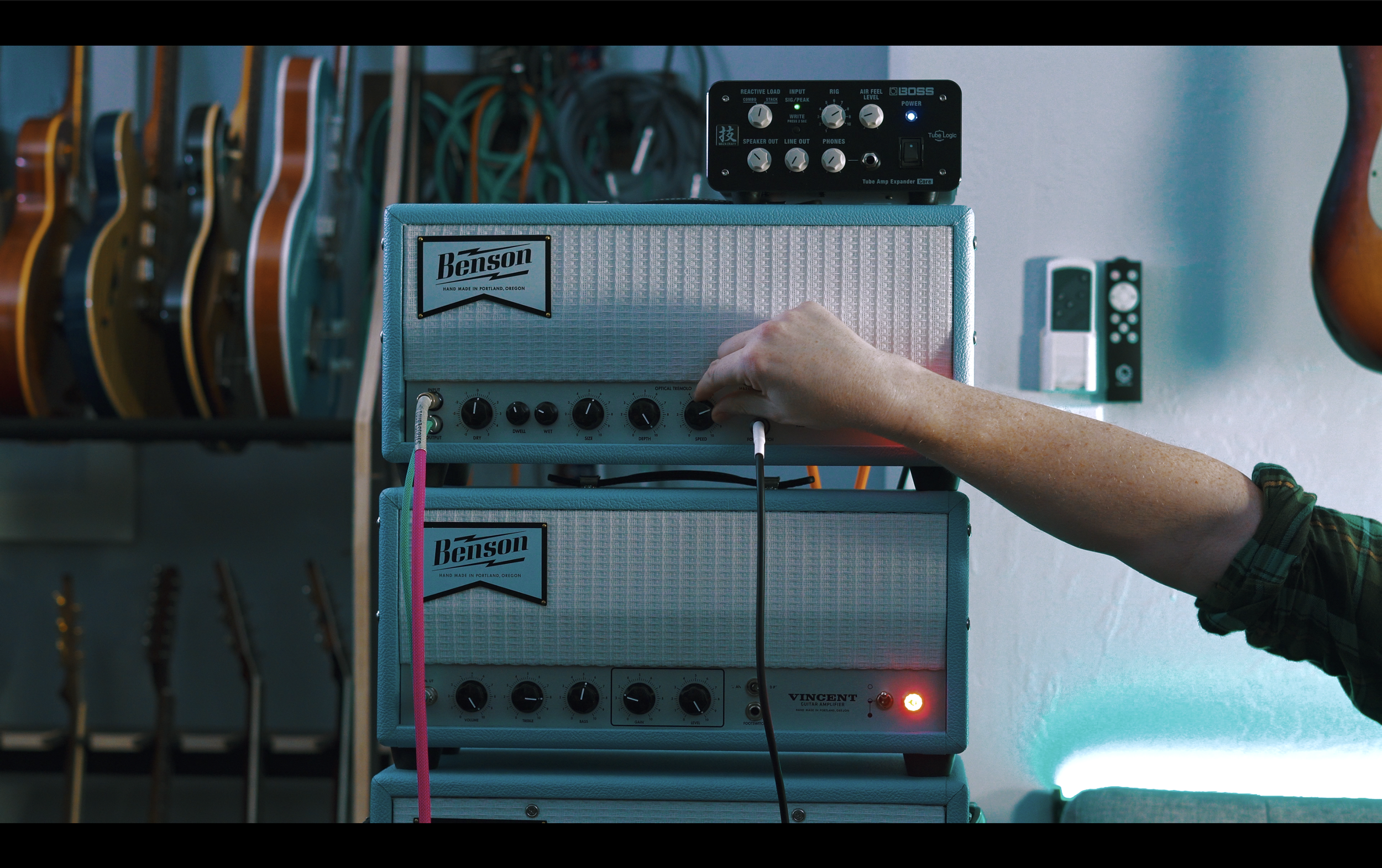
In this episode the ThorpyFX Boneyard Fuzz takes center stage — featuring the Frank Brothers Arcade with Lollar '50s Wind P90s, into the Benson Amps Vincent and Benson 2x12" cabinet.
The Boneyard packs tones from classic Tone Bender circuits MK I through MK IV into one stompbox using three germanium transistors. Adrian Thorpe of ThorpyFX describes it as a vanity project — his interpretation of what the ultimate Tone Bender would sound like after years spent playing, testing, and obsessing over every era of the circuit. Limited to approximately 250 units due to the scarcity of suitable germanium transistors — only a very narrow band is appropriate for the circuit, and finding enough took years.
Four controls, all extremely interactive in the manner of a Zvex Fuzz Factory — micro-adjustments at the intersection of all four knobs unlock sweet spots unavailable at any single setting.
Level controls output volume. Attack is the fuzz gain control — from lighter fuzz through to searing sustain. Tone controls treble and bass response — counterclockwise for smoother sounds, clockwise for brighter. Feed acts as a master bias control, adjusting the voltage to the pedal — choke it for sputtering, gated fuzz, or open it up for a smoother, more polished character.
The left footswitch bypasses the Tone stack entirely — removing the treble shaping from the circuit for a different tonal response and greater overall output. The central toggle switches between three-transistor mode (MK II through MK IV voicings — the classic saturated bender character) and two-transistor mode (MK I and MK I.V — closer to a Fuzz Face character, drier, more direct). 1% metalfilm resistors, Wima and Panasonic capacitors, Neutrik jacks, gold-plated PCB with dust-sealed potentiometers throughout.
🎛️ ThorpyFX Boneyard: https://thorpyfx.com
🎸 Frank Brothers Arcade: https://www.frankbrothersguitars.com
🎸 Lollar '50s Wind P90: https://www.lollarguitars.com/lollar-pickups
🔊 Benson Amps: https://www.bensonamps.com/guitar-amplifiers
Subscribe for more boutique tone explorations.
🎸 Frank Brothers Arcade Goldtop | Lollar '50s Wind P90 Soapbars
🎛️ ThorpyFX Boneyard Fuzz | NOS Germanium | MK I–IV | Feed Bias | 2/3 Transistor Toggle
🔊 Benson Amps Vincent | Benson 2x12"
Recording: Royer R121 & SM57 on cab | Royer R10 on rear
Greer Amps Black Mountain Crunch Drive
Brand new from Greer Amps — and it's one of the most natural, amp-like crunch drives I've played. Welcome back to Edge of Breakup.
In this episode the Greer Amps Black Mountain Crunch Drive takes center stage — stacked with the Greer Moonshot Treble Booster for the second half of the demo — featuring the Frank Brothers Ultralight with Lollar El Rayo Humbuckers and Lollar Firebird on a Blender Pot, into the Benson Amps Monarch and Benson 2x12" Celestion G12H cabinet via the Boss Waza Tube Amp Expander.
Nick Greer of Greer Amps built the Black Mountain around a specific tone quest — the sound of one particular modded Marshall amp he encountered visiting a close friend, from the post-Plexi era metal panel period that came just after the great Plexiglass-panel amps of the late '60s. From simply adding crunch to getting that famous midrange snarl and growl of those metal panel amps, the Black Mountain gives up the goods in a way that has a natural, amp-like crunch to it. The whole thing was developed with The Darkness' Permission to Land blasting in the background — prime British crunch territory.
The two clipping diodes responsible for the drive in this circuit are purposefully imbalanced, selected to impart the proper texture and crunch. This intentional mismatch is what gives the Black Mountain its characteristic asymmetric bite — crisping up even at relatively low gain settings in a way that symmetrical clipping simply cannot produce.
Three knobs: Volume, Gain, Tone. Can be powered from 9V to 18V for additional headroom. The pedal is used here in two very different contexts: into a breaking-up Monarch (where the Black Mountain adds texture and character on top of amp-derived distortion), and as the sole gain source into a clean amp (where it drives every note of the distortion on its own).
The Greer Moonshot Treble Booster enters later in the demo, pushing the Black Mountain's input from the front for additional gain, midrange emphasis, and focus.
🎛️ Greer Amps Black Mountain: https://www.greeramps.com
🎸 Frank Brothers Ultralight: https://www.frankbrothersguitars.com
🎸 Lollar El Rayo & Firebird: https://www.lollarguitars.com/lollar-pickups
🔊 Benson Amps: https://www.bensonamps.com/guitar-amplifiers
Subscribe for more boutique tone explorations.
🎸 Frank Brothers Ultralight | Lollar El Rayo Humbuckers + Lollar Firebird (Blender Pot)
🎛️ Greer Amps Black Mountain Crunch Drive | Imbalanced Diodes | 9-18V | 3 Knobs
🎛️ Greer Amps Moonshot Treble Booster (stacked)
🔊 Benson Amps Monarch | Celestion G12H 2x12" | Boss Waza TAE
Recording: Universal Audio Apollo x4 | Royer R10 & R121 + SM57 + Sennheiser E906 | Ableton Live 11
Cunningham Amps ZONK MKI Fuzz — Strat Tones — Lost in Crystal Canyons
Three demos, three completely different guitars. The ZONK | MKI sounds different every time. Welcome back to Edge of Breakup.
This is the third Lost in Crystal Canyons x Cunningham Amps ZONK | MKI demo on the channel — this time with the Nash S63 Stratocaster into the Benson Amps Vincent with Boss Waza Tube Amp Expander for reverb.
Previous demos:
With Frank Brothers Arcade / P90s: https://youtu.be/4QP_uT-XDXU
With 1967 Gibson ES-335 / Humbuckers: https://youtu.be/w_CSIo9B5i8
The short version of the pedal: two fully independent NOS germanium circuits — a Zonk Machine (left toggle) and a Tone Bender MKI (right toggle) — in a solid steel enclosure with NOS knobs and a battery kill switch. Two knobs: Fuzz (left, gain) and Level (right, output). Single-digit production drops. Built by Tim Cunningham in Auckland, New Zealand. Designed by Robert Hart of Lost in Crystal Canyons.
What the Nash S63 single coils bring to this pairing that the P90s and humbuckers don't: a tighter, clearer initial transient that makes the NOS germanium transistors' response feel more immediate and touch-sensitive. The Fuzz knob has more usable range across the full sweep. The guitar volume cleanup — particularly in the neck/middle position — is extraordinarily linear and musical. The Benson Vincent's clean headroom keeps everything open and three-dimensional in a way that rewards the single coil's frequency response.
The comparison between the Tone Bender MKI and Zonk Machine circuits is explored in detail in this demo — both at full crank, both cleaned up, and both with the level inverted as a volume control while the gain acts as the character adjuster.
Robert Hart: https://www.instagram.com/lostincrystalcanyons/
Tim Cunningham: https://www.instagram.com/cunninghamamps/
🔊 Benson Amps: https://www.bensonamps.com/guitar-amplifiers
🎸 Nash Guitars S63: https://nashguitarsusa.com
Subscribe for more boutique tone explorations.
🎸 Nash Guitars S63 Stratocaster | Lollar Pickups
🎛️ Lost in Crystal Canyons x Cunningham Amps ZONK | MKI | NOS Germanium | Zonk Machine + Tone Bender MKI
🔊 Benson Amps Vincent
Recording: Royer R121 & SM57 on cab | Royer R10 on room
Walrus Audio Melee | Instant Shoegaze Pedal
Two weeks into 2023 and I've already found my favorite pedal of the year. The Walrus Audio Melee: Wall of Noise is exactly what it says it is. Welcome back to Edge of Breakup.
In this episode the Walrus Audio Melee takes center stage — featuring the Baum Guitars Wingman into the Benson Amps Monarch and Benson 2x12" cabinet with Celestion G12H speakers via the Boss Waza Tube Amp Expander.
The Melee gives you two of the most powerful effects in guitar — high-gain distortion and reverb — and lets you decide not just how much of each, but in what order they hit each other, and in real time. That's the whole concept.
The joystick is the primary control. Moving it up increases distortion intensity. Moving it left-to-right adjusts the reverb wet/dry mix. Every position between center and the four cardinal points is a unique combination of gain and space — from almost dry and barely distorted, to fully dimed distortion with a completely wet reverb signal. Slam it all the way right and the dry signal disappears into pure ambient wash with distortion running through it. It plays like a video game and sounds like shoegaze.
A toggle switch controls the signal order: Distortion into Reverb (traditional — lush, singing leads with reverb trailing the distortion) or Reverb into Distortion (experimental — the reverb trail itself gets saturated, creating an impenetrable wall of processed atmospheric noise). Three reverb programs: Ambient (lush trails, soaring sustain), Octave Down (low-octave doubling in the reverb trail — similar to the Slö's Dark mode), and Reverse Reverb with Feedback (reversed trails that accumulate and cascade on themselves). Three-position Tone toggle (Dark/Medium/Bright) and three-position Decay toggle. Modulation added via the bypass + decay toggle combination.
The Sustain footswitch is the performance secret — momentary hold ramps up reverb trails, release tapers them off. Latch it for sustained pad underneath continued playing.
🎛️ Walrus Audio Melee: https://www.walrusaudio.com/products/melee-wall-of-noise
🎸 Baum Guitars Wingman: https://baumguitars.com/en-us/collections/wingman
🔊 Benson Amps: https://www.bensonamps.com/guitar-amplifiers
Subscribe for more boutique tone explorations.
🎸 Baum Guitars Wingman | Goldsound Jabmaster Pickups
🎛️ Walrus Audio Melee: Wall of Noise | Distortion + Reverb | 3 Reverb Modes | Joystick | Order Switch
🔊 Benson Amps Monarch | Celestion G12H 2x12" | Boss Waza TAE
Recording: Universal Audio Apollo x4 | Royer R10 & R121 + SM57 + Sennheiser E906 | Ableton Live 11
Fish Circuits Model One | Strat Tones!
The long-awaited Strat demo for the Fish Circuits Model One — and the goal is simple: slam the front end of the Benson Monarch on the edge and push it over completely. Welcome back to Edge of Breakup.
Watch the first Model One demo with the Frank Brothers Ultralight (El Rayo + Firebird): https://www.youtube.com/watch?v=tAXliuvsavw
🎛️ Fish Circuits Model One: https://fishcircuits.com/products/model-one-overdrive
🎸 Giordano Guitars: https://www.instagram.com/_giordanoguitars_/
🔊 Benson Amps: https://www.bensonamps.com/guitar-amplifiers
The Model One is a natural, amp-like overdrive with three controls and two switches. At lower gain settings it delivers dynamic, amp-like breakup that reacts to your playing. Cranked, it gets into saturated fuzzstortion territory reminiscent of orange amplifiers.
This demo covers the full sweep of the pedal's flexibility across two very different roles: clean amp enhancement and pushed-amp interaction.
N mode is the story when the amp is clean. More volume output, less gain, high headroom — the closest thing to a pure amp-front-end slam the Model One offers. With Level pushed past unity and Drive pulled back, it hits the Monarch's input stage hard with level, EQ, and topology rather than with clipping. The Monarch responds by contributing all the saturation. The Body switch's low-frequency control becomes the key variable — backing off the lows gives the Monarch's preamp room to bloom; pushing them adds mass and sustain.
B mode takes over when the amp is already breaking up. More gain, more compression, clipping diodes engaged — the Model One becomes part of the dirt rather than a pure amp driver. The interaction between B mode and a pushed Benson is where the "fuzzstortion" character lives.
The Giordano Guitars '60s S-Model's single coils reveal a different side of the Model One than the El Rayo humbuckers in the first demo — more immediate transient response, more Top End knob range in play, and the neck/middle pickup position quack behaving particularly well with medium Body settings.
Subscribe for more boutique tone explorations.
🎸 Giordano Guitars '60s S-Model | Giordano Pickups
🎛️ Fish Circuits Model One | Natural Overdrive | N/B Mode | Body Switch
🔊 Benson Amps Monarch
Boss RE-202 Space Echo
The full-featured Space Echo experience — the RE-202 is the one you get when you want every knob on the surface and the ability to store what you dial in. Welcome back to Edge of Breakup.
In this episode the Boss RE-202 Space Echo takes center stage. After two RE-2 demos (preamp on: https://youtu.be/DYWpMujA_U8 | preamp off: https://youtu.be/8IapAovWg7o) — this is the RE-202. Guitar is the Frank Brothers Ultralight with Lollar El Rayo Humbuckers at neck and bridge, Lollar Firebird in the middle on a Blender Pot, and a Bigsby trem, into the Benson Amps Monarch and Benson 2x12" cabinet via the Boss Waza Tube Amp Expander.
The RE-202 and RE-2 share the same core RE-201 circuit reproduction — the same JFET preamp, mixer stage, and high-gain silicon transistor record and playback amplifiers. The differences between them define the upgrade:
A fourth virtual tape head expands the available echo combinations from 11 to 12, covering head configurations impossible to achieve with a real RE-201. A dedicated Saturation knob replaces the RE-2's preamp on/off toggle — adding magnetic tape compression and preamp coloration continuously, from clean through warm to grimy overdrive on the repeats. Bass and Treble knobs shape the EQ of the echo signal independently. A Reverb Type selector expands beyond spring reverb to include hall, plate, room, and ambience. A button flips between 'new' and 'aged' virtual tape. Four onboard presets — expandable to 127 via MIDI — with a dedicated Memory footswitch. Three footswitches total (vs one on the RE-2), with Warp and Twist available on dedicated switches.
The Saturation knob is the key creative addition. At zero you have the RE-2's "preamp off" transparency — clean, analog dry-through. Sweep it up and the repeats accumulate compression and magnetic tape character. At maximum you're pushing the RE-201's preamp circuit hard enough to have the repeats saturating and crashing into each other. That range — from clean to filthy — is unavailable on the RE-2 without switching modes entirely.
🎛️ Boss RE-202 Space Echo: https://www.boss.info/global/products/re-202/
🎸 Frank Brothers Ultralight: https://www.frankbrothersguitars.com
🎸 Lollar El Rayo & Firebird: https://www.lollarguitars.com/lollar-pickups
🔊 Benson Amps: https://www.bensonamps.com/guitar-amplifiers
Subscribe for more boutique tone explorations.
🎸 Frank Brothers Ultralight | Lollar El Rayo (Neck & Bridge) + Firebird (Blender) | Bigsby
🎛️ Boss RE-202 Space Echo | 12 Echo Modes | Saturation | Preset Memory | New/Aged Tape
🔊 Benson Amps Monarch | Benson 2x12" | Boss Waza TAE
Recording: Universal Audio Apollo x4 | Royer R121 & SM57 on grille | Royer R10 on room | Ableton Live 11
Jackson Audio Optimist | Cory Wong Signature Dual Overdrive
Four sounds from one pedal — two overdrive channels, a stacked mode, and a three-band EQ that doubles as a standalone tool. The Jackson Audio Optimist is the most versatile overdrive in this class. Welcome back to Edge of Breakup.
In this episode the Jackson Audio Optimist takes center stage — Cory Wong's (Vulfpeck / Fearless Flyers) signature dual overdrive — running into my Nash T63 Telecaster with Lollar Pickups and Emerson wiring, into the Benson Amps Monarch and Benson 2x12" cabinet via the Boss Waza Tube Amp Expander with Benson Tall Bird for tube reverb.
The Optimist was designed by Brad Jackson and Cory Wong around a simple idea: take the two most celebrated transparent overdrive circuits in history, put them in one box, and add a studio-grade EQ section. The result covers four distinct voices.
OD1 is the Klon Centaur circuit, reproduced in exact detail with germanium diodes for the characteristic mid hump and compressed, sweet overdrive character the original is famous for. This is the circuit that has inspired more boutique overdrives than any other, and Jackson Audio's reproduction is meticulous.
OD2 is the Timmy-style circuit — designed to be perfectly flat across the full range of the guitar, intended for rhythm work and as a complementary harmonic enhancer for OD1 when stacked. The EQ curve of OD2 deliberately contrasts OD1's mid hump — together they balance each other while adding cumulative gain and harmonic richness. When the two pair together they create an even more boosted drive that doesn't squeal, because they're both mid-level drives.
The three-band Baxandall-inspired EQ — activated by pressing both footswitches simultaneously — is post-OD and fully bypassable. ±12dB of boost or cut per band, with center detents for easy return to flat. Used as a boost, it pushes your guitar signal into your amp's sweet spot. Used as a cut, it surgically removes the frequencies that mud up a guitar in a live or recorded mix. As a standalone EQ with both ODs bypassed, it shapes your clean tone.
Four sounds: OD1 alone, OD2 alone, both stacked, and the EQ engaged — any combination via MIDI or footswitch. This demo explores all of them.
🎛️ Jackson Audio Optimist: https://jackson.audio/products/the-optimist
🎸 Nash Guitars T63: https://nashguitarsusa.com
🎸 Lollar Pickups: https://www.lollarguitars.com/lollar-pickups
🔊 Benson Amps: https://www.bensonamps.com/guitar-amplifiers
Subscribe for more boutique tone explorations.
🎸 Nash T63 Telecaster | Lollar Pickups | Emerson Wiring
🎛️ Jackson Audio Optimist | Klon (OD1) + Timmy (OD2) + Baxandall EQ | MIDI | Cory Wong Signature
🔊 Benson Amps Monarch | Benson 2x12" | Benson Tall Bird | Boss Waza TAE
Cornerstone Imperivm Dual Overdrive
The most legendary tonal combination in boutique overdrive — Dumble meets Tube Screamer — in one compact Italian-built pedal. Welcome back to Edge of Breakup.
In this episode the Cornerstone Imperivm takes center stage — the new successor to the beloved Gladio Double Preamp — running into the Giordano Guitars '60s S-Model, into the Benson Amps Monarch.
Cornerstone Music Gear is a family-owned operation run by husband and wife Emilio and Linda Massari in Italy. Emilio has a background in aerospace engineering — that precision carries through to every circuit. The Imperivm combines two Cornerstone pedals into one box: the Gladio SC (Dumble-inspired) on the right and the Antique (Tube Screamer-inspired) on the left, each with their own footswitch, and an Order switch that routes them in either direction.
The Gladio side is built around Emilio's interpretation of the Alexander Dumble amplifier circuit — the most sought-after and least-attainable amp sound in existence, associated with Robben Ford, SRV, and Eric Johnson. The Clean knob blends the dry signal with the overdriven tone, giving precise control over dynamics and clarity for a touch-sensitive overdrive that feels like a true extension of your fingers. A Comp switch adjusts compression character. Controls: Gain, Tone, Volume, Clean, Comp.
The Antique side is Cornerstone's refined take on the TS808 Tube Screamer, targeting the vocal, singing mid-forward drive of John Mayer's clean-to-crunch tone. The Presence knob shapes high frequencies after clipping — dial in extra edge and clarity to cut through the mix, or roll back for warmer vintage tones. A Mids switch toggles between the classic TS808 mid-hump and a cut setting for a more neutral voice. Controls: Gain, Tone, Presence, Volume, Mids, Comp.
Stack them in either order — Antique into Gladio (TS character driving the Dumble) or Gladio into Antique — and the stacking behavior is dramatically different depending on direction. The combination of mid-push from the Antique into the Gladio's compressed, harmonically rich voicing is the main event of this demo.
🎛️ Cornerstone Imperivm: https://www.cornerstonemusicgear.com/product/imperium2/
🎸 Giordano Guitars: https://www.instagram.com/_giordanoguitars_/
🔊 Benson Amps: https://www.bensonamps.com/guitar-amplifiers
Subscribe for more boutique tone explorations.
🎸 Giordano Guitars '60s S-Model
🎛️ Cornerstone Imperivm | Gladio SC (Dumble) + Antique (TS808) | Stackable | Order Switch
🔊 Benson Amps Monarch
Cunningham Amps Dual Range Fuzz (NOS Telefunken BC108 Silicon Transistors)
A hand-wired Tone Bender with a built-in footswitchable boost — built one at a time in New Zealand by Tim Cunningham. Welcome back to Edge of Breakup.
In this episode the Cunningham Amps Dual Range Fuzz takes center stage — running into my Nash S63 Stratocaster with Lollar Pickups and Emerson Treble Bleed, into the Benson Amps Monarch and Benson 2x12" cabinet via the Boss Waza Tube Amp Expander with the Benson Tall Bird for tube reverb.
The Dual Range Fuzz is based on Cunningham's MK 1.6 circuit and takes it further by adding an additional boosted fuzz mode that can be fine-tuned for extra gain and volume. Available in Germanium, Silicon, or a Hybrid model featuring one of each transistor — all high-quality NOS devices, hand-selected and tested in each individual circuit.
The circuit is built on a hand-etched board with the highest quality components and obsessive attention to detail. Each pedal is built by hand, one at a time, and individually voiced to optimize its specially selected pair of transistors — no two pedals are exactly the same.
Four controls across two footswitches. The fuzz side: Attack (fuzz gain) and Level (output, from subtle to sonic destruction). The boost side: its own Gain and Volume knobs, footswitchable independently — set the pedal up for two quite distinct tones, or add just a touch of extra grunt to your rhythm tone for lead work. There's also a Boost Low Cut switch which shaves off bottom end when in Boost mode and Gain is fully cranked — up position gives full range fuzz, down position reduces bass response for extra cut in the mix.
Raising the Level hits the input of your amp harder and interacts with tube preamp stages to produce beautiful overtones and a wide range of overdrive and distortion tones through to raging fuzz. The guitar volume knob cleanup — especially with the stacked boost and fuzz both active — is the discovery moment of this demo.
🎛️ Cunningham Amps Dual Range Fuzz: https://www.cunninghamamps.co.nz
🎸 Nash Guitars S63: https://nashguitarsusa.com
🎸 Lollar Pickups: https://www.lollarguitars.com/lollar-pickups
🔊 Benson Amps: https://www.bensonamps.com/guitar-amplifiers
Subscribe for more boutique tone explorations.
🎸 Nash S63 | Lollar Pickups | Emerson Treble Bleed
🎛️ Cunningham Amps Dual Range Fuzz | NOS Germanium | MK 1.6 + Boost | Hand-Etched Board
🔊 Benson Amps Monarch | Benson Tall Bird | Boss Waza TAE | Benson 2x12"
Recording: Universal Audio Apollo x4 | 2x Royer Ribbon Mics + SM57 on cab | Ableton Live
R2R Electric Supa MKII Fuzz
The best fuzz I've ever played. Every knob is usable across its full span. Welcome back to Edge of Breakup.
In this episode the R2R Electric Supa MKII Fuzz takes center stage — running into my Giordano Guitars '60s S-Model, into the Benson Amps Monarch (NOS Tung Sol tubes) through the Boss Waza Tube Amp Expander with the Benson Tall Bird in the effects loop, into the Benson Vincent 2x12" cabinet.
The Supa MKII is Chris Vincent's (@djlavalamp) synthesis of two circuits that are essentially the same pedal under different names: the Sola Sound Tone Bender MKII and the Marshall Supa Fuzz — both made by the same people in the mid-1960s, the Supa Fuzz being a slightly evolved version of the MKII produced for Marshall's retail catalog. Chris combined his favorite elements of both and made modifications of his own, resulting in more overall volume headroom and a wider sonic palette while maintaining the integrity of the original circuit.
The components are what define a R2R build. Three hand-selected and matched vintage 1960s Amperex 2N280 and Mullard OC75 germanium transistors. Vintage Stackpole, CTS, and Centralab potentiometers. 1960s Philips Mustard Cap capacitors. 1960s ERO Foil capacitors. NOS Philips 10uf and 47uf capacitors. NOS Piher and Philips resistors. Every component recycled from 1950s and 1960s audio gear. Hand-wired.
The three-knob version featured here adds an external Bias control to the Volume and Fuzz — the Bias knob is where the range of this pedal truly opens up. Dial it into the sweet spot for the classic Tone Bender MKII / Supa Fuzz bloom and sustain. Push it hot for compressed, thick fuzz. Back it off for gated, spitty, broken territory. The circuit is extremely reactive to your guitar volume control — you can get tones ranging from crystal clean to bright overdrive to massive fuzz, all from rolling back the volume knob.
Get on the R2R Electric mailing list — it's the only way to get one: https://www.r2relectric.com/how-to-order
Follow Chris: https://www.instagram.com/djlavalamp/
🎸 Giordano Guitars: https://www.instagram.com/_giordanoguitars_/
🔊 Benson Amps: https://www.bensonamps.com/guitar-amplifiers
Subscribe for more boutique tone explorations.
🎸 Giordano Guitars '60s S-Model
🎛️ R2R Electric Supa MKII Fuzz | NOS Germanium | Tone Bender MKII + Marshall Supa Fuzz | Bias Control
🔊 Benson Amps Monarch (NOS Tung Sol) | Benson Tall Bird | Boss Waza TAE | Benson Vincent 2x12"
Recording: Universal Audio Apollo x4 | Royer R121 & SM57 on grill | Royer R10 on back | Ableton Live 11
Origin Effects Halcyon
The Tube Screamer is one of the most cloned circuits in history. The Origin Effects Halcyon is the one that actually fixes it. Welcome back to Edge of Breakup.
In this episode the Origin Effects Halcyon Green Overdrive takes center stage — into a clean Benson Monarch and then pushing a breaking-up amp, covering both primary use cases thoroughly. Origin Effects is best known for their Cali76 compressor series — their precision approach to engineering applies here in full.
The Tube Screamer's most persistent problem has always been its "all or nothing" nature. At full guitar volume you get the famous mid-pushed drive. Roll back the guitar volume and the tone goes dull and lifeless — the mid hump and low-end cut that define the TS sound don't shift as you clean up, they just collapse. The Halcyon's Adaptive circuit is the fix.
The Adapt toggle has three positions. Off is pure TS808 behavior. Position I is intermediate adaptive shift. Position II is full adaptive frequency profile shifting — as you roll back your guitar's volume, the pedal's treble and bass roll-off reduce progressively, revealing the full frequency profile of your clean tone rather than the locked-in mid-hump character of the drive. The result is a pedal that cleans up like a great tube amp. The difference between Adapt Off, I, and II is explored in detail throughout this demo.
Five controls total. Level, Drive, and Tone are the TS classics. The Dry knob adds a parallel clean blend — counterclockwise removes it entirely for traditional TS character, clockwise adds clarity and low-end body. The Voice toggle switches between 808 (classic TS mid hump) and Mod — which shifts the mid hump frequency up for more presence and bite. The Mod voice with Adapt Mode II is its own sound entirely.
Ultra-high input impedance. High-quality buffered bypass. Built in the UK.
🎛️ Origin Effects Halcyon: https://www.origineffects.com/halcyon-green-overdrive
🎸 Giordano Guitars: https://www.instagram.com/_giordanoguitars_/
🔊 Benson Amps: https://www.bensonamps.com/guitar-amplifiers
Subscribe for more boutique tone explorations.
🎸 Giordano Guitars '60s S-Model
🎛️ Origin Effects Halcyon Green Overdrive | Adaptive Circuit | 808 + Mod Voice | Dry Blend | Adapt I / II
🔊 Benson Amps Monarch | Benson Tall Bird | Boss Waza Tube Amp Expander
Meris LVX — 10 Favorite Stereo Sounds
The most ambitious delay pedal I've ever played. The Meris LVX is not a delay with presets — it is a modular delay system where you design the delay from scratch. Welcome back to Edge of Breakup.
In this episode the Meris LVX Modular Delay System takes center stage — running into the Frank Brothers Ultralight with Lollar El Rayo Humbuckers and Lollar Firebird on a Blender Pot, into the Benson Amps Monarch and Benson 2x12" cabinet. After several weeks with the presets, this is a deep dive into what the LVX actually is and how it sounds when you make it your own.
Most delay pedals give you a fixed architecture: input, delay, modulation, output. The LVX breaks that completely. It features discrete processing elements and control signal modifiers that can be connected in any desired configuration for nearly infinite flexibility. The processing elements include modules drawn directly from the Meris catalog — Polymoon, Hedra, Enzo, and Ottobit Jr., alongside all-new elements including Preamps, Granulize, Cassette, and Poly Pitch.
Each of those elements can be placed in one of four locations in the signal path: pre-delay with dry signal, pre-delay only, in the feedback loop, or post-delay. Put modulation before the delay for classic chorus-then-delay behavior. Put it in the feedback loop and the modulation accumulates with each repeat. Put a preamp in the feedback path and the repeats get progressively hairier. This is the difference between a delay with modulation and a modular delay system.
The onboard display makes navigating the architecture visual and immediate. 99 preset locations across 33 banks, with a Favorite Preset Bank for instant access to three top presets. 2540ms of highly configurable dual delay. 24-bit/48kHz conversion, 32-bit floating-point processing internally. True stereo 60-second looper. MIDI and expression throughout. Digitally controlled analog mix bus.
The LVX reveals its true character in stereo — parked between two amps, the true stereo processing becomes something you feel as much as hear.
🎛️ Meris LVX: https://meris.us/product/lvx/
🎸 Lollar El Rayo & Firebird Pickups: https://www.lollarguitars.com
🔊 Benson Amps Monarch: https://www.bensonamps.com/amps/monarch
Subscribe for more boutique tone explorations.
🎸 Frank Brothers Ultralight | Lollar El Rayo Humbuckers + Lollar Firebird (Blender Pot)
🎛️ Meris LVX | Modular Delay System | 2540ms Dual Delay | 32-bit DSP | True Stereo | 99 Presets
🔊 Benson Amps Monarch | Benson 2x12" Cabinet
Kaisertronics x Edge of Breakup Dual Boost & Fuzz
The ultimate NOS germanium fuzz — designed specifically for this channel. Welcome back to Edge of Breakup.
In this episode the Kaisertronics Dual Germanium Boost/Fuzz takes center stage — this pedal was initially designed for Sean at Edge of Breakup, combining two of Kaisertronics' most beloved circuits into one unit at the channel's request.
The Dual Germanium Boost/Fuzz combines the Damn Germanium Booster (a Dallas Rangemaster-style treble booster circuit) and the Deluxe Germanium Fuzz (a modified Fuzz Face topology) into one enclosure. A combo of NOS TI 2N404 and 2N508 transistors were used in Sean's original unit.
Each side can be run independently or stacked — and the stacking order matters. Run the fuzz into the booster for classic Rangemaster-into-Fuzz-Face character: the booster's Range knob becomes a tone control for the combined fuzz output, letting you dial in everything from dark and woolly to ice-pick treble. Reverse the order — booster into fuzz — and you get wilder, more compressed, cocked-wah-adjacent tones with unique oscillation characteristics.
A bias knob on the fuzz side and internal trimmer controls on both circuits allow deep fine-tuning of each transistor's operating point. Vary the volume of each side independently, adjust the bias, and the tonal variations are extensive.
Note: a giveaway was associated with this video — closed as of 10.28.2022. Winner announced on Instagram: https://www.instagram.com/edgeofbreakup
🎛️ Kaisertronics Dual Germanium Boost/Fuzz: https://www.kaisertronics.com/pedals/p/dual-germanium-boostfuzz
🎸 Giordano Guitars: https://www.instagram.com/_giordanoguitars_/
🔊 Benson Amps Monarch: https://www.bensonamps.com/amps/monarch
#Kaisertronics #GermaniumFuzz #Rangemaster #FuzzFace #NOS #TrebleBooster #DualFuzz #GiordanoGuitars #BensonAmps #GuitarPedals #VintageFuzz #GuitarTone #GuitarDemo #BoutiqueFuzz #EdgeOfBreakup
Subscribe for more boutique tone explorations.
🎸 Giordano Guitars '60s S-Model
🎛️ Kaisertronics Dual Germanium Boost/Fuzz | NOS TI 2N404 + 2N508 | Damn Booster + Deluxe Fuzz
🔊 Benson Amps Monarch | Benson Tall Bird | Boss Waza Tube Amp Expander
Acorn Amps ADHD
Glitch, filter, bitcrushing, octave, square wave, guitar synth oscillator — disguised as a fuzz pedal. The Acorn Amps ADHD is the most chaotic and most fun pedal I've featured on the channel. Welcome back to Edge of Breakup.
In this episode the Acorn Amplifiers ADHD takes center stage across three guitars — the Giordano Guitars '60s S-Model Strat, the 1967 Gibson ES-335, and the Frank Brothers Ultralight with Lollar El Rayo Humbuckers and Lollar Firebird on a Blender Pot.
ADHD stands for Adaptive Droning Hyperfuzz Device. It works like a two-oscillator synthesizer: one oscillator is your guitar signal converted to a square wave by the fuzz circuit, the other is an adjustable square wave oscillator that can be tuned by hand with the Frequency knob or controlled via external expression pedal. A voltage-controlled timer blends with the gain control of an LM386 amplifier IC chip to produce interactive, layered, bitcrushed octave-up-and-down fuzz tones that can be sculpted further with the Tone/Filter control.
Five knobs run the whole machine. Level handles output. Frequency tunes the internal oscillator — sweep it and the pitch of the synth tone tracks or clashes with your guitar depending on what you're playing, creating everything from locked-in octave doubling to pure noisecore. The pink Balance knob in the center mixes the two oscillators to taste — dialing back the synth side gives you vintage Octavia-style octave fuzz; pushing it to the opposite end and you're in pure square wave chaos. Threshold does the bitcrushing — counterclockwise gives spitty lo-fi gated fuzz, higher settings give full body. Tone adjusts the bandwidth of the fuzz-oscillator interaction.
Three guitars, three completely different tonal personalities through the ADHD. The Giordano single coils, the 335 humbuckers, and the Ultralight's El Rayo/Firebird blend each interact with the oscillator in meaningfully different ways. The Balance knob is the key to making this usable across all contexts.
🎛️ Acorn Amps ADHD: https://www.acornamps.com/gear/adhd-synth-fuzz
🎸 Giordano Guitars: https://www.instagram.com/_giordanoguitars_/
🎸 Frank Brothers Guitars: https://www.frankbrothersguitars.com
🎸 Lollar Pickups: https://www.lollarguitars.com
Subscribe for more boutique tone explorations.
🎸 Giordano Guitars '60s S-Model | Gibson ES-335 | Frank Brothers Ultralight + Lollar El Rayo & Firebird (Blender)
🎛️ Acorn Amps ADHD | Adaptive Droning Hyperfuzz Device | LM386 | Voltage-Controlled Timer | Balance Knob
Fish Circuits Model One
A cult indie builder overdrive that deserves more attention than it gets — and the Frank Brothers Ultralight with Lollar El Rayo humbuckers pushing the Benson Monarch over the edge. Welcome back to Edge of Breakup.
In this episode the Fish Circuits Model One takes center stage — featuring the Frank Brothers Ultralight with Lollar El Rayo Humbuckers and a Lollar Firebird on a Blender Pot, into the Benson Amps Monarch. A full Strat demo covering all modes is coming separately.
The Model One is a natural, amp-like overdrive with three controls and two switches that cover an enormous amount of tonal ground. At lower gain settings it delivers dynamic, amp-like breakup tones that react to the subtleties of your playing. When cranked, you're in saturated fuzzstortion territory with loads of sustain and depth, reminiscent of Orange amps.
The Mode switch is where the character lives — and it's counterintuitive in a useful way. N mode has more volume output but less gain; B mode has more gain but less volume, with saggier, more compressed, almost fuzz-like tones when the Drive is maxed. B mode is the more distorted, clipping-diode engaged mode — compressed and thick. N mode is the open, high-headroom mode — brighter, louder, less compressed, closer to a treble booster character in feel. The two modes are genuinely distinct enough to feel like two different pedals.
The Body switch controls the low-frequency content feeding the drive circuit — three positions: low cut (tighter, more forward), flat, and low boost (biggest and meanest). Combined with the Mode switch and Drive knob, the Model One offers a variety of drive sounds in one compact format, from always-on subtle saturation to full-on raging fuzz territory.
The Frank Brothers Ultralight loaded with Lollar El Rayo Humbuckers and a Lollar Firebird on a Blender Pot is a unique combination — the El Rayo's single-coil-like clarity meets the Firebird's mid-forward bark, blendable on demand. The Benson Monarch on the edge responds beautifully to the Model One's Body and Mode controls.
🎛️ Fish Circuits Model One: https://fishcircuits.com/products/model-one-overdrive
🎸 Lollar El Rayo Humbuckers: https://www.lollarguitars.com
🔊 Benson Amps Monarch: https://www.bensonamps.com/amps/monarch
Subscribe for more boutique tone explorations.
🎸 Frank Brothers Ultralight | Lollar El Rayo Humbuckers + Lollar Firebird (Blender Pot)
🎛️ Fish Circuits Model One | Natural Overdrive | N/B Mode | Body Switch | 3-Position Low Freq
🔊 Benson Amps Monarch
Lauren Audio Mustang
A revisit that was overdue. The Lauren Audio Mustang has earned its reputation as one of the most coveted indie-built preamp pedals available — and my production process has come a long way since the first demo. Welcome back to Edge of Breakup.
In this episode the Lauren Audio Mustang Neve 1073 Preamp Pedal takes center stage — paired with the Giordano Guitars '60s S-Model into the Benson Amps Monarch.
The Neve 1073 is one of the most studied, imitated, and beloved preamp circuits ever built. Designed by Rupert Neve in 1970, it defined the warm, punchy, three-dimensional character of countless classic records. Lauren Audio's James faithfully recreated that circuit in pedal form — and then went further, adding more gain than the original unit is capable of producing along with a variable negative feedback control that puts the harmonic content and breakup entirely in the player's hands.
The Mustang is a Class-A overdrive based on the Neve 1073, supercharged with a modified gain control and variable negative feedback that lets the player control harmonic content and breakup, allowing for a soaring, searing overdrive typically unattainable by its studio brethren. It runs at an internal 24V like the classic Neve rack unit, for incredible headroom and dynamic depth.
Neve 1073-spec BC109C transistors and polystyrene filtering capacitors define the circuit character. A JFET front end provides high-impedance guitar input. The Sensitivity control handles most of the gain and input level — the primary tone-shaping parameter. The Feedback knob controls the variable negative feedback loop: maxed out, you get the most harmonic content, the most breakup, and the closest thing to a fuzz a studio preamp circuit can produce. Rolled back, you get a smooth, pristine preamp character with the warmth and punch of the original console channel strip.
The range covered in this demo — from glassy preamp at 9 o'clock Gain all the way to max Gain and Feedback searing into the Benson Monarch — is genuinely extraordinary.
Pre-order: https://www.lauren.audio/product/mustang-pre-order-1
Subscribe for more boutique tone explorations.
🎸 Giordano Guitars '60s S-Model | Handmade by Nicolas Giordano in Italy
🎛️ Lauren Audio Mustang | Neve 1073 Class-A Preamp | 24V Internal | BC109C | Variable Feedback
🔊 Benson Amps Monarch
Silktone Germanium Fuzz
The most cleverly engineered germanium fuzz pedal ever made. The Silktone Fuzz solves every problem germanium fuzz has had since 1966. Welcome back to Edge of Breakup.
In this episode the Silktone Germanium Fuzz takes center stage — Classic and Raw modes, all across the Bias dial.
The Silktone Fuzz is built around two carefully selected germanium transistors in the classic Fuzz Face topology. But germanium transistors are temperature-sensitive components — which means on every other germanium fuzz pedal, the bias knob setting that sounds perfect at 70°F in your living room will be meaningfully different at 90°F outdoors. You set by ear every time. Silktone's solution: a three-digit LED Active Bias Monitor that shows you the real-time voltage passing through the transistors at all times, regardless of temperature. Dial it to 4.50 for the classic sweet spot. Dial it past 7.50 for fat, sticky fuzz. Dial it to 1.10 for spitty, gated fuzz. Those numbers are repeatable. That is an engineering breakthrough.
The pickup simulator fixes the second chronic problem with germanium fuzz: placement in the signal chain. Most low-impedance fuzzes produce nasty squealing oscillation when any buffered pedal precedes them. The Silktone's internal pickup simulator means it behaves as if a guitar is plugged straight into it regardless of where it sits on your board — before or after wah, overdrive, whatever.
The Cleanup knob is the third innovation. It works in tandem with the pickup simulator by mimicking your guitar volume knob — giving you the full range of fuzz-to-overdrive-to-boost cleanup response without touching your guitar's volume. Set your guitar to full, dial the Cleanup where you want the character to live, and it stays there for the gig.
Classic mode is the traditional Fuzz Face voicing. Raw mode bypasses the Cleanup knob and tone shaping entirely for the full, unimpeded, unfiltered germanium fuzz tone. Two completely different characters from one circuit.
🎛️ Silktone Fuzz: https://www.silktone.org/store/p13/fuzz.html
Subscribe for more boutique tone explorations.
🎛️ Silktone Germanium Fuzz | Active Bias Monitor | Pickup Simulator | Cleanup Knob | Classic + Raw Modes
Walrus Audio Eons Fuzz
Five completely different fuzz circuits in one compact pedal — and a voltage knob that makes each one into ten. The Walrus Audio Eons Five-State Fuzz is the most versatile fuzz pedal I've encountered. Welcome back to Edge of Breakup.
In this episode the Walrus Audio Eons Five-State Fuzz takes center stage — all five modes explored across both the clean and dirt channels.
The Eons is the third in Walrus Audio's Five-States series following the Ages overdrive and the Eras distortion. Same format: five-position mode rotary, five knobs (Volume, Gain, Bass, Treble, and Voltage), compact enclosure. The Voltage knob is the differentiator. Sweep it from 3V to 18V and every mode becomes a different pedal — at 3V you get sputtery, gated, dying-battery fuzz; at 18V you get massive, open, uncompressed fuzz with added low-end and headroom. Every position in between is its own flavor.
Five modes, each built around different clipping configurations:
Mode I — Silicon soft-clipping. Traditional, well-rounded compressed fuzz. Big, smooth, Woodstock-era character.
Mode II — Silicon clipping with bass boost. More compression, more crunch, heft in the low end.
Mode III — Germanium clipping. Crunchy and dynamic — the feel of a fuzz and a distortion combined. The most responsive to playing dynamics and voltage changes.
Mode IV — LED clipping diodes with a slight high-end cut. Dynamically dark. Useful for single-coil pickups or brighter amps where other fuzz modes get brittle.
Mode V — Hard-clipping silicon transistors combined with LED and silicon soft-clipping diodes. The rowdiest of the modes — compressed, loud, and angry.
Active Bass and Treble controls give cut or boost to shape each mode independently — a meaningful addition that most fuzz pedals skip entirely.
🎛️ Walrus Audio Eons Five-State Fuzz: https://www.walrusaudio.com/products/eons-five-state-fuzz
🎸 Frank Brothers Ultra Light | Lollar El Rayo and Firebird | Treble Bleed with the Benson Monarch and Tall Bird, and Boss Waza Tube Amp Expander, actual cabinet mic'd with several mics.
Subscribe for more boutique tone explorations.
🎛️ Walrus Audio Eons | Five-State Fuzz | 5 Clipping Modes | 3V-18V Voltage Control | Active Bass & Treble
Cunningham Amps ZONK MKI Fuzz — Vintage Gibson Guitars ES-335 — Lost in Crystal Canyons
Same pedal as my previous demo, but this time with a 1967 Gibson ES-335. Completely different tonal universe. Welcome back to Edge of Breakup.
This is the second Lost in Crystal Canyons x Cunningham Amps ZONK | MKI demo on the channel — the first featured a Frank Brothers Arcade goldtop with Lollar P90s. Today the 1967 Gibson TV ES-335 goes into the Benson Amps Vincent with Boss Waza Tube Amp Expander for reverb. If you want the full pedal background, the first demo covers it in detail.
The short version: the ZONK | MKI is a collaboration between Robert Hart (Lost in Crystal Canyons — guitar and gear lifestyle photographer) and Tim Cunningham (Cunningham Amps, Auckland, New Zealand). Two fully independent NOS germanium circuits in one solid steel enclosure — a Zonk Machine on the left toggle position, a Tone Bender MKI on the right — each built to Tim's exacting hand-matched standard. Two knobs: Fuzz (left, gain) and Level (right, output). One battery kill switch. Single-digit production drops.
What the ES-335 brings to this pairing that the P90-loaded goldtop doesn't: the humbuckers and semi-hollow construction push a rounder, thicker low-end into both circuits, making the Zonk Machine warmer and the Tone Bender MKI's bark more mid-forward. The neck pickup on the 335 into the Zonk at high Fuzz is an entirely different animal than a P90 bridge. The guitar volume cleanup is extraordinary — the 335's humbuckers respond to the NOS germanium transistors in a way that rewards slow, deliberate volume knob work.
First demo (Frank Brothers Arcade): https://www.youtube.com/watch?v=w_CSIo9B5i8
Robert Hart: https://www.instagram.com/lostincrystalcanyons/
Tim Cunningham: https://www.instagram.com/cunninghamamps/
🔊 Benson Amps Vincent: https://www.bensonamps.com/amps/vincent
Subscribe for more boutique tone explorations.
🎸 1967 Gibson TV ES-335
🎛️ Lost in Crystal Canyons x Cunningham Amps ZONK | MKI | NOS Germanium | Zonk Machine + Tone Bender MKI
🔊 Benson Amps Vincent
Recording: Royer R121 & SM57 on cab | Royer R10 on room
Jam Pedals Retrovibe
Two NOS germanium circuits — a Dallas Rangemaster and a vintage-spec Uni-Vibe — running into a pushed Benson Monarch. This is a visceral tonal experience. Welcome back to Edge of Breakup.
In this episode the JAM Pedals RetroVibe pairs with the R2R Electric R2RGeMaster Treble Booster (@djlavalamp) — running into my Nash S63 Stratocaster with Lollar Vintage Blonde neck and middle, Lollar Special Strat bridge, Emerson Custom 4-Way Wiring Kit and Treble Bleed, into my Benson Amps Monarch and Benson 2x12" cabinet.
The RetroVibe is comprised of photocells, a bulb, original NOS 2SC828 transistors and carbon comp resistors — the same transistors used in the 1969 Uni-Vibe. 9V DC operation, internally lifted to 15V DC. Handmade in Athens, Greece.
Two controls on the face: Depth sets the intensity of the modulation, from subtle shimmer to deep pulsating throb. Speed navigates from slow-rate oceanic swells all the way to fast Leslie-speaker rotary impersonations. A toggle switches between Chorus and Vibrato modes. An internal trimmer adjusts maximum effect intensity and also dramatically shapes the character of the effect — not just a ceiling, but a voice control. Expression pedal input for real-time Speed control via standard passive 10k and TRS cable. Four photocells surrounding a pulsating light source deliver the thick, swirling beauty of vintage chorus and vibrato in all its analog complexity.
The R2RGeMaster enters the chain as a germanium treble booster — Philips/Mullard AC107 black glass transistors, Dallas Rangemaster circuit, 6-position NOS input capacitor switch — cleaning up beautifully via the guitar volume knob and giving the RetroVibe a glassy, focused signal to work with. The interaction between germanium boost and NOS Uni-Vibe circuit is exactly what you'd hope for.
🎛️ JAM Pedals RetroVibe: https://www.jampedals.com/retrovibe/
🎛️ R2R Electric R2RGeMaster: https://www.r2relectric.com/how-to-order
🎸 Nash Guitars S63: https://nashguitarsusa.com
🎸 Lollar Pickups: https://www.lollarguitars.com
🔧 Emerson Custom 4-Way: https://emersoncustom.com
🔊 Benson Amps Monarch: https://www.bensonamps.com/amps/monarch
Subscribe for more boutique tone explorations.
🎸 Nash S63 | Lollar Vintage Blonde (Neck & Middle) + Special Bridge | Emerson Custom 4-Way + Treble Bleed
🎛️ JAM Pedals RetroVibe | NOS 2SC828 | Photocell Uni-Vibe | Chorus + Vibrato
🎛️ R2R Electric R2RGeMaster | NOS AC107 | 6-Position Capacitor Switch
🔊 Benson Amps Monarch | Benson 2x12" Cabinet
Recording: Royer R121 & SM57 on grille | Royer R10 on back off-axis